Pendo vs WalkMe: Which Digital Adoption Platform is Right For You?
The choice between Pendo and WalkMe depends on your business size, goals, and onboarding complexity. Both platforms help improve product adoption and user engagement, but they serve different needs.
Pendo is ideal for product-led teams that want strong product analytics with simple in-app guidance. It offers user behavior tracking, feature usage insights, feedback tools, and easy onboarding experiences. Pendo is best suited for SaaS companies, startups, and mid-sized teams that value quick setup, ease of use, and data-driven product decisions.
WalkMe is designed for large enterprises with complex workflows and multiple applications. It provides highly customizable walkthroughs, automation, and advanced training capabilities. WalkMe works well for organizations needing structured employee onboarding, compliance, and cross-platform guidance at scale.
In this comparison, we evaluate Pendo and WalkMe on features, usability, implementation effort, and overall value to help you choose the right digital adoption platform.
What are the key differences between Pendo vs WalkMe?
- Target Users: Pendo suits product-led SaaS teams; WalkMe is built for large enterprises with complex, multi-system workflows.
- Core Strength: Pendo focuses on product analytics and user insights; WalkMe emphasizes guided workflows, automation, and structured training.
- Implementation: Pendo is faster to deploy and easier to manage; WalkMe requires more setup but offers deeper customization and control.
Comparison Table: Pendo vs Walkme
| Feature |
Pendo |
WalkMe |
| Product Analytics |
Strong built-in product usage tracking and behavior insights |
Good analytics, but more focused on guidance performance |
| Path Analysis |
Visual user journey paths to show feature engagement |
Offers paths mainly within guided experiences |
| User Segmentation |
Advanced segmentation for targeted guides |
Segments users for personalized walkthroughs |
| In-App Guides & Messaging |
Intuitive in-app tooltips, banners, walkthroughs |
Highly customizable, rule-based guidance |
| Integration Ecosystem |
Easy integration with major tools (CRM, analytics) |
Extensive integrations, including enterprise apps |
| Growth Insights |
Built for product growth and feature adoption |
Growth insights through adoption metrics |
| Dashboards |
Custom dashboards for analytics & guide performance |
Enterprise dashboards with governance views |
| Security & Compliance |
Standard security, GDPR/enterprise support |
Enterprise-grade security and compliance focus |
| Automation |
Trigger workflows based on user behavior |
Advanced automation and process enforcement |
| Pricing |
Starts at USD 15 per month |
Pricing is available on request at Techjockey.com |
Detailed Feature Comparison of Pendo vs WalkMe
- In-App Guidance & Walkthroughs
Pendo enables teams to create contextual tooltips, walkthroughs, and banners with minimal technical effort, ideal for feature adoption. WalkMe’s guidance is more robust and conditional, allowing for highly dynamic, multi-step flows tailored to complex enterprise workflows, with deeper rule logic and automation triggers.
- User Behavior & Engagement Analytics
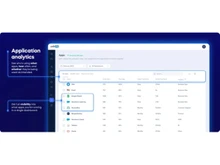
Pendo excels in visualizing user behavior, showing feature adoption, frequency, and patterns over time. It helps product teams identify friction and prioritize improvements. WalkMe measures engagement with its guidance and adoption flows but focuses more on how users interact with workflows and less on broad product behavior trends.
- Feedback & Sentiment Collection
Pendo offers built-in NPS surveys, polls, and feedback modules tied to user segments, enabling product teams to gather sentiment directly where users interact. WalkMe’s feedback features are more oriented around assessing guidance effectiveness rather than broad product sentiment.
- Segmentation & Targeting Logic
Pendo provides advanced segmentation based on usage metrics, user traits, and behavior, delivering specific experiences to relevant users. WalkMe also supports segmentation but emphasizes workflow conditions and user state rules to trigger guidance only when specific criteria are met.
- Funnels & Conversion Analysis
Pendo allows teams to build funnels around product features to understand drop-offs in key workflows and drive optimization decisions. WalkMe provides funnel insights tied to guided experiences, enabling businesses to evaluate how successfully users complete structured processes and training sequences.
- Adoption Health & Success Metrics
Pendo’s adoption metrics focus on feature utilization, retention, and growth indicators that align with product goals. WalkMe’s success metrics center on how effectively users complete guided tasks, reduce errors, and adhere to defined processes, offering insights into workflow efficiency.
When To Choose Pendo vs WalkMe?
| Use Case |
Choose Pendo |
Choose WalkMe |
| Product-Led Growth |
Ideal for driving feature adoption using product usage insights. |
Less focused on product growth, more on task completion. |
| Feature Discovery |
Helps users discover and adopt new SaaS features easily. |
Better for fixed workflows, not continuous feature discovery. |
| Employee Training |
Best for customer-facing products, limited internal training use. |
Excels at training employees across complex enterprise software. |
| Digital Transformation |
Supports gradual product updates and experience improvements. |
Designed for large-scale enterprise digital transformation initiatives. |
| Error Reduction |
Identifies friction points but doesn’t enforce processes. |
Enforces correct steps, reduces errors, and ensures process compliance. |
Final Verdict: Pendo or WalkMe
Choosing between Pendo and WalkMe depends on how you plan to use a digital adoption platform. Pendo is well-suited for product-focused teams that want to understand user behavior, improve feature adoption, and make data-driven product decisions. It works best in SaaS environments where continuous product improvement and user engagement matter most.
WalkMe is a strong choice for enterprises managing complex software environments and structured workflows. It focuses on guiding users step by step, reducing errors, and ensuring consistent task completion across multiple systems. This makes it valuable for employee training and large-scale digital transformation.
Both platforms deliver value in different ways. The right digital adoption platform is the one that aligns with your business goals, users, and long-term strategy. To explore your best option, reach out to Techjockey for expert guidance and personalized recommendations.
 UAE
UAE India
India


 Comparison


 4 Ratings & 0 Reviews


 Free Trial




 Get directly in your email inbox on your Whatsapp


