How to Track AI Costs Before They Spiral Out of Control?

July 27, 2026

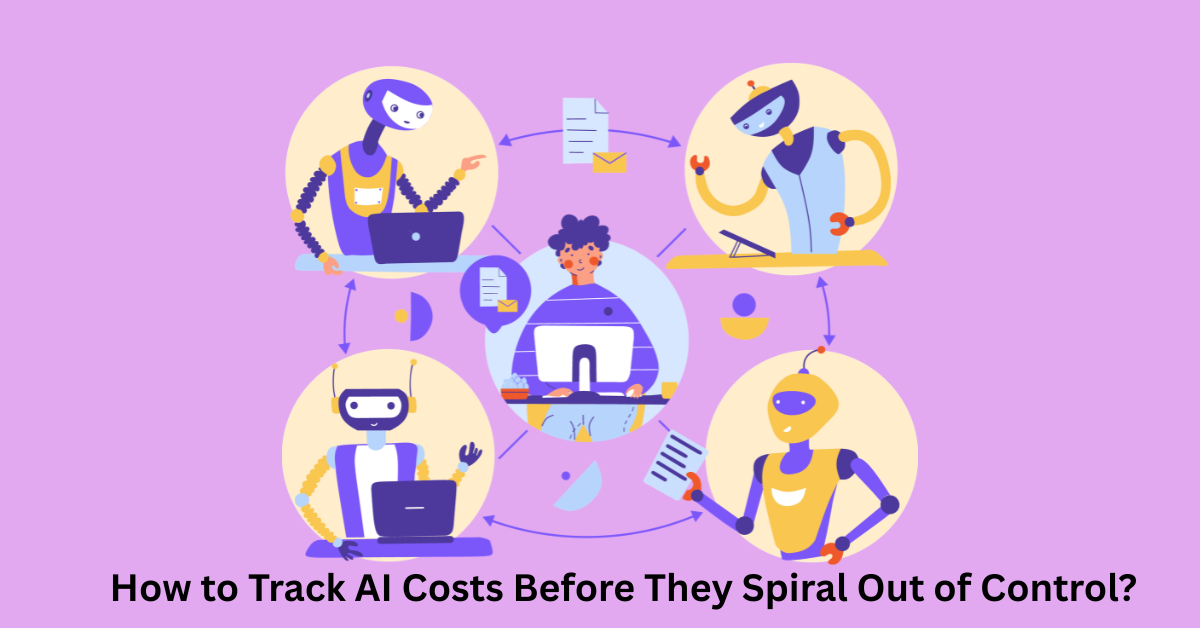
How to Track AI Costs Before They Spiral Out of Control?-feature image

AI is no longer a side experiment. It is powering core products, customer interactions, and engineering workflows across businesses of every size. But as AI adoption accelerates, so do the bills. The problem is that most teams do not see the damage until the monthly invoice lands. By then, the overspend has already happened, budgets have been blown, and nobody quite knows where the money went.

Tracking AI costs sounds simple. In practice, it is one of the most overlooked financial blind spots in modern engineering teams, and it is getting more expensive to ignore.

Why AI Costs Are Different from Regular Cloud Costs?

Most finance and engineering teams are reasonably good at tracking cloud costs. They know how to read an AWS or Azure bill, set up budget alerts, and spot unusual spikes in storage.

AI costs are a different problem entirely.

Unlike regular cloud spend, AI costs do not come from one place. They are spread across multiple sources, a cloud provider for hosted AI, a direct API subscription, a managed infrastructure platform, and developer tools, each arriving on a separate invoice. There is no single view that connects them all.

The tools most teams use for cloud cost management were simply not built to handle this. They see what shows up on a cloud bill. Everything else is invisible.

The result is that AI costs grow quietly in the background until someone notices the number has doubled, or tripled.
CloudYalilogo

CloudYali

4.1

Starting Price

$ 100.00      

Where Your AI Money Is Actually Going?

To understand where AI spend goes unnoticed, it helps to think about it across four distinct categories:

  • Hosted AI: This is AI infrastructure provisioned through your cloud provider. The hidden cost here is idle capacity. You pay for provisioned throughput whether your workloads are running or not. Teams often spin up capacity for a project, then forget to scale it down when usage drops. The meter keeps running.
  • Direct APIs: These are the direct subscriptions to AI model providers that teams use to power features and experiments. Unused API keys sitting dormant for weeks or months are still billed. Spend spikes from a new feature or a model change often only surface at month-end, long after the damage is done.
  • Managed AI Infrastructure: This covers platforms used to train, fine-tune, or deploy models. Old experiment notebooks from projects that wrapped up months ago are often still running. Endpoints created for proof-of-concept work, never properly decommissioned, quietly bill hundreds of dollars per month each. Nobody notices because nobody is looking.
  • Developer Tools: AI-powered coding assistants and developer tools are increasingly standard across engineering teams. But usage varies wildly. One developer might burn ten times more tokens than another on the same invoice, with no visibility into why. Without per-developer or per-team attribution, there is no way to understand the cost or optimize it.

The problem across all four categories is the same. The waste is invisible until the bill arrives.

Real Example: When an AI Bill Tripled in One Quarter

One SaaS company running on AWS and OpenAI watched their AI bill triple over the course of a single quarter. The team knew costs were rising but had no way to pinpoint why. The spend looked like a single line item. There was nothing to do.

When they got proper cost visibility through CloudYali, the answer turned out to be surprisingly specific. One product feature, using one particular AI model, was responsible for the bulk of the increase. The model being used was far more expensive than alternatives that would have delivered comparable results for that use case.

They switched models. Within weeks, the AI line item dropped by approximately 50%.

The fix was simple. Finding it without the right visibility tool was not.

CloudYalilogo

CloudYali

4.1

Starting Price

$ 100.00      

What Good AI Cost Tracking Looks Like?

For teams serious about getting AI costs under control, there are five things that matter:

  • A unified view of all AI spend: Every provider, every workspace, every project, in one dashboard. Not spread across five separate billing portals that nobody checks consistently.
  • Token-level and model-level breakdown: A line item on a bill tells you how much you spent. It does not tell you which model, which feature, or which team drove that spend. Granular breakdowns are what make it possible to actually do something about the numbers.
    Workspace and project attribution: Knowing the total is not enough. You need to know which team, product, or feature is responsible for which portion of the spend. Without attribution, cost reviews are guesswork.
  • Anomaly detection that fires before month-end: A spike that shows up in a weekly alert is actionable. The same spike discovered in a month-end review is just a postmortem. Real-time anomaly detection is what separates reactive teams from proactive ones.
  • Budget alerts with thresholds: Setting a monthly budget is not enough if the alert fires after the budget has been exhausted. Threshold-based alerts at 50%, 75%, and 90% of budget give teams time to adjust course before overruns become a problem.

How CloudYali Tracks AI Spend?

CloudYali is a FinOps platform built specifically for teams managing costs across cloud, AI, and data platforms. Unlike traditional cloud cost tools that only see what shows up on a cloud bill, CloudYali tracks AI spend across providers with the same depth and rigor it applies to AWS, GCP, Azure, and other cloud providers.

For teams dealing with fragmented AI bills, a few capabilities stand out:

  • Unified AI and cloud cost dashboard: OpenAI, Anthropic, Gemini, and cloud provider costs all appear in one place. No separate tools, no manual consolidation, no switching between portals.
  • Unused API key detection: CloudYali surfaces API keys that have been inactive for 30 or more days, a common and overlooked source of silent spend.
  • Workspace-level anomaly detection: Instead of flagging a total bill anomaly, CloudYali pinpoints spend changes at the workspace or project level for Anthropic and OpenAI, making it far easier to identify what actually changed and why
  • Token, model, and feature-level breakdown: Spend is broken down from the total right down to which model and which feature is driving costs, giving engineering and finance teams the context they need to act.
  • Read-only access, fast deployment: CloudYali connects to your accounts with read-only access. No agents to install, no code changes required. Most teams are up and running within days.
CloudYalilogo

CloudYali

4.1

Starting Price

$ 100.00      

How to Get Started?

Getting AI cost visibility does not require a lengthy implementation or a dedicated FinOps hire. Here are four practical steps to start with:

  • Connect your accounts: Link your cloud provider accounts and AI API providers to a unified cost management platform. Read-only access is all that is needed.
  • Run a first audit: Let the platform surface what is already there, idle resources, orphaned endpoints, unused API keys, and untagged spend. Most teams find something actionable in the first week.
  • Set up per-team or per-project budgets with threshold alerts: Define budgets at the team or project level and configure alerts at 50%, 75%, and 90%. This shifts the team from reacting to month-end surprises to catching overruns in real time.
  • Review anomalies weekly: Build a lightweight weekly habit of reviewing flagged anomalies and acting on recommendations. Small course corrections made early are far less disruptive than large ones made after the fact.

Conclusion

AI costs are not going to get simpler. As more features ship, more models get integrated, and more teams start using AI-powered developer tools, the spend will only grow, and so will the complexity of tracking it.

The teams that build visibility early will have a significant advantage. They will catch waste before it compounds, make better model choices, and give their finance teams the attribution data they need to plan accurately.

The first step is straightforward. Stop relying on a monthly invoice as your only view into AI spend. Platforms like CloudYali are built specifically for this, giving engineering and finance teams a unified view of cloud and AI costs, with the depth needed to act before the bill forces the conversation.

Consult with Our Techjockey Expert

Connect for fast and scalable software delivery, corporation plans, advanced security, and much more.

Talk To Tech Expert