March 23, 2026
In manufacturing, one thing goes wrong, like a machine breakdown or a shipment getting late, it can disrupt the whole schedule.
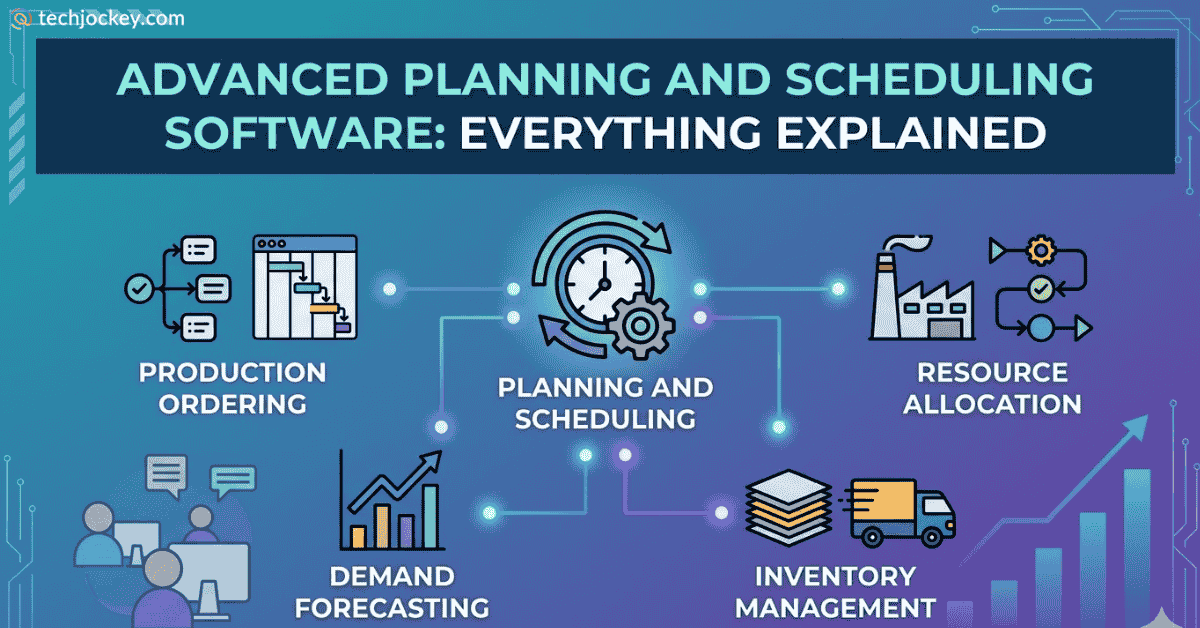
An advanced planning and scheduling software, often called APS, is the solution to plan and schedule the manufacturing process in a better way.
It’s high time to say goodbye to spreadsheets or basic whiteboards to run your shop floor. It can make things probably feel pretty chaotic in the growing tech world.
This guide is going to break down what an advanced planning system software is, why it’s required in manufacturing, and which tools are actually worth your time.
Let’s begin.
An advanced planning and scheduling software can be explained as a digital tool that helps manufacturers manage their production faster.
This clarifies when and how to make a product based on the resources you actually have. It can be said as the ‘brain’ of a factory. It looks after your available machines, labor, and raw materials and then creates a realistic schedule. Unlike basic systems that assume you have infinite capacity, an APS knows that a machine can only do one thing at a time and that workers need breaks.
We have covered the top tools in the coming sections, but before that, we will discuss some key features of an advanced planning and scheduling software.
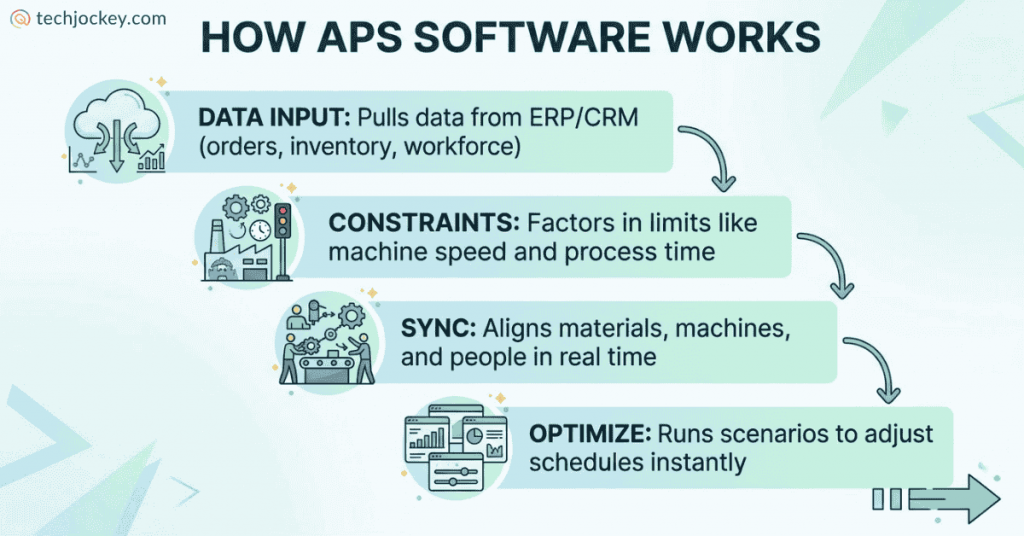
The operation of advanced planning and scheduling software is not as complicated as you might think. Let me explain it in simple sentences.
It usually follows a few key steps:
I hope you have understood the process. Let’s now move on to the benefits an advanced planning and scheduling system offers.
Switching to advanced scheduling software is not just about being highly technical. It has real-world benefits. Here we go…
Now that you know what advanced planning and scheduling software is, its benefits, and how it works, we have some of the best tools on the list.
Here are five of the top players that are making waves in the manufacturing world right now.
SYSPRO is a well-known name in the ERP world, and its Manufacturing Operations Management (MOM) suite includes very strong APS capabilities. It’s built specifically for manufacturers, so it speaks the right language.
Key Features:
Siemens is a giant in the industrial world, and Opcenter, formerly Preactor, is one of the most widely used APS systems globally. It’s highly flexible and can handle incredibly complex manufacturing environments.
Key Features:
PlanetTogether focuses heavily on making the scheduling process as visual and intuitive as possible. It’s designed to bridge the gap between your high-level planning and the actual chaos of the shop floor.
Key Features:
For larger enterprises already using SAP, their S/4HANA resource scheduling module is a powerhouse. It’s built into the core system, meaning your data is always up to date without any syncing issues.
Key Features:
Skyplanner is a modern, AI-driven approach to APS. It uses an AI called ‘Artemis’ to help calculate the best possible production plan in seconds. It’s a great fit for smaller to mid-sized shops that want something fast and smart.
Key Features:
Excel is great for math, but it’s terrible for time.
Spreadsheets are static. The moment you print a spreadsheet and walk it out to the floor, it’s already out of date. If a worker calls in sick, you have to manually find every cell affected by that change.
Advanced scheduling software is dynamic. When one thing changes, everything else shifts automatically to compensate.
Also, spreadsheets don’t have memory. They don’t know that Machine C always takes 20 minutes longer to warm up in the winter. An APS system keeps track of these details, making your plans more accurate over time.
We are starting to see Smart Factories where the machines actually talk directly to the advanced scheduling software.
In the near future, if a machine senses it’s about to overheat, it will tell the APS. The software will then automatically move the next job to a different machine and schedule a repair technician, all before a human even knows there’s a problem. Tools like Skyplanner are already moving in this direction with AI, and it’s only going to get more common.
Final Thoughts
Investing in advanced planning and scheduling for manufacturing is one of the best ways to automate your manufacturing business. No matter if you choose a heavy-duty system like Siemens or a smart, AI-driven tool like Skyplanner, their final goal is to make you work smarter.
By giving your team a clear, realistic map of the day, you’ll reduce stress, save money, and, most importantly, keep your customers happy with on-time deliveries. If you are tired of the fire-fighting mentality on the shop floor, it might be time to let an advanced planning system do take care of heavy tasks for you


Explore Topics

Consult with Our Techjockey Expert
Connect for fast and scalable software delivery, corporation plans, advanced security, and much more.
Compare Popular Software

Get the latest Techjockey US Blog Updates!
Subscribe to get the first notified about tech updates directly in your inbox.

 Previous