Conductor vs Semrush: Which SEO Tool Is Right For You?
Choosing the appropriate SEO tool can be the difference between the success of your business in the traditional and AI-driven search. Two popular tools are Conductor and Semrush, but they are used to address different needs.
Conductor is designed for companies that require deep web insight, integrated information, and AI tailored for visibility on Google and LLMs. It is aimed at mass optimization, real-time monitoring, and individual content creation.
On the other hand, Semrush provides a broader marketing platform with SEO, content, advertising, social, and competitive search. It best suits teams who need the entire marketing toolkit with huge amounts of data, in-depth analysis of keywords, and excellent competitive intelligence.
In this guide, we will see their significant differences, compare the main features, and help you understand which platform is more appropriate to meet the objective of the work of SEO.
What Are The Key Differences Between Conductor vs Semrush?
- Platform Focus: Conductor majors on in-depth SEO and content optimization, whereas Semrush extends to advertisements, social media and general competitor research options.
- Feature Depth: Conductor gives advanced web intelligence and is guided by AI content, whereas Semrush provides broader marketing capabilities, massive keyword data, and the choice of multiple channels.
- Reporting Style: Conductor offers reporting of singular SEO health reports and AI search reporting, and Semrush offers a broad range of competitor tracking, keywords, and multi-channel campaign reporting.
Comparison Table: Conductor vs Semrush
| Feature |
Conductor |
Semrush |
| SEO Management Tools |
Strong enterprise SEO workflows with structured optimization |
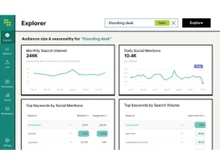
Wide SEO toolkit suitable for multi-channel research |
| Content Marketing Tools |
AI guidance for scalable content planning improvement |
Editorial calendars and competitive content gap insights |
| Conversion Tracking |
Tracks SEO impact on key conversion events |
Tracks conversions across ads, SEO, social channels |
| Marketing Analytics |
Deep insights focusing on organic performance metrics |
Broader analytics covering campaigns and competitor data |
| Website Analytics |
Detailed site audits and technical issue monitoring |
Comprehensive site audits with keyword-driven insights |
| Custom Dashboards |
Custom enterprise dashboards for SEO reporting needs |
Flexible dashboards combining multiple marketing metrics |
| Keyword Research Tool |
Prioritizes intent-focused keywords with content guidance |
Large keyword database with strong competitor analysis |
| Campaign Management |
Supports ongoing SEO initiatives and optimization cycles |
Manage multi-channel marketing campaigns effectively |
| Support |
Dedicated enterprise support with strategic guidance |
Standard support with tutorials, chat, and community |
| Best For |
Large enterprise needing deep SEO services |
Businesses needing all-in-one digital marketing tools |
| Pricing |
Pricing is available on request at Techjockey. |
Starts at USD 139.95 per month |
Detailed Feature Comparison of Conductor vs Semrush
- AI-Driven Content Recommendations
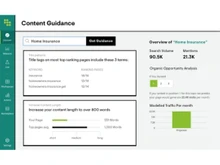
Purpose-built AI is used to analyze your site, competitors, and market trends to give conductors highly personalized content recommendations that increase visibility in search engines and AI platforms. Semrush also provides content ideas, but rather than comprehensive, AI-based content plans to support enterprise expansion. It concentrates on optimizing keywords and readability.
- Answer Engine Optimization (AEO)
Conductor focuses on AEO, and it is optimizing content to be used in search engines powered by AI, such as ChatGPT and Perplexity. It assists businesses in appearing on AI to respond to results through the analysis of questions, intent of search, and competitor performance. Semrush has less AI visibility features, largely relying on old-style SEO rankers, and Conductor has a better emerging AI search visibility.
- Real-Time Website Monitoring
The conductors keep an eye on every aspect of the sites 24/7, discovering technical SEO errors, dead pages, and performance decline in real-time. Alerts prioritize the most relevant problems, which makes it possible to solve them faster. Semrush offers a site audit, which is timely, with fewer granular features, providing fewer real-time notifications in enterprise-level management of websites.
- Topic & Competitor Research
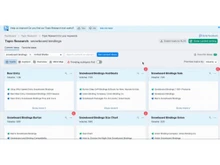
Deep topic insights are offered by conductors to bring together information on a search trend, competitors, engagement indications and strategic plan content. On the other hand, Competitor and keyword research is also offered by Semrush, but in a more surface-level manner, where it offers more general ideas without providing enterprise-level, AI-driven advice on content opportunities.
- Generative AI Content Creation
Creator Conductor is used to scale authoritative content, identify and use AI to create content based on search intent and brand voice. It is compatible with visibility insights to help content be effective in search engine optimization (SEO) and AI search. The content creation tools of Semrush primarily help to achieve better readability of SEO and position keywords rather than complete generative content processes.
- Advanced Enterprise SEO Reporting
Conductor provides detailed and integrated reports on content, AI visibility and site health, to enable teams to monitor ROI and effectiveness of strategy. Semrush also offers a lot of dashboards in terms of monitoring the keywords and traffic. However, Conductor has a reporting system that is designed to be used in the enterprise level of decision-making, with actionable insights to both human and AI search visibility.
When to Choose Conductor vs Semrush?
| Your Need |
Choose Conductor |
Choose Semrush |
| Optimize for AI search platforms |
Yes, designed for AI-driven search visibility like ChatGPT |
No, limited AI search tools, better for traditional SEO |
| Manage large enterprise websites |
Yes, real-time monitoring and issue prioritization at scale |
No, audits are periodic and less detailed for big sites |
| Identify content opportunities |
Yes, AI-powered gap analysis across topics and competitors |
No, provides keyword gaps but less strategic insight |
| Track multi-region performance |
Yes, unified data across domains and markets |
No, global tracking exists, but not enterprise-optimized |
| Automate SEO workflows |
Yes, it supports content optimization and reporting automation |
No, workflow tools are more general and marketing-focused |
| Handle complex technical SEO issues |
Yes, detects crawl errors, structural problems, and advanced issues |
No, standard audits only, better for small or mid-sized websites |
Final Verdict: Conductor vs Semrush
Both Conductor and Semrush are powerful SEO tools, but they focus on different strengths.
Conductor is suitable in the case of enterprise-level SEO, AI-powered content suggestions, real-time web monitoring and Answer Engine Optimization, which is why it is good when a large team wants to gain in-depth insights, practical reporting, and AI-driven search visibility in a variety of markets.
Unlike Semrush, which is a more general digital marketing platform and integrates SEO, content marketing, competitor research, advertising, and social media tools together, Semrush is designed to meet the needs of businesses of all sizes that want a one-stop solution to handle both SEO and broader marketing activities.
Select Conductor due to its enterprise SEO features, AI-driven content creation, and integrated data insights, and Semrush due to a complete marketing toolkit with a rich amount of key data, competitor tracking, and multi-channel management of digital campaigns.
 UAE
UAE India
India


 Comparison


 6 Ratings & 0 Reviews


 Free Trial







 Get directly in your email inbox on your Whatsapp


