Namecheap VS Porkbun: Which Web Hosting Solution is Right for You?
Namecheap vs Porkbun would be determined by the type of experience you desire with an online provider and how you wish to manage your online presence. They both provide web hosting services as well as domain registration to assist users in getting websites online, but they are designed to serve slightly different groups.
Namecheap is an established platform that assists individuals and companies in establishing a stable and extensive online presence. Users who prefer to have everything in one location and want a long-term, reliable solution as well as an expanding brand often make this choice.
Porkbun is a less complicated and more recent substitute that emphasizes convenience and fair prices. It is well-liked among developers, creators, and small website owners who do not want a complicated or pressurizing experience.
This comparison will assist you in deciding on the necessity of an in-depth platform or an easy and affordable solution.
Key Differences Between Namecheap and Porkbun
- Platform Approach: Namecheap represents a full business-oriented platform, whereas Porkbun makes things easy for users who desire something to manage quickly and easily.
- Ease of Use: Porkbun is easier and less guided, and Namecheap offers a more advanced and organized user experience.
- Pricing Philosophy: Porkbun is targeting cost-conscious users and offering transparent pricing, whereas Namecheap is aiming at customers seeking value over simplicity in the long term.
- Target Audience: Namecheap is designed to serve the growing business and the team, whereas Porkbun is designed to serve the developers, creators, and owners of personal websites.
Comparison Table: Namecheap vs Porkbun
| Feature |
Namecheap |
Porkbun |
| Company Background |
Long-established global domain and hosting provider |
Modern registrar known for simplicity and customer focus |
| Brand Personality |
Professional and business-oriented |
Casual, fun, and user-friendly |
| Dashboard Experience |
Full-featured dashboard for managing many services |
Clean, minimal interface for quick domain tasks |
| Domain Portfolio Handling |
Great for large domain portfolios and multi-service users |
Ideal for straightforward domain management |
| Billing Transparency |
Uses discounts, bundles, and promotions |
Clear pricing with minimal surprises |
| Service Add-Ons |
Large ecosystem of tools and optional upgrades |
Focused core services with only useful extras |
| Documentation & Guides |
Extensive tutorials and learning resources |
Simple, practical help and guides |
| Developer Friendliness |
Balanced for beginners and business needs |
Highly appealing to developers and technical users |
| Support |
24/7 support across multiple channels |
Human-centred support with phone, chat, and email |
| Pricing |
Starts at USD 1.58 per month |
Starts at USD 2.50 per month |
Detailed Feature Comparison of Namecheap vs Porkbun
- DNS Management: Namecheap offers visitors configurable DNS controls with optional performance tuning to users with complex configurations. Porkbun provides Cloudflare-hosted DNS on all domains by default. Both support full record control and routing of traffic, with the baseline configuration and upgrade paths varying to leave users with some flexibility on the level of control and automation desirable.
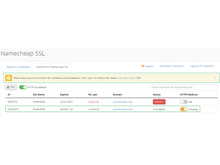
- SSL Certificate Handling: Namecheap offers a range of SSL certificate choices suited to different verification needs and website types. Porkbun includes automatic Let’s Encrypt SSL for supported domains. Both approaches secure website traffic effectively, with one offering broader certificate selection and the other focusing on simple always-on encryption.
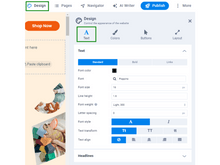
- Website Creation Tools: Namecheap has built-in site-building software that enables its users to create sites fast with the help of templates. Porkbun offers access to lightweight site-building options with the purpose of quick publishing. These two assist users in building websites without writing any code, but the tools differ in the level of workflow and focus on customization.
- Domain Marketplace Access: Namecheap operates a large marketplace where users can explore premium and aftermarket domains. Porkbun also offers auctions and local marketplace listings for previously owned domains. Both enable access to unique domain names beyond standard availability, but discovery and purchasing experiences differ in presentation and navigation.
- API Availability: Namecheap also supports automated domain and DNS management through API access, which can be used on a large scale or when driven by developers. Porkbun also has domain registration and record-updating APIs. Both platforms are based on automation, but their documentation framework and supported actions are slightly different.
- Hosting Architecture Options: Namecheap has several hosting systems, such as shared cloud and virtual machines with various workloads. Porkbun has specialty hosting like Cloud WordPress and static hosting. Both encourage hosting requirements, but their infrastructure options are based on varying priorities of scalability and ease of use.
- Backup and Update Handling: Namecheap also has provisions for managed updates and backup processes depending on the hosting environment. Porkbun highlights the automatic updates in some of the hosting services. They are both intended to have less maintenance work, but the degree of automation varies according to the type of hosting and user setup.
- Email Hosting Structure: Namecheap offers email service, which is domain-centered and intended to be used in personal and business correspondence. Porkbun provides simple mailbox email hosting based on domain-tied mailboxes. They both allow use of a professional email, but are different in their mailbox structure, depth of configuration, and the integration of email with other services.
- Domain Transfer Experience: Namecheap guides users through domain transfers with structured steps and account-level controls. Porkbun focuses on a simplified transfer flow with essential requirements clearly presented. Both support smooth domain movement, with differences mainly in interface design and how guidance is delivered.
- Security Layer Approach: Namecheap provides several security options, including increased DNS protection and vault-based controls. Porkbun pays attention to such inherent features as DNS stability and auto-certificate issuance. The two focus on domain and site security, yet they focus on different approaches to obtain protection and resilience.
When to Choose Namecheap vs Porkbun
| Scenario |
Choose Namecheap When |
Choose Porkbun When |
| Managing multiple brands |
You handle several domains or brands and want centralized long-term control |
You manage only a few domains and prefer a simple workspace |
| Project growth expectations |
Your project is likely to expand in scale and complexity over time |
Your project has a fixed scope with limited future expansion |
| Workflow customization |
You want flexibility to shape workflows around your online operations |
You prefer ready-made workflows that require little adjustment |
| Domain portfolio strategy |
Domains are part of a planned asset or investment strategy |
Domains are purchased mainly for active use or ideas |
| Account access needs |
You need structured access management for multiple users |
You work solo or with very limited collaboration |
| Maintenance involvement |
You are comfortable handling settings and configurations |
You want minimal maintenance and hands-off management |
Final Verdict: Namecheap vs Porkbun
The decision between Namecheap and Porkbun is determined by how you intend to run your online presence and the degree of control or ease of use that you desire.
Namecheap is the best fit for customers who anticipate their websites or domains to expand with time and are willing to work under a more organized platform. It suits well in long-term projects, which can change in terms of complexity.
Porkbun is more appropriate for users who desire a simple experience and little setup and maintenance. It is also suitable to use in personal websites, small projects, or when a user wants to have a clean and straightforward attitude.
Neither option is universally better. Your decision should match your goals, working style, and plans. For more clarity and expert guidance, you can reach out to Techjockey for personalized recommendations.
 UAE
UAE India
India


 Comparison


 2 Ratings & 2 Reviews


 Free Trial








 Get directly in your email inbox on your Whatsapp


