September 8, 2026
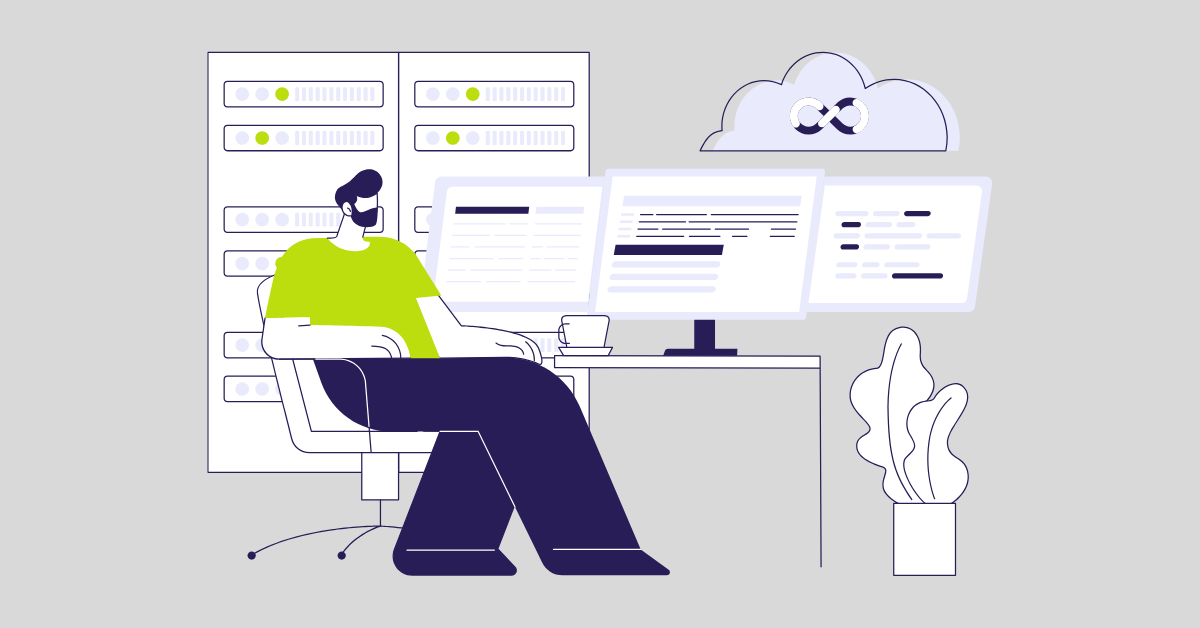
Fragmented toolchains and endless context switching represent the biggest hurdle in modern software delivery. Developers waste valuable hours constantly jumping between cloud environments, CI/CD pipelines, and monitoring systems.
Cokpit solves these operational bottlenecks with a unified agentic control plane, where autonomous DevOps agents observe system metrics and execute complex workflows end-to-end.
This post explores how unified agentic orchestration transforms DevOps practices across cloud infrastructure, CI/CD, and incident response. Readers will discover governance guardrails,
integration patterns, and measurable operational impacts.
DevOps teams usually navigate dozens of specialized software tools every single day. Infrastructure provisioning, for instance, takes place in Terraform while deployments run inside Kubernetes clusters. Application logs and metric dashboards remain trapped within separate monitoring platforms.
Engineers have no choice but to manually reconstruct context whenever operational outages occur. This fragmented workflow certainly forces constant switching between disconnected browser tabs. Context switching consumes valuable mental energy and introduces costly configuration errors.
Traditional automation scripts demand constant maintenance from busy engineering teams. Static scripts break easily whenever underlying APIs change or infrastructure scales. High operational overhead ultimately slows software releases and delays critical feature launches.
Scattered operations also create severe communication gaps across internal organizational teams. Cloud infrastructure engineers often operate with entirely different operational priorities than developers.
Developers focus heavily on feature velocity and rapid code deployment. Operations engineers prioritize system stability, security policies, and resource cost
controls.
Without a shared operational console, team hand-offs require frequent manual meetings. Engineers spend hours explaining build errors and infrastructure configurations back and forth. Resolving simple deployment failures can stall entire product engineering cycles for hours.
Furthermore, monitoring metrics without unified operational context leads to false alerts. Site reliability engineers struggle to separate critical alerts from routine background noise. Alert fatigue sets in rapidly across overburdened system operations departments. Modern cloud complexity clearly demands a fundamental shift in daily operations.
Cokpit
Starting Price
Price on Request
Cokpit replaces disconnected consoles with an intelligent, centralized orchestration layer. The platform connects directly with AWS, Azure, and Google Cloud Platform. It also integrates natively with core tools like Kubernetes, Jenkins, GitHub, GitLab, Docker, and Terraform.
Instead of relying on human hand-offs, Cokpit deploys specialized autonomous agents. These agents are adept at analyzing infrastructure metrics, codebase changes, and pipeline data simultaneously. The system builds a complete real-time operational picture across all enterprise environments and toolchains.
Standardized context integration eliminates the need for custom internal integration scripts. The console maintains steady communication with existing tools through native integrations and standardized APIs.
Engineers gain immediate visibility into multi-cloud deployments without leaving the central workspace. The console operates through four core capability areas:
This continuous feedback loop executes tasks without manual engineering intervention. Autonomous AI agents reason through complex dependencies before taking operational action. Teams define high-level strategic goals rather than writing tedious procedural scripts. This intent-driven management allows software organizations to scale operations without expanding headcount.
Cokpit
Starting Price
Price on Request
Combining infrastructure management and software delivery transforms everyday operations. In traditional setups, pipeline failures force developers to inspect build logs manually. Cokpit agents, on the other hand, parse failed pipeline stages and locate broken dependency code in near real-time.
The platform proposes validated fixes for identified build errors, enabling developers to review and approve resolutions directly within the unified console, reducing pipeline triage from hours of debugging into a quick approval workflow.
Infrastructure provisioning becomes equally seamless across complex multi-cloud enterprise environments. Autonomous agents automatically generate and validate Terraform templates, Helm charts, and Dockerfiles. Standardized templates prevent configuration drift across development, staging, and live production environments.
Continuous compliance monitoring runs within the same console. Agents actively detect configuration drift and security policy violations across multi-cloud workloads, flagging issues before they escalate into incidents. Teams can maintain high availability and operational standards while reducing the manual effort typically required to catch these issues early.
Autonomous execution requires strict operational guardrails inside enterprise production environments. Autonomous software ought to operate within clear policy boundaries to maintain organizational trust. Cokpit enforces granular permission limits based on least privilege principles.
Specialized monitoring agents cannot modify live production infrastructure without explicit authorization. Role-based access controls dictate which agents can access specific cloud resources and execute operational commands.
High-risk operations can be configured to pause inside the console for manual engineering approval. Every agent action leaves a detailed audit trail for complete operational transparency.
Audit logs record executed commands and system state changes, with actions automatically logged into GitHub, Jira, or Confluence. System administrators can inspect and verify agent actions through centralized audit logs at any time.
For organizations operating in the UAE, regulatory adherence remains a top priority. Data residency expectations under the Personal Data Protection Law (PDPL) demand strict local control. National guidelines regulate where sensitive customer and business data can be stored.
Cokpit supports fully air-gapped, on-premises deployments to satisfy these strict legal requirements. Organizations can deploy autonomous AI agents entirely within their own local infrastructure, without external dependencies.
The platform won Best Agentic AI Platform for DevOps at the DevOps Conclave & Awards 2026. Industry experts recognized its innovative balance of autonomous orchestration and security controls. This accolade validates its robust approach toward secure, enterprise-grade autonomous operations.
Cokpit
Starting Price
Price on Request
Adopting a unified agentic console delivers immediate efficiency gains across DevOps and platform engineering teams. Eliminating tool switching cuts everyday developer context switching by fifty percent. Software engineers spend more continuous time building product features.
Autonomous root cause diagnosis reduces mean time to resolution by forty percent. Intelligent incident handling minimizes costly application downtime and protects customer experience quality.
Deployment pipelines move smoothly without manual bottlenecks, doubling release speed. Automated runbook generation cuts documentation labor hours by at least seventy percent. AI agents automatically record operational changes into Jira, Confluence, and GitHub repositories.
Continuous policy monitoring ensures ninety-nine point nine percent reliability across workloads. Automated guardrails prevent unauthorized configuration shifts before security vulnerabilities emerge.
The following metrics illustrate key operational impacts achieved through agentic orchestration, comparing traditional DevOps workflows against AI-powered orchestration with Cokpit:
Teams typically achieve 3-5x ROI within the first 30 days of deployment. Fast ROI stems from immediate reductions in downtime and manual labor hours. Autonomous agents continuously learn from past incidents to refine future troubleshooting workflows. Continuous learning creates an adaptive operational environment that gets smarter over time.
Cokpit
Starting Price
Price on Request
Conclusion: The Future of ‘Single Console’ Operations
Unifying cloud operations and software delivery represents a fundamental operational shift. Modern enterprise DevOps environments have grown too complex for manual management. Traditional script-based automation cannot keep pace with dynamic cloud-native software delivery.
Engineering teams move away from reactive troubleshooting toward intent-driven cloud management. Autonomous AI agents handle tedious maintenance and infrastructure provisioning. These agents execute complex multi-step workflows across diverse toolchains without human intervention.
Engineers gain freedom to focus on strategic software design and business innovation. A single agentic console bridges operational divides, delivering speed, security, and control. The unified control plane empowers organizations to scale cloud operations efficiently. Operating through a single agentic console sets a new standard for modern DevOps execution.


Consult with Our Techjockey Expert
Connect for fast and scalable software delivery, corporation plans, advanced security, and much more.
Compare Popular Software

Get the latest Techjockey UAE Blog Updates!
Subscribe to get the first notified about tech updates directly in your inbox.

 Previous