June 25, 2026
Developing new software should not feel like a shot in the dark, where all the time and effort you put in still doesn’t guarantee success. One minute, you are excited about a rollout, and the next, something breaks in production.
This is exactly where feature flag tools come in (and timely so). By letting you release features safely, test with real users, and turn things on or off whenever needed, these tools, also known as flippers, simplify software engineering and shipping without needing to recode anything.
If the developer in you too is looking to timely dodge all the oops moments and have a smooth release for your applications and tools, you have landed in the right place. Keep reading to explore our thoroughly researched feature flag tools list, where each tool is meant to make tech creation a lot more easy and little less scary.
Feature flag tools, also called feature toggles, are software solutions that let developers or engineers turn specific features in an application on or off without requiring new code. These do not reflect all the changes thus made at once and instead let the teams handle feature visibility using configuration settings.
In essence, these tools work just like switches, switching certain features on/off for a certain group of users or certain environments like testing or production without making any changes to the code. This, so new features can be tested in real-time and user feedback on the same can be attained before a full release, reducing the risk of bugs or failures affecting everyone.
Some of the most renowned feature flag tools are listed below for your convenience. You can pick one that fits your needs in the best manner and let software shipping be a cakewalk for your tech brand today and forever.
| Feature Toggle | Type | Key Strength |
|---|---|---|
| LaunchDarkly | Managed SaaS | Mature platform, strong governance |
| Optimizely Feature Experimentation | SaaS | Advanced A/B testing |
| Unleash | Open-source feature flag management | Self-hosting, privacy control |
| Flagsmith | Open-source feature flags & SaaS | Flexible deployment options |
| Statsig | SaaS | Built-in analytics & experiments |
| Harness | SaaS | CI/CD integration |
| GrowthBook | Open-source feature flags | Bayesian stats, SQL metrics |
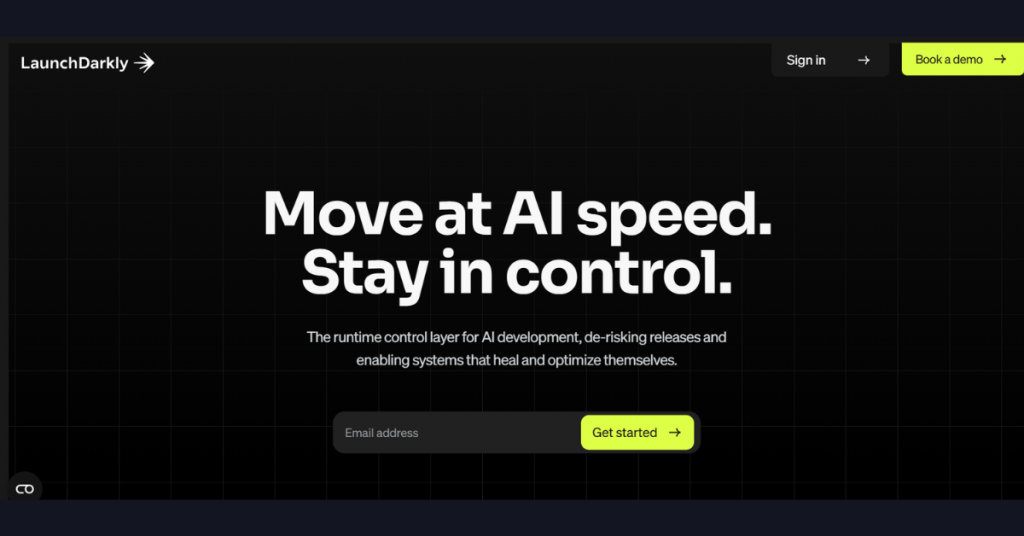
LaunchDarkly is a feature management and feature flagging platform that helps software teams control how and when new features are released. It allows developers to turn features on or off without changing code, making it easier to test updates, fix issues, and release changes gradually.
The software is best suited for development teams that want safer deployments, faster releases, and more control over the user experience.
Key Features of LaunchDarkly:
Pro and cons of LaunchDarkly:
Pros
Cons
LaunchDarkly Pricing & Plans:
| Plan | Price |
|---|---|
| Developer | 0 |
| Foundation |
Code Control: 10/Service Connection/month 8.33 USD/1k client-side MAU/month Agent Control: 5 USD/1k AI runs past 5K/month |
| Enterprise | Price on request |
| Guardian | Price on request |
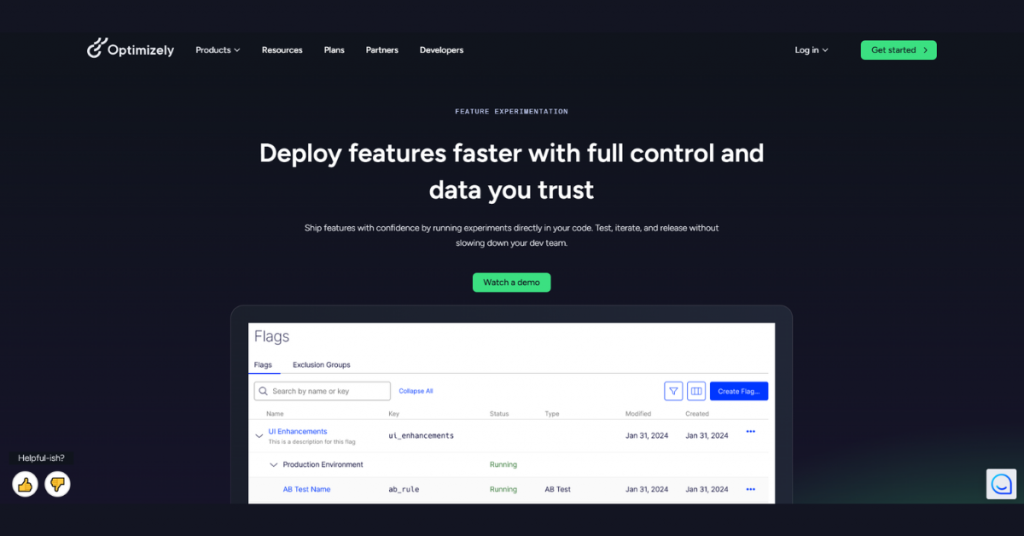
Optimizely Feature Experimentation is a feature flag tool designed for teams that want to test ideas before fully launching them. What sets it apart is its strong focus on controlled experiments; owing to which, teams can release a feature to a small group of users, measure how it performs, and compare results before rolling it out widely.
The said flipper acts as an ideal fit for product teams that rely on data and user behavior to guide product decisions.
Key Features of Optimizely Feature Experimentation:
Pro and cons of Optimizely Feature Experimentation:
Pros
Cons
Optimizely Feature Experimentation Pricing & Plans: Price on request
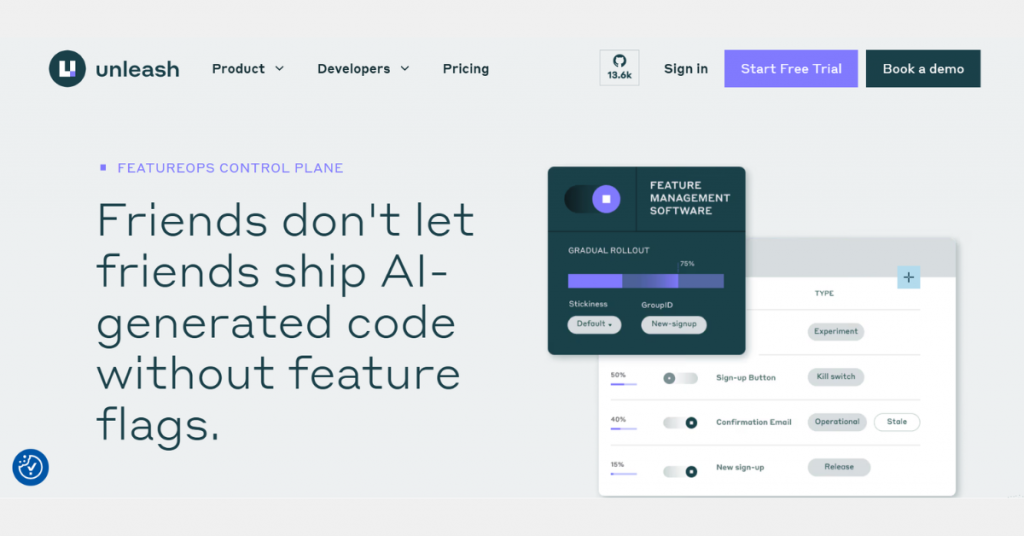
Unleash is an open‑source feature flag management platform that gives teams full control over feature releases while keeping everything on their own servers. Its main strength is that it is open-source and self‑hosted, so companies do not have to rely on a third‑party cloud. This makes Unleash a good choice for organizations that care about data privacy, security, and control over their deployment setup.
Key Features of Unleash:
Pro and cons of Unleash:
Pros
Cons
Unleash Pricing & Plans:
| Plan | Price |
|---|---|
| Open-Source | 0 |
| Pay-As-You-Go | 75 USD/seat/month |
| Custom Enterprise | Price on request |
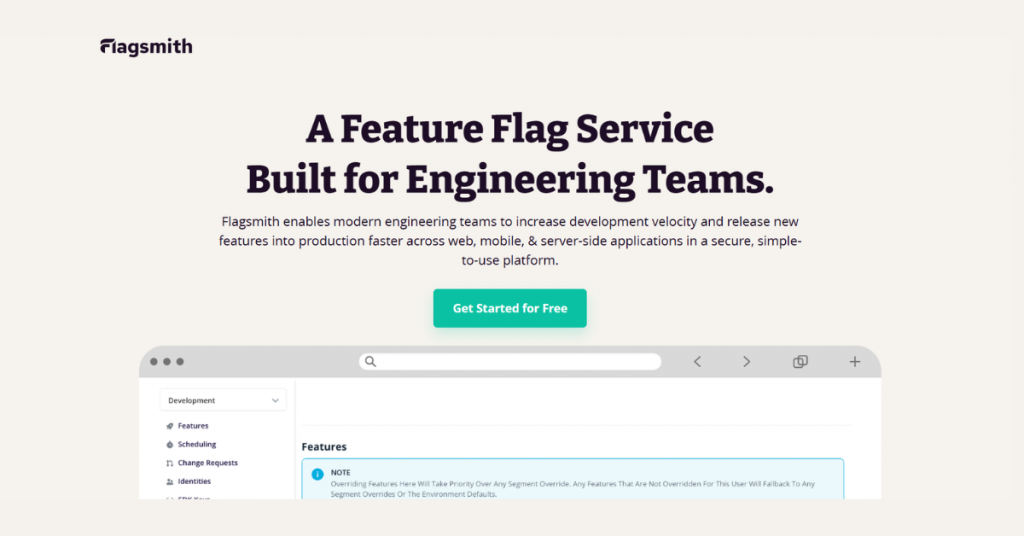
A feature flagging and remote configuration tool, Flagsmith lets teams control how features behave across different users, environments, and devices. The tool is known for its deployment flexibility, that is to say, it can be used in the cloud or self‑hosted, depending on company needs.
It also combines feature flags with remote configuration, so teams can change app behavior without releasing new code, making updates faster and more controlled.
Key Features of Flagsmith:
Pro and cons of Flagsmith:
Pros
Cons
Flagsmith Pricing & Plans:
| Plan | Price |
|---|---|
| Free | 0 |
| Start-Up | 45 USD/month |
| Scale-Up | 300 USD/month |
| Enterprise | Price on request |
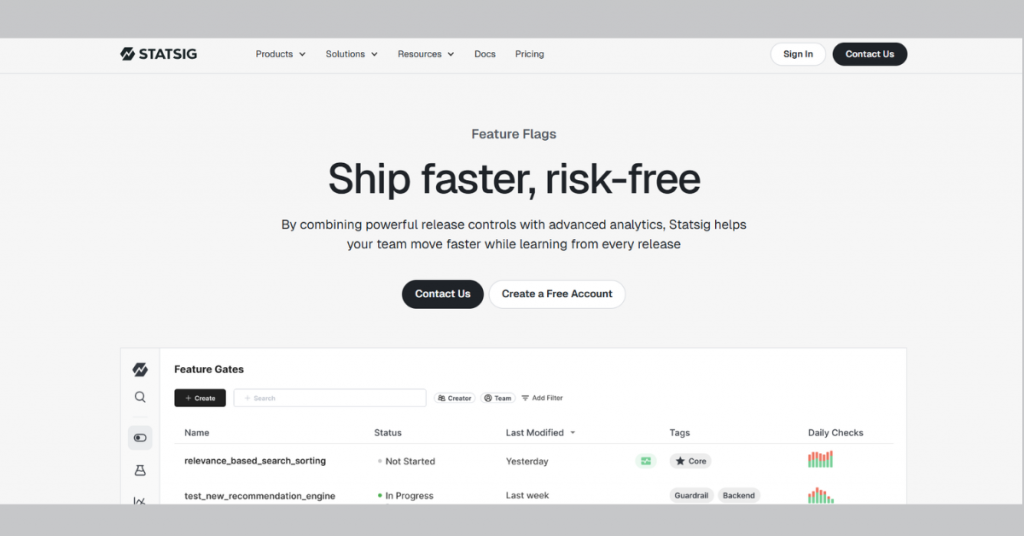
Statsig focuses on helping teams make product decisions based on real user data. Instead of guessing whether a feature works, it lets teams measure how changes affect user behavior and business metrics. The feature toggle tool is largely known for its strong emphasis on experimentation and analytics built directly into feature rollouts, so teams can learn what works while the product is live, not after the fact.
Key Features of Statsig:
Pro and cons of Statsig:
Pros
Cons
Statsig Pricing & Plans:
| Plan | Price |
|---|---|
| Developer | 0 |
| Pro | 150 USD/month |
| Enterprise | Price on request |
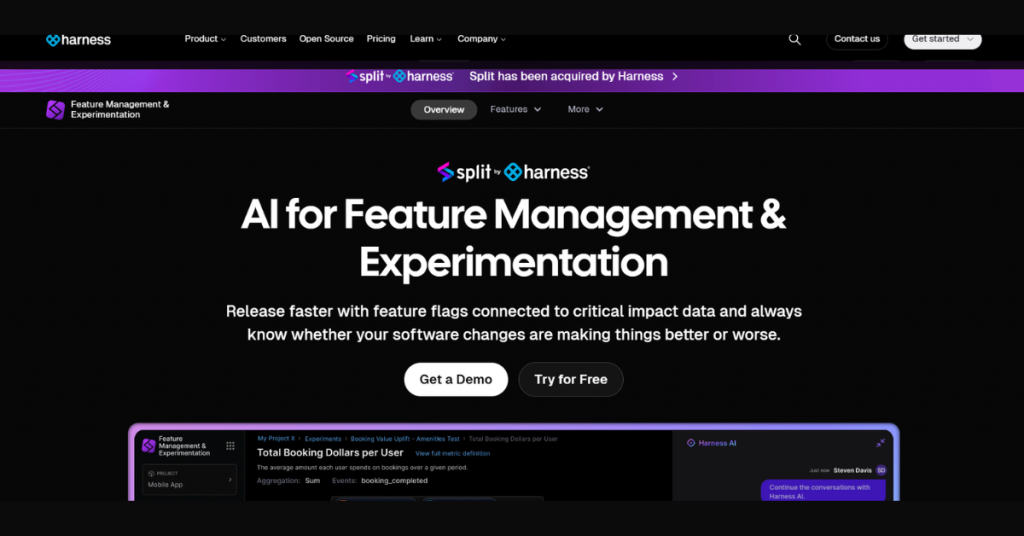
Harness, as a feature management and experimentation tool, focuses on speed and control in software delivery by giving teams the ability to release features and run experiments without slowing down deployments.
Its automation and built‑in safeguards help teams reduce risk when shipping changes and make it stand out from the rest. Because it tightly connects feature control with deployment pipelines, it works best for engineering teams that want faster releases without losing stability.
Key Features of Harness:
Pro and cons of Harness:
Pros
Cons
Harness Pricing & Plans:
| Plan | Price |
|---|---|
| Free Plan | 0 |
| Essentials Plan | Price on request |
| Enterprise Plan | Price on request |
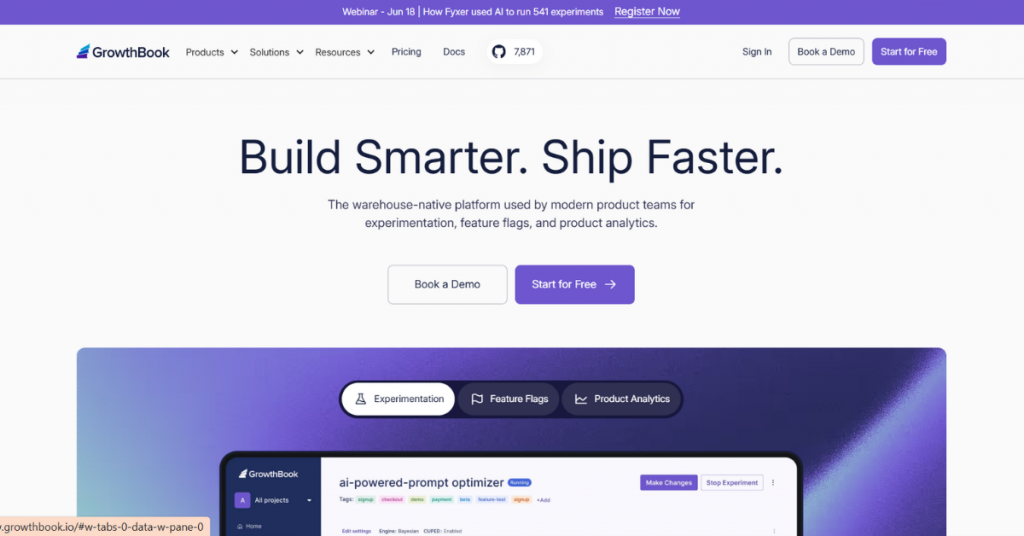
GrowthBook is a tool built for teams that want to experiment and test product changes using their own data. Instead of storing data inside the tool, it connects to existing data warehouses, so companies keep full control over their data. As a result, GrowthBook acts as a perfect fit for teams that care about data ownership and want flexibility in how experiments are run.
Key Features of GrowthBook:
Pro and cons of GrowthBook:
Pros
Cons
GrowthBook Pricing & Plans:
| Plan | Price |
|---|---|
| Cloud | |
| Starter | 0 |
| Pro | 40 USD/seat/month |
| Enterprise | Price on request |
| Self-Hosted | |
| Open-Source | 0 |
| Enterprise | Price on request |
Conclusion
Feature flag tools, as such, act as a crucial bridge between new software and users. By timely pulling the plug on problematic features, these help engineering teams safely release new tech without the need for fresh deployments.
If you thus happen to look out for a flipper for your business, the list of enterprise solutions and open‑source platforms detailed above is your best bet. Choose the right one depending on your team size, budget, and overall focus. Don’t forget to call the Techjockey product team if you need any help while at it!


Explore Topics

Consult with Our Techjockey Expert
Connect for fast and scalable software delivery, corporation plans, advanced security, and much more.
Compare Popular Software
Top 8 Idea Management Software for Innovation in 2026
February 21, 2026

Get the latest Techjockey US Blog Updates!
Subscribe to get the first notified about tech updates directly in your inbox.

 Previous