March 6, 2026
Are you also a growing organization where you need to manage a lot of maintenance tasks, repair requests, and service jobs?
If yes, then relying on spreadsheets, emails, or paper forms in order to track work requests could lead to missed updates and delays in repairs. It can also lead to confusion among technicians and managers.
So, what’s the solution?
A work order software could be of help in organizing, assigning, tracking, and completing service tasks through a single platform.
This guide will discuss in detail the problems you can face while not having a work order software. Also, it will tell how this software’s presence can make your team productive and streamline operations.
Let’s begin.
Work order software is a digital tool that helps organizations create, manage, and track work orders from a single dashboard.
A work order typically represents a request for maintenance, repair, inspection, or service.
Instead of relying on manual systems like paper forms or emails, companies can use this software to handle the entire process digitally.
With the work order system, teams can:
The software is a centralized platform where you can store work order data and manage it. Facility managers, maintenance teams, and service providers can access the system to coordinate tasks and ensure work orders are completed efficiently.
A work order software is beneficial for businesses operating in multiple locations that need to handle large volumes of service requests.
Often, maintenance teams are flooded with service requests throughout the day. When there is no proper system to manage them, these requests can quickly become disorganized or overlooked.
Manual processes create several challenges, including:
Work order management software eliminates many of these issues by digitizing the entire process.
Rather than puzzling with hundreds of papers or searching through scattered messages and emails, businesses can automate the whole process of managing work orders. This way, maintenance issues get resolved faster, and operations continue running smoothly.
Let’s now discuss the important features a modern work order software solution has.
Starting a repair should not feel like a headache. With standardized forms, anyone can report an issue in seconds. These forms typically capture key details such as:
Scheduling tools help managers match the right technician to the right task based on their skills and location. Dispatching features help ensure the right technician is assigned to the right task at the right time.
This improves resource allocation and reduces delays in service delivery.
A live dashboard lets everyone see exactly where a job stands. When a technician updates a status or changes an estimated completion time, you see it instantly. It keeps the whole team on the same page without the extra meetings.
Your technicians are not always sitting at their desks, so their software should always be with them. Mobile apps let your team view work orders, upload ‘before and after’ photos, and chat with managers right from their phones. It ensures they have the right info even when they are out on-site.
Instant alerts ping the right people the moment a job is submitted, assigned, or finished. These notifications help ensure that no request goes unnoticed and that everyone involved in the process stays informed.
Communication features allow technicians, managers, and requestors to collaborate within the platform. By using built-in messaging, all updates and instructions stay attached to the specific work order. This creates a clear paper trail and stops important details from getting lost in private texts or old emails.
Work order software also provides reporting tools that allow managers to analyze operational data. Reports may include:
These insights help you make smart decisions to save money and time in the long run.
Your team gets a digital library of manuals and repair guides right at their fingertips. Having troubleshooting tips available on the spot helps technicians finish jobs faster and with fewer mistakes.
In some cases, service representatives can assist customers remotely through video calls or live guidance. This allows you to diagnose problems instantly and, in many cases, walk the customer through a fix over the phone without sending technicians on-site.
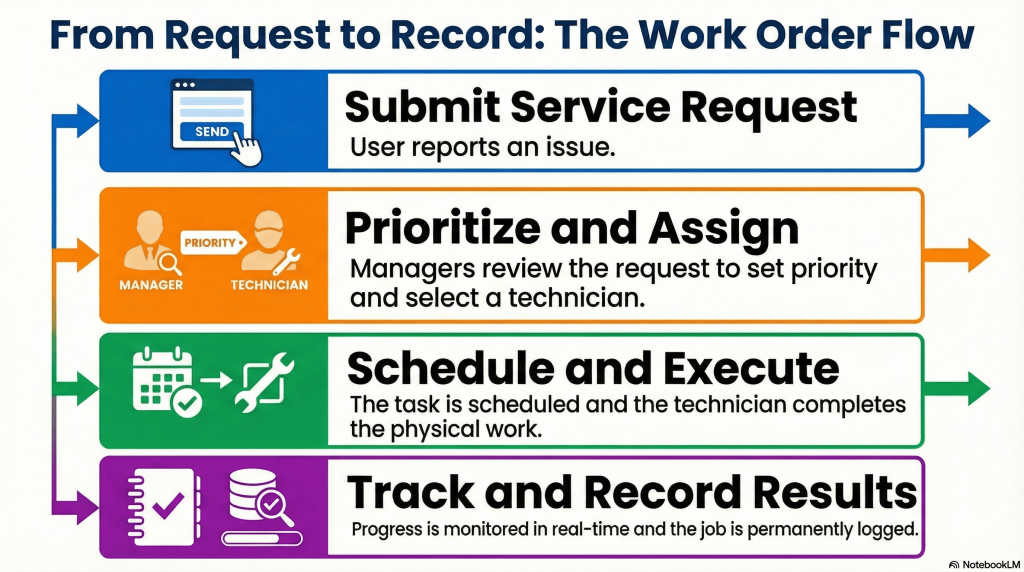
Work order workflows vary depending on the organization and industry, but most follow a similar pattern.
The work order management process starts with the submission of a service request. This request could be about repairing equipment, performing preventive maintenance, or addressing a facility issue.
Once a request is received, the following steps take place:
Throughout this process, the software records actions, communications, and updates, creating a complete history of the job.
Implementing work order software provides several advantages for organizations that manage maintenance operations or service tasks.
Nothing is lost during the transition when you can manage all the data in one place. It can be the detailed information about the issue, required parts, and service history. This will reduce errors and make sure that the technicians have the information to work properly.
Automation gets the manual labor off your hands and accelerates the handling of tasks. Work orders can be generated, allocated, and finalized within a shorter time, enhancing the overall productivity.
You can view the entire history of repairs and even arrange preventive maintenance with work order management software before anything fails. This assists in increased longevity of machinery and minimizes unforeseen failures.
Introducing work order software does not require a complete overhaul of existing processes. In most cases, organizations can integrate it into their current workflows.
To successfully implement a work order system, businesses should:
Once implemented, the system becomes a central hub for managing all maintenance operations.
Conclusion
Modern maintenance management heavily relies on work order software. It assists organizations to be more efficient by digitizing service requests and automating workflows, as well as offering real-time visibility into maintenance activities.
Companies using work order software are able to enhance productivity, lower the cost of maintenance, and provide quick service. From facility managers to field technicians, everyone benefits from having a clear, structured system for managing service tasks.


Explore Topics

Consult with Our Techjockey Expert
Connect for fast and scalable software delivery, corporation plans, advanced security, and much more.
Compare Popular Software
Top 8 Idea Management Software for Innovation in 2026
February 21, 2026


Get the latest Techjockey US Blog Updates!
Subscribe to get the first notified about tech updates directly in your inbox.

 Previous