Ally Invest vs Fidelity: Which Trading Platform is Right for You?
The decision between Ally Invest and Fidelity should be based on the type of investor you are and the level of support you require. These two platforms are similar in terms of commission-free trading and simplified tools, but they have slight differences in terms of users.
Ally Invest is targeted at the beginner or casual investor, or any person desiring to easily invest with fewer fees. It has simple robo-portfolios, no fee commissions, and a clean and simple beginner-friendly interface. It is most suitable for individuals who desire simplicity and banking as well as investing in a single location.
Fidelity is a stronger, full-service company that provides sophisticated tools, research, retirement funds, and human advisors. It is appropriate for long-term investors, active traders, and those who prefer a variety of investment opportunities and more detailed advice.
In this guide, we compare Ally Invest and Fidelity on features, usability, fees, and value to help you choose the right platform.
Key Differences Between Ally Invest vs Fidelity
- Ease of Use: Ally Invest is simple and user-friendly, but Fidelity offers more advanced options that can be confusing to the first-time investor.
- Integration with Banking: Ally Invest can be easily combined with Ally Bank accounts to easily transfer funds, whereas Fidelity has more investing services than a bank.
- Product Range: Fidelity has a wider variety of investment options, such as mutual funds, bonds and retirement plans, whereas Ally Invest has a simpler version.
Comparison Table: Ally Invest vs Fidelity
| Feature |
Ally Invest |
Fidelity |
| Best For |
Beginners and casual investors seeking simple investing |
Long-term investors and traders need advanced guidance |
| Investment Options |
Stocks, ETFs, bonds, options, robo-advisors |
Stocks, ETFs, mutual funds, crypto, retirement accounts |
| Account Minimum |
USD 0 self-directed, USD 100 robo portfolios required |
USD 0 minimum for most accounts, advisory varies |
| Commissions |
USD 0 on most U.S. stocks and ETFs |
USD 0 on most U.S. stocks and ETFs |
| Advisory Services |
Robo-advisor and basic support available |
Dedicated human advisors for personalized wealth management |
| Tools & Research |
Basic charts, screeners, and research tools |
Advanced research, analytics, and market insights provided |
| Mobile & Web Access |
Simple, beginner-friendly app and web platform |
Feature-rich app and web, slightly complex interface |
| Banking Integration |
Smooth integration with Ally Bank accounts |
Mainly investing, with limited banking integration features |
| Customer Support |
Phone, chat, email; friendly support |
Phone, chat, email; professional expert guidance |
| Pricing |
Price is on request at Techjockey. |
Price is on request at Techjockey. |
Detailed Feature Comparison of Ally Invest vs Fidelity
- Trading Tools and Platform Experience
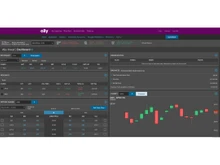
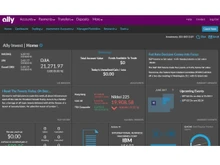
Ally Invest targets a simple and clean trading platform that suits novices who prefer a simple trading atmosphere. Fidelity provides a much better platform with superior charts, analysis features, and Active Trader Pro that appeals to seasoned traders in need of specialized market information and technical features.
- Investment Product Variety
Fidelity provides a wide variety of investment products such as mutual funds, bonds and sector funds, and retirement accounts, among others. It is appropriate for diversified investors. Ally Invest offers basic investments such as stocks, ETFs, options, and automated portfolios and is therefore more suitable for users who would rather invest without a lot of options.
- Research and Market Analysis
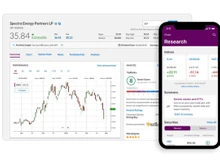
Fidelity offers vast research content by reputable third-party vendors, detailed market reports, screeners, and learning content on any level of experience. Ally Invest has research tools, as well, but it is not as deep and versatile. Fidelity suits individuals who are more reliant on data to make investment decisions.
- Robo Advisory and Automated Investing
Ally Invest provides a free computerized investment portfolio that builds and reinvests your investments according to your objectives. It is developed to appeal to low-effort investors. Fidelity also has automated investing, but with lots of more flexible returns and advice, so it is a better solution for those who are automatized but need more strategy selections.
- Mobile App and User Experience
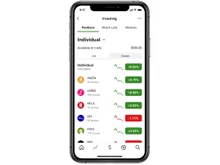
Ally Invest is a simple and convenient mobile experience that is accessible to beginners and informal users. The Fidelity app is more developed, and it has more research instruments, account analysis and trading. It may seem complicated, yet it is as good as serious investors who desire solid control via their phones.
- Suitability for Different Investor Types
Ally Invest is ideal for new investors seeking simplicity, automated selections, and a clear platform that eliminates confusion. The long-term investor, trader, or anyone seeking in-depth tools, research, and more investment products to develop a broad, flexible investment plan should choose Fidelity.
When to Choose Ally Invest vs Fidelity?
| Situation |
Choose Ally Invest |
Choose Fidelity |
| Mobile-first investing |
Smooth mobile experience for casual phone traders |
Feature-rich app ideal for detailed mobile investing |
| Banking integration needed |
Works well with Ally Bank for unified management |
Banking integration is limited compared to the Ally ecosystem |
| Cost-conscious investor |
Low trading costs are suitable for simple portfolios |
Costs vary more across products and account types |
| Learns through simple education |
Basic learning resources are easy for beginners to follow |
Deep educational library for advanced learning needs |
| Wants quick account setup |
Fast setup process with minimal complexity involved |
Longer setup due to detailed options and tools |
| Prefers straightforward portfolio views |
Simple dashboards without overwhelming data overload |
Detailed dashboards with more metrics and insights |
| Occasional investor style |
Great for infrequent trades with minimal confusion |
Best for users investing consistently and actively |
Final Verdict: Ally Invest or Fidelity?
Ally Invest would be most appropriate for those interested in a simple, easy-to-use investment experience that lacks complex tools. It is good with beginner and casual traders, and anyone who just wants a clean platform to make simple investing decisions. It is convenient when a person needs a fast set-up, minimal research, automated portfolios and a simple method to operate investments without being overwhelmed.
Fidelity is more suitable when it comes to users who like depth, flexibility, and a broad investment selection. It is beneficial to the investors who are used to powerful research, highly developed charting, and planning tools on a professional level. It is also good with long-term investors who should be provided with detailed retirement accounts, diversified portfolios, and rich educational support.
The two platforms are used in different ways of investing. Ally Invest is ideal in situations where you desire transparency, simplicity, and daily investing. Fidelity is perfect when you desire greater power, control and long-term flexibility.
To simplify it more, you can visit both, look at their tools, and choose the one that suits your investing style.
 UAE
UAE India
India


 Comparison


 12 Ratings & 12 Reviews


 Free Trial


![Ally Invest Review [Worth Avoiding?]](https://img.youtube.com/vi/OzARsGUPXEM/0.jpg)








 Get directly in your email inbox on your Whatsapp


