
What Is EV Fleet Management Software? Features, Benefits & Top Picks
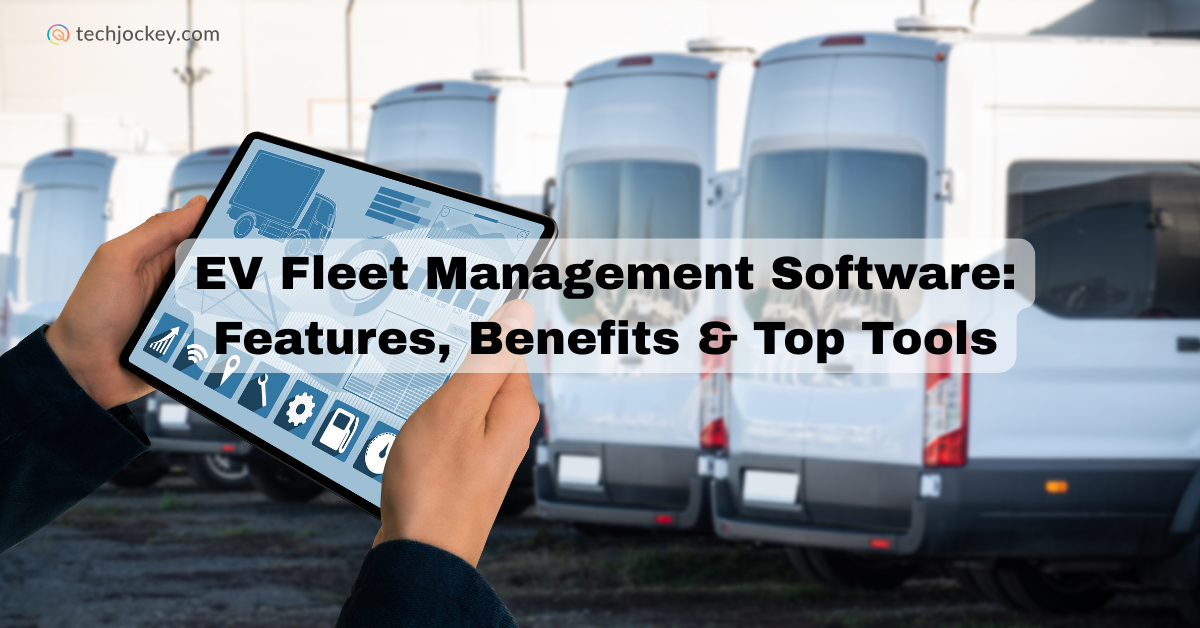


Imagine managing a fleet of electric vehicles and getting calls like ‘This vehicle is low on charge’, ‘That one needs maintenance’, all before you even get out of your bed. Sounds tiring, right? That is exactly why businesses are turning to EV fleet management software.
Though EVs are comparatively cleaner and cheaper to run, managing them is a task, a tedious one at that. From monitoring battery levels and coordinating charging to tracking vehicles in real time and keeping operational costs in check, a lot goes into running an electric feet properly. To do it all manually? That’s the stuff nightmares are made of!
Well, with a fleet management system at your service, things do not have to be that way. ‘How?’ You ask. Let’s deduce and while at it, also look at some of the leading electric fleet software solutions that can help your fleet stay one step ahead every time, all the time.
What is EV Fleet Management Software?
EV fleet management software is a software solution designed to help businesses manage their electric vehicles in an orderly and efficient manner. It acts a centralized dashboard where fleet managers can track vehicle locations, monitor battery levels, schedule charging sessions, and keep an eye on maintenance needs.
Instead of relying on manual processes, businesses get real-time data to ponder over and form smarter decisions. The software makes certain vehicles stay charged, available, and road-ready at all times while reducing downtime and operational costs.
All in all, it makes managing an electric fleet more organized and far less time-consuming.
Key Features of EV Fleet Management Software
Managing an electric fleet involves much more than knowing where your vehicles are. Here’s everything a modern EV fleet management software does to cover the rest…
- Real-Time Vehicle Tracking: Monitor the location, status, and movement of every vehicle in your fleet through GPS-based tracking. This helps improve visibility and route planning.
- Battery Health Monitoring: Keep track of battery performance, state of charge (SoC), energy consumption, and overall battery health to prevent unexpected breakdowns.
- Smart Charging Management: Schedule charging sessions, monitor charger usage, and ensure vehicles are charged when electricity rates are lowest. This helps reduce energy costs and keeps vehicles road ready.
- Route Optimization: Plan efficient routes based on vehicle range, traffic conditions, charging station availability, and delivery schedules.
- Maintenance Scheduling: Track vehicle health and receive alerts for preventive maintenance. Early detection of issues reduces downtime and helps avoid costly repairs.
- Energy Consumption Analytics: Gain insights into how much energy each vehicle consumes and identify opportunities to improve efficiency and lower operating costs.
- Driver Performance Monitoring: Analyze driving behaviors such as speeding, harsh braking, and excessive idling. Better driving habits can improve vehicle efficiency and extend battery range.
- Charging Infrastructure Management: Manage charging stations across multiple locations, monitor charger availability, and ensure optimal utilization of charging resources.
- Reporting and Analytics: Access detailed reports on fleet performance, energy usage, vehicle utilization, charging costs, and sustainability metrics to support data-driven decision-making.
- Alerts and Notifications: Receive real-time alerts for low battery levels, charging interruptions, maintenance requirements, and other critical events that require immediate attention.
Benefits of EV Fleet Management Software
As electric fleets grow, managing them efficiently becomes tough. EV fleet management software simplifies this process by bringing vehicle tracking, battery monitoring, charging management, maintenance scheduling, and performance analytics into one centralized platform. This gives fleet managers complete visibility over their operations and helps them make better decisions.
The software also reduces operational costs by optimizing charging schedules, improving vehicle utilization, and identifying issues before they become big and expensive.
With real-time insights into battery health and vehicle performance, businesses can minimize downtime through proactive maintenance and ensure their vehicles remain road ready.
Additionally, route optimization and driver performance monitoring help improve productivity while maximizing vehicle range and energy efficiency.
Beyond operational gains, EV fleet management software supports sustainability goals by helping organizations track energy consumption and get the most value from their electric vehicles. In short, it enables businesses to run more reliable and cost-effective EV fleet operations.
Challenges of EV Fleet Management Software
While EV fleet management software makes fleet operations easier, it comes with its own set of challenges. One of the biggest hurdles is integrating the software with different vehicle models, charging stations, and existing fleet management systems.
Managing charging schedules can also be difficult, especially for large fleets that share limited charging infrastructure. In addition, fleet managers must deal with concerns such as battery degradation, range limitations, and the accuracy of real-time data.
The initial cost of implementation and employee training can be another challenge for some businesses. As fleets expand, handling large volumes of data and ensuring smooth communication between vehicles, chargers, and software platforms becomes increasingly important.
However, with the right solution and proper planning, these challenges can be effectively managed, allowing businesses to get the most value from their electric fleet operations.
Compare the Best EV Fleet Management Software in 2026
We’ve compared the top EV fleet management solutions to help you evaluate their capabilities and select the best software for efficient electric fleet operations.
| Electric Fleet Software | Best For | Key Feature |
|---|---|---|
| Samsara | Large Fleets | AI-powered tracking, safety, and fleet analytics |
| Motive | Trucking & Logistics Fleets | Driver safety, compliance, and AI dashcams |
| ChargePoint | Charging Management | Smart charging and charger network management |
| LocoNav | Small to Mid-sized Businesses | GPS tracking and route optimization |
| Geotab | EV-focused & Mixed Fleets | Battery monitoring, EV analytics, and telematics |
List of 5 Best EV Fleet Management Software in 2026
Let’s take an in-depth look at the tools one by one to help you select the best one for your business in no time…
1. Samsara
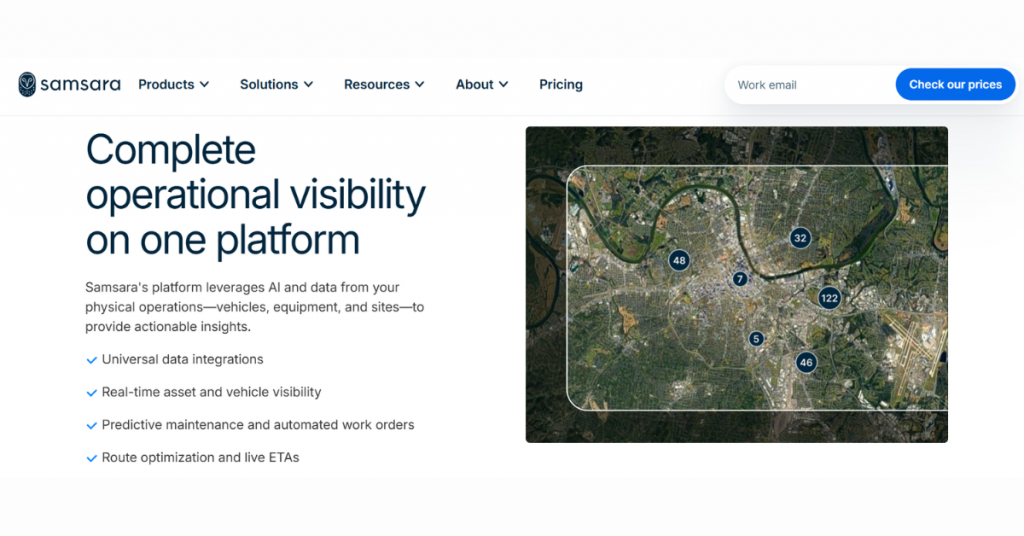
Samsara is a cloud-based EV fleet management software that helps businesses monitor vehicles, drivers, and assets in real time. It combines GPS tracking, battery and charging insights, driver safety monitoring, and fleet analytics in a single platform.
As an EV fleet management system, Samsara gives fleet managers better visibility into daily operations, helping them reduce downtime, improve vehicle utilization, and make data-driven decisions. It is especially useful for organizations managing large electric or mixed fleets.
Key Features of Samsara:
- Provides real-time tracking for EV fleets, vehicles, trailers, and mobile assets
- Offers EV-specific visibility into vehicle utilization and operations
- Supports route optimization and live ETAs to improve fleet efficiency
- Enables predictive maintenance to reduce downtime and extend vehicle life
- Provides AI-powered dash cams and safety monitoring tools
- Delivers real-time driver coaching and risk alerts
- Supports equipment and asset tracking from a single dashboard
- Offers workforce management tools for drivers and field teams
- Provides weather alerts and road risk notifications
- Includes automated maintenance workflows and work orders
- Supports ELD compliance, driver logs, and regulatory reporting
- Integrates with third-party fleet, operations, and business systems through APIs
- Provides AI-powered analytics using large-scale operational data

Samsara
Starting Price
Price on Request
Pro and cons of Samsara:
Pros
- Combines fleet, safety, asset, and workforce management in one platform
- Strong AI-driven safety capabilities
- Improves fleet visibility and operational efficiency
- Supports preventative maintenance programs
- Scales well for large commercial fleets
- Offers extensive integration options
Cons
- Many capabilities depend on Samsara hardware
- Better suited for medium and large fleets
- Initial deployment can be resource-intensive
- Full functionality may require multiple Samsara modules
Samsara Pricing & Plans: Price on request
2. Motive
Motive is an automated fleet management solution designed to improve fleet safety, compliance, and operational efficiency. It offers features such as GPS tracking, AI-powered dashcams, vehicle diagnostics, and driver behavior monitoring.
Businesses can use this fleet management software for EVs to streamline operations, monitor vehicles, and improve accountability while keeping drivers safe and productive.
Key Features of Motive:
- Provides real-time GPS tracking for EVs, vehicles, trailers, and equipment
- Offers fleet visibility through telematics and vehicle health monitoring
- Supports AI-powered dash cams with 360° visibility
- Delivers real-time safety alerts to help prevent collisions
- Provides driver coaching and safety performance insights
- Enables predictive maintenance and fleet diagnostics
- Supports equipment and asset monitoring from a unified platform
- Offers route optimization and operational automation
- Includes ELD compliance, driver logs, and regulatory reporting
- Provides fleet telematics, fuel tax reporting, and dispatch tools
- Integrates with third-party applications through APIs and the App Marketplace
- Uses AI Vision to improve safety, productivity, and fleet performance
Pro and cons of Motive:
Pros
- Combines safety, fleet, equipment, and workforce tools in one platform
- Strong AI-driven safety capabilities
- Improves fleet visibility and utilization
- Supports large and complex fleet operations
- Extensive feature set for compliance and operations
- Broad integration ecosystem
Cons
- Hardware is required for many capabilities
- Implementation may require significant setup effort
- Better suited for commercial fleets than small operators
- Full functionality may require multiple Motive products
Motive Pricing & Plans: Price on request
3. ChargePoint
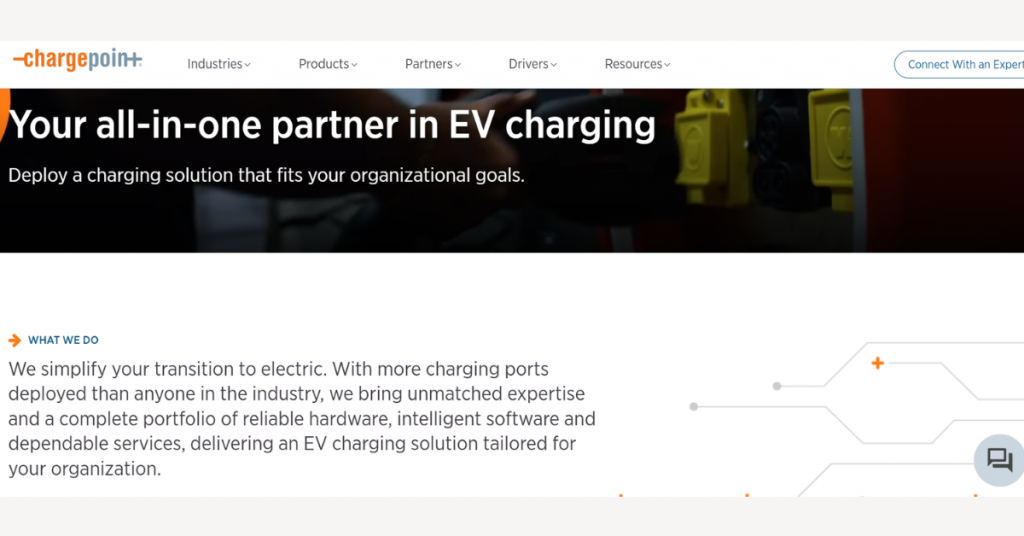
ChargePoint is an electric vehicle fleet management software platform focused on EV charging operations. It helps businesses manage charging stations, monitor charging activity, optimize energy usage, and control charging costs from a centralized dashboard.
It basically ensures vehicles are charged and ready when needed while improving charger utilization. It is particularly valuable for organizations that want greater control over their charging infrastructure and energy consumption.
Key Features of ChargePoint:
- Provides a unified platform for managing EV charging operations
- Supports fleet-wide charging management from a single dashboard
- Offers real-time visibility into vehicle charging, energy usage, and station performance
- Enables charging schedule automation and power distribution control
- Provides vehicle health monitoring and fleet readiness insights
- Supports both electric and traditional fleet fueling management from one platform
- Offers predictive analytics and operational reporting
- Integrates with over 40 third-party systems through open APIs
- Provides fleet charging infrastructure planning and deployment support
- Supports Level 2 AC and DC fast charging solutions
- Offers roaming network access to expand charging availability for drivers
- Provides charger monitoring, maintenance, and support services
Pro and cons of ChargePoint:
Pros
- Built specifically for EV fleet operations
- Strong charging infrastructure ecosystem
- Supports charging network expansion through roaming partnerships
- Extensive API and integration capabilities
- Combines software, hardware, and services in one solution
- Helps optimize charging costs and fleet utilization.
Cons
- Focused primarily on EV charging rather than broader fleet operations
- Hardware deployment adds implementation complexity
- Best value comes from using ChargePoint charging infrastructure
- Large deployments may require significant upfront investment
ChargePoint Pricing & Plans: Price on request
4. LocoNav
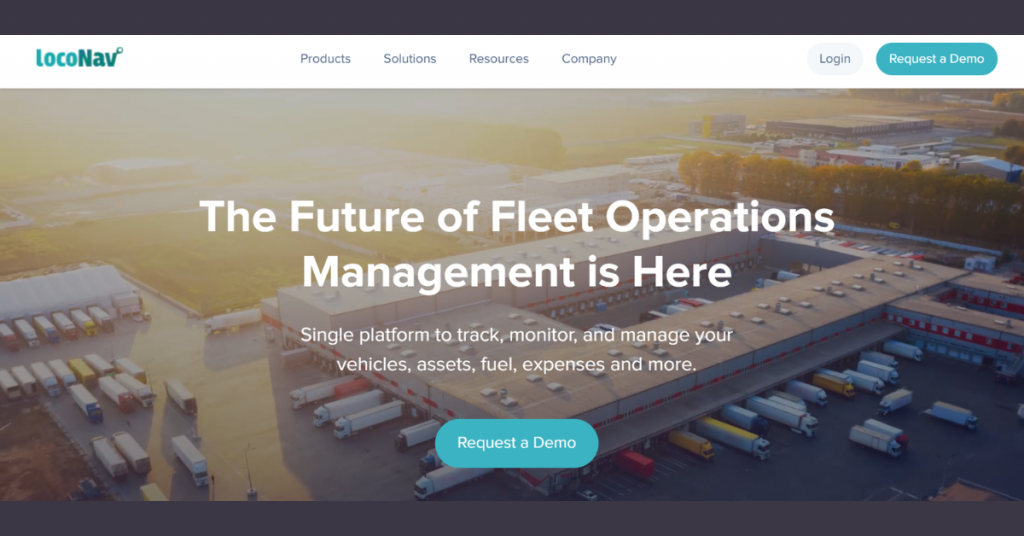
LocoNav is an electric fleet software solution that helps businesses track vehicles, optimize routes, monitor driver performance, and manage fleet operations more effectively. It provides real-time visibility into vehicle locations and performance, making day-to-day fleet management simpler and more organized.
For companies looking for an affordable fleet management software for EVs, LocoNav offers essential tools that improve operational efficiency, reduce unnecessary costs, and support better decision-making across the fleet.
Key Features of LocoNav:
- Provides real-time GPS tracking for EVs and fleet assets
- Supports state-of-charge (SoC) monitoring for electric vehicles
- Offers live battery status and charging alerts
- Provides battery health and degradation monitoring
- Tracks charging cycles, charging locations, and charging patterns
- Helps reduce charging costs through charging analytics and reports
- Supports EV range monitoring and driving range estimation
- Provides battery life prediction and battery data management
- Offers remote commands and firmware management capabilities
- Includes fault alarms and battery diagnostics
- Provides driver management, trip management, and geofencing tools
- Supports AI-powered video telematics and driver safety monitoring
- Delivers fuel, asset, expense, and fleet management from a single platform

LocoNav
Starting Price
Price on Request
Pro and cons of LocoNav:
Pros
- Built specifically for EV fleet operations
- Strong battery monitoring capabilities
- Provides detailed charging insights
- Combines EV management with fleet telematics
- Includes AI-powered safety tools
- Supports OEMs, fleet operators, and mobility providers
Cons
- Hardware installation may be required for full functionality
- Advanced features can increase deployment complexity
- Is better suited for commercial fleets than individual users
- Some capabilities depend on vehicle and battery integrations
LocoNav Pricing & Plans: Price on request
5. Geotab
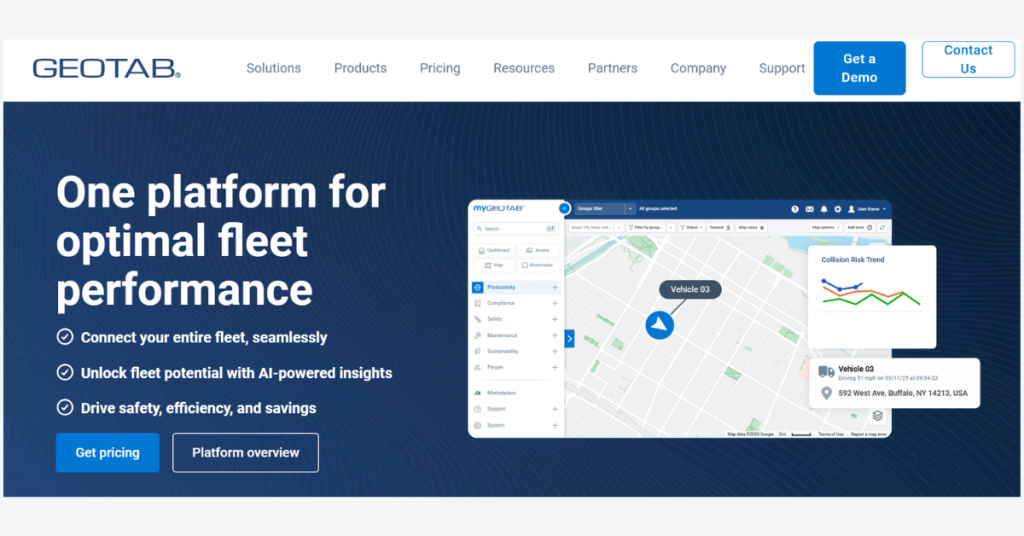
Geotab is a leading EV fleet management software platform known for its advanced telematics and EV-specific analytics. It enables businesses to track vehicle performance, monitor battery health, analyze charging data, and assess fleet electrification opportunities.
It also provides sustainability reporting and customizable dashboards, making it ideal for organizations managing large EV or mixed fleets. Its data-driven approach helps businesses optimize operations and maximize the value of their electric vehicles.
Key Features of Geotab:
- Supports 300+ EV models across various manufacturers
- Provides real-time battery state-of-charge and state-of-health monitoring
- Offers EV Suitability Assessment (EVSA) to identify vehicles ready for electrification
- Helps forecast cost savings and emissions reductions before EV adoption
- Provides EV model recommendations based on fleet requirements
- Tracks battery degradation, energy usage, and real-world driving range
- Monitors EV charging status in real time
- Sends alerts when vehicles are not charging as expected
- Provides charging history, charging logs, and energy consumption reports
- Supports charging queue management and dispatch planning
- Integrates with charging providers and fleet technology partners
- Offers real-time GPS tracking, telematics, and fleet analytics

Geotab
Starting Price
Price on Request
Pro and cons of Geotab:
Pros
- Strong EV-specific analytics and reporting
- Offers a broad EV model coverage
- Simplifies fleet electrification planning
- Excellent charging visibility and monitoring
- Supports both mixed and fully electric fleets
- Rich telematics and operational insights
Cons
- Initial setup may require telematics hardware
- Advanced functionality may depend on partner integrations
- Is better suited for commercial fleets than small operators
- EV data availability varies by vehicle manufacturer
Geotab Pricing & Plans: Price on request
How to Choose the Best EV Fleet Management Software?
Here’s everything you need to ensure to be able to pick the best electric fleet software for your business…
- Assess Your Fleet’s Needs: Start by identifying your key requirements, whether it is vehicle tracking, charging management, route optimization, battery monitoring, or maintenance scheduling.
- Look for EV-Specific Features: Choose software designed for electric fleets, with features like battery health tracking, state-of-charge monitoring, charging management, and range prediction.
- Check Integration Capabilities: Ensure the platform integrates smoothly with your EV models, charging infrastructure, telematics systems, and other business tools.
- Evaluate Real-Time Monitoring: Opt for a solution that provides real-time visibility into vehicle locations, charging status, fleet performance, and operational metrics.
- Prioritize Ease of Use: A user-friendly dashboard makes it easier for fleet managers and drivers to adopt the software and use it effectively.
- Review Reporting and Analytics: Look for robust reporting features that provide insights into energy consumption, fleet utilization, operating costs, and overall performance.
- Consider Scalability: Choose software that can grow with your fleet and support additional vehicles, charging stations, and users as your operations expand.
- Assess Customer Support and Training: Reliable customer support, onboarding assistance, and training resources can make implementation much smoother.
- Compare Pricing and ROI: Don’t just focus on upfront costs. Evaluate the long-term value, potential cost savings, and operational benefits the software can deliver.
- Read Reviews and Request a Demo: Check customer reviews, case studies, and product demos to understand how the software performs in real-world fleet operations before making a decision.
Conclusion
Running an EV fleet involves managing multiple things at once. Miss out on looking after one and the entire operation gets affected. Thankfully, electric vehicle fleet management software helps you keep everything under control.
The result? A fleet that is always ready to hit the road. Because when your vehicles run smoothly, your business does too.


Written by
Yashika Aneja

Yashika Aneja is a Senior Content Writer at Techjockey, with over 5 years of experience in content creation and management. From writing about normal everyday affairs to profound fact-based stories on wide-ranging themes, including environment, technology, education, politics, social media, travel, lifestyle so on and so forth, she... Read more
 Previous


