
7 Best Reverse Logistics Software for Returns Management
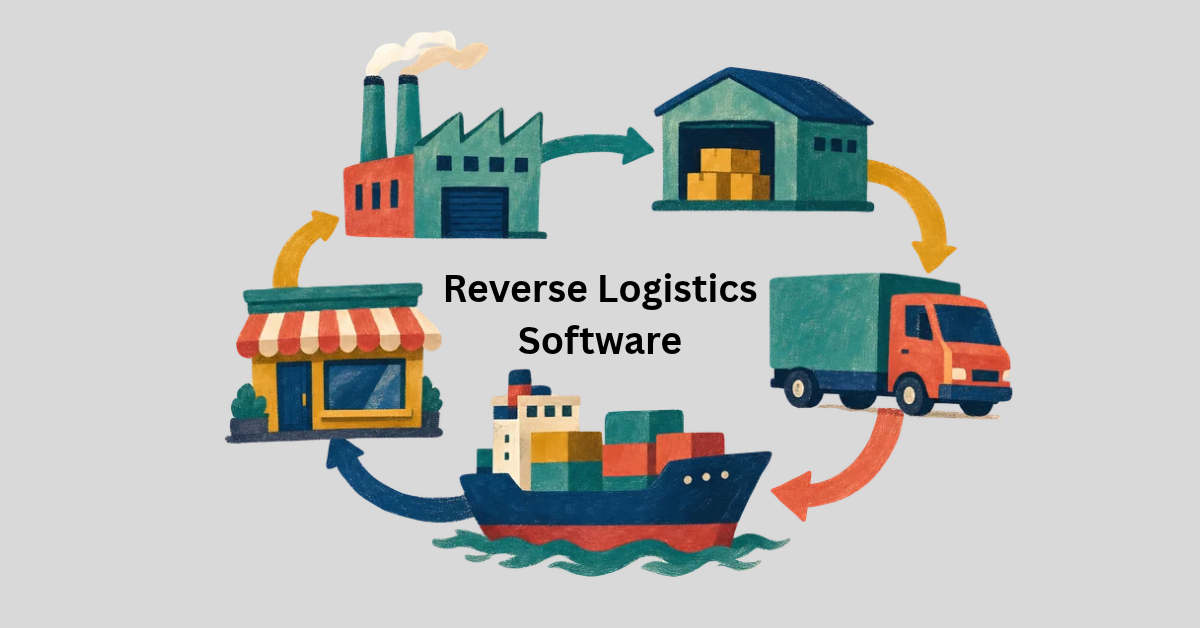


Product returns excite none. For when something your business deals in gets sent back to you, not only does it feel bad, but it also creates extra work. For every returned item has to be inspected, processed, restocked, replaced, or refunded, leading to a pile of spreadsheets and delays.
With reverse logistics software, however, things become manageable max. Automating the returns process in its entirety, the software keeps everything, from return requests and tracking to exchanges and returns, organized in one place. This not only makes the process quick, but also helps businesses lower costs and keep their customers happy alongside through and through.
Let’s thus explore some of the best reverse logistics software platforms available today and see how the right solution can simplify returns management for all.
What is Reverse Logistics Software?
Reverse logistics software is a supply chain management tool that helps businesses manage products moving backwards, i.e., from customers back to the seller or manufacturer. This includes returns, exchanges, repairs, recycling, and refunds.
Instead of manually tracking or processing returned items, businesses can use returns management software to automate and organize the entire process. This, so returns get handled and dealt with in a timely and transparent manner. The goal, all in all, is to make returns easier to handle while reducing costs and saving time.
Comparing the Leading Reverse Logistics Management Software
Take a closer look at the capabilities, benefits, and business applications of the top software solutions for managing product returns.
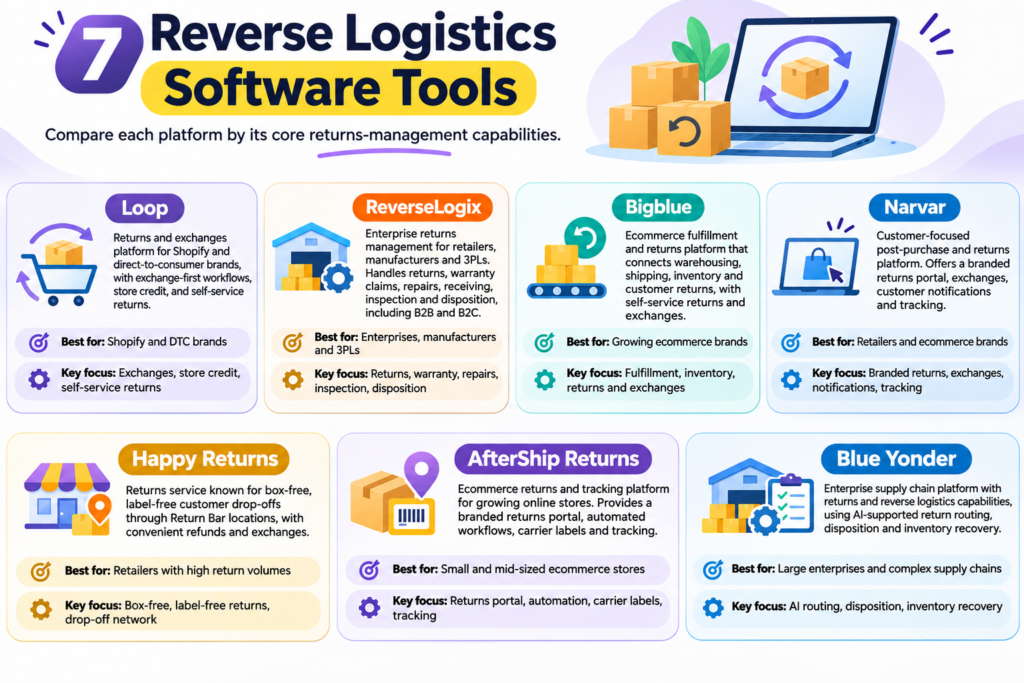
| Software | Best For | Standout Feature |
|---|---|---|
| Loop | Shopify and DTC brands | Revenue-focused exchanges that reduce refunds |
| ReverseLogix | Large enterprises and 3PLs | End-to-end returns, warranty, repair, and resale management |
| Bigblue | Growing e-commerce brands | Combines fulfillment, shipping, inventory, and returns in one platform |
| Narvar | Customer-centric retailers | Branded self-service returns and post-purchase experience |
| Happy Returns | Retailers with high return volumes | Box-free, label-free returns through a large drop-off network |
| AfterShip | Small and mid-sized e-commerce stores | Affordable returns automation with built-in tracking |
| Blue Yonder | Enterprise supply chains | AI-driven return routing and inventory recovery |
List of 7 Best Reverse Logistics Software in 2026
Some of the leading reverse logistics management software solutions are listed below for your understanding and convenience…
1. Loop
Loop is a renowned returns management software built mainly for e-commerce and direct-to-consumer brands. It helps customers start returns, request exchanges, and receive store credit through a simple self-service portal.
The software focuses on turning refunds into exchanges, helping businesses retain more revenue while making returns smooth for customers.
Key Features of Loop:
- Turns returns into exchanges to help brands keep more revenue
- Provides a self-service return and exchange portal for customers
- Offers instant exchanges before returned items are received
- Enables customers to exchange for any product in the catalogue through Shop Now
- Includes bonus credit incentives to encourage exchanges over refunds
- Automates return approvals, policies, and workflows
- Protects businesses with fraud prevention and custom return rules
- Provides order tracking and delivery updates after purchase
- Supports cross-border returns and multiple shipping destinations
- Delivers analytics and insights on customer return behavior

Loop
Starting Price
Price on Request
Pro and cons of Loop:
Pros
- Helps recover revenue that would otherwise be lost to refunds
- Makes returns easier for both customers and support teams
- Reduces manual work through automation and self-service tools
- Encourages exchanges with incentives like bonus credit and instant swaps
- Provides strong integration with
- Supports fraud prevention and return policy control
- Offers detailed visibility into return and exchange trends
Cons
- Costs more than basic returns management solutions
- Focuses heavily on Shopify-based ecommerce businesses
- Requires higher return volumes to justify premium plans
- Presents more features than smaller stores may need
- Depends on paid plans for advanced exchange and
Loop Pricing & Plans:
| Plan | Price |
|---|---|
| Checkout+ | Free |
| Essential | USD 155/month |
| Advanced | USD 340/month |
2. Reverse Logix
ReverseLogix is an extensive reverse logistics management software designed for businesses that handle large volumes of returns. It brings returns, warranties, repairs, and product recovery into a single system. The platform is best suited for enterprises that need complete visibility and control over their return operations from start to finish.
Key Features of Reverse Logix:
- Manages the entire returns lifecycle from return request to final resolution
- Supports returns, warranties, repairs, refurbishments, and resale on one platform
- Provides automated returns initiation and processing workflows
- Enables return-to-vendor and B2B bulk returns management
- Includes AI-powered fraud prevention and decision-making tools
- Offers real-time tracking and visibility across return operations
- Supports warranty management, repair workflows, and recommerce programs
- Provides analytics and reporting for return performance and recovery rates
- Integrates with ERP, WMS, CRM, ecommerce, and carrier systems
- Handles complex B2B, B2C, retail, manufacturing, and 3PL return processes
Pro and cons of Reverse Logix:
Pros
- Helps businesses manage all reverse logistics activities in one place
- Reduces manual effort through automation and workflow rules
- Supports complex return operations across multiple channels and locations
- Provides strong visibility into returns, repairs, and inventory movement
- Improves customer experience with faster and more organized returns processing
- Enables deep integrations with existing business systems
- Supports enterprise-grade reverse logistics requirements
Cons
- Requires implementation planning due to its broad functionality
- Focuses primarily on mid-size and enterprise organizations
- Presents more features than smaller businesses typically need
- Depends on custom configuration for highly specialized workflows
ReverseLogix Pricing & Plans: Price on request
3. Bigblue
Bigblue combines fulfillment and returns into a single platform, making it easier for e-commerce brands to manage operations. Customers can initiate returns on their own, choose exchanges or store credit, and track the process without contacting support.
By connecting warehousing, shipping, inventory, and returns, the software helps businesses create a smooth post-purchase experience while keeping day-to-day operations organized.
Key Features of Bigblue:
- Provides a self-service returns portal that lets customers create returns on their own
- Supports refunds, exchanges, and store credit from a single return flow
- Enables branded return experiences with customizable portal settings
- Offers prepaid, free, and customer-paid return label options
- Manages international returns with shipping labels and customs documentation
- Provides warehouse inspection and restocking workflows
- Tracks return status and collects return reasons for analysis
- Supports printerless returns, home pickups, and carrier networks in multiple countries
- Enables store credit and exchange incentives to retain revenue
- Delivers analytics on return performance, support efficiency, and retained revenue
Pro and cons of Bigblue:
Pros
- Makes returns simple through a fully self-service process
- Reduces customer support workload by automating return requests
- Helps retain revenue through exchanges and store credit options
- Supports international reverse logistics operations
- Provides flexible return label and shipping choices
- Offers actionable insights into return causes and customer behavior
- Creates a branded customer experience throughout the return journey
Cons
- Requires a separate Returns Pack subscription to access the return portal
- Limits certain return-label services to supported countries
- Focuses primarily on ecommerce and DTC brands rather than complex enterprise reverse logistics
- Depends on Bigblue’s fulfillment ecosystem for the best experience
Bigblue Pricing & Plans: Price on request
4. Narvar
Narvar is known for creating a better customer experience after a purchase. Its reverse logistics software solutions help businesses manage returns, exchanges, refunds, and customer communication from one platform. With its branded self-service return process, the software further makes returns easier for customers while helping businesses build long-term loyalty.
Key Features of Narvar:
- Provides a branded self-service returns and exchanges portal
- Converts refunds into exchanges, gift cards, and repeat purchases
- Enables retailers to create and enforce custom return policies
- Offers return fraud detection through AI-powered risk analysis
- Includes flexible drop-off, pickup, and return options for customers
- Provides return tracking and proactive status updates
- Supports shipment consolidation to reduce reverse logistics costs
- Delivers analytics and insights into return reasons and customer behavior
- Integrates with ecommerce platforms such as Shopify
- Uses AI-driven rules to personalize return and exchange experiences
Pro and cons of Narvar:
Pros
- Helps retailers retain revenue through exchanges and store credit
- Makes returns easier with a self-service customer experience
- Reduces operational costs through automation and shipment consolidation
- Protects businesses from return fraud using AI-powered screening
- Provides strong visibility into return trends and performance
- Supports personalized return journeys based on customer and product data
- Offers extensive retail-focused post-purchase capabilities
Cons
- Costs more than many SMB-focused returns solutions
- Focuses primarily on larger retail and ecommerce operations
- Presents implementation complexity for some organizations
- Depends on add-ons and integrations for certain advanced capabilities
Narvar Pricing & Plans: Price on request
5. Happy Returns
Happy Returns simplifies returns logistics by offering box-free and label-free returns. Customers can drop off items at designated locations without packaging them first. This makes the return process quick and convenient while reducing shipping costs and operational work for retailers. It is especially useful for brands with frequent customer returns.
Key Features of Happy Returns:
- Provides box-free and label-free returns through a large Return Bar drop-off network
- Offers a self-service online returns portal for customers
- Enables easy exchanges, refunds, and store credit options
- Reduces return friction by eliminating the need for packaging and printed labels
- Supports return analytics to track performance and customer behavior
- Integrates with ecommerce platforms and payment ecosystems like PayPal
- Includes email and SMS notifications throughout the returns journey
- Provides instant return processing and faster refund experiences
- Helps prevent fraud through item verification and return tracking
- Supports in-store and physical drop-off return experiences
Pro and cons of Happy Returns:
Pros
- Makes product returns simple and convenient for customers
- Reduces packaging costs through box-free and label-free returns
- Helps improve customer satisfaction with faster return experiences
- Provides access to a wide physical return drop-off network
- Supports revenue retention through exchanges and store credits
- Offers strong integration with PayPal and ecommerce ecosystems
- Reduces operational burden for ecommerce teams
Cons
- Focuses primarily on mid-market and enterprise retailers
- Relies heavily on the Return Bar network for its biggest advantage
- Requires implementation discussions before adoption
Happy Returns Pricing & Plans: Price on request
6. AfterShip
AfterShip is an easy-to-use returns management software for small and medium-sized online businesses. It automates return requests, exchange approvals, shipping labels, and refund tracking. Since it also offers shipment tracking tools, businesses can manage both deliveries and returns from a single platform, saving time and effort.
Key Features of AfterShip:
- Provides a branded self-service returns and exchanges portal
- Supports refunds, exchanges, and store credit options from one dashboard
- Automates return approvals and policy enforcement
- Enables product exchanges that help retain revenue
- Includes automatic return label generation with multiple carriers
- Provides printless and QR-code return options
- Supports advanced routing rules to direct returns to the right location
- Offers fraud prevention tools to reduce return abuse
- Integrates with ecommerce, ERP, WMS, customer support, and marketing platforms
- Delivers analytics on return reasons, exchanges, and refund trends

AfterShip
Starting Price
$ 11.00
Pro and cons of AfterShip:
Pros
- Helps recover revenue through exchanges and store credit incentives
- Reduces manual work with automated return workflows
- Makes returns easier for shoppers with self-service tools
- Supports global carrier networks and drop-off locations
- Offers strong integration capabilities for growing ecommerce brands
- Includes built-in tracking and reverse logistics tools
Cons
- Limits lower-tier plans by annual return volume allowances
- Applies overage fees when return limits are exceeded
- Requires Premium or Enterprise plans for advanced automation and fraud tools
- Focuses primarily on ecommerce merchants rather than broader reverse logistics operations
- Depends on higher plans for custom integrations and API access
AfterShip Pricing & Plans:
| Plan | Price |
|---|---|
| Essentials | Starts at USD 16/month |
| Premium | Starts at USD 99/month |
| Enterprise | Price on request |
7. Blue Yonder
Blue Yonder is an enterprise-grade reverse logistics software built for complex supply chains. It uses AI-driven decision-making to determine the best destination for returned products, be it a warehouse, store, reseller, or recycling facility.
The platform helps large businesses reduce return costs, recover inventory faster, and improve overall supply chain efficiency.
Key Features of Blue Yonder:
- Provides end-to-end returns management across the reverse supply chain
- Uses AI-powered Smart Disposition to determine the best action for every return
- Enables intelligent routing to warehouses, stores, repair centers, or resale channels
- Supports online, in-store, warehouse, and kiosk-based returns
- Provides automated policy enforcement and return eligibility controls
- Includes fraud detection to identify suspicious return activity
- Offers self-service return portals with QR codes and label generation
- Supports return-to-vendor, recommerce, refurbishment, and recycling workflows
- Provides analytics and decision intelligence for inventory recovery
- Integrates with warehouse, inventory, fulfillment, and order management systems

Blue Yonder
Starting Price
Price on Request
Pro and cons of Blue Yonder:
Pros
- Helps recover more value from returned inventory
- Reduces reverse logistics costs through smart routing and automation
- Improves inventory recovery by restocking items faster
- Supports multiple return channels from one platform
- Provides strong fraud prevention capabilities
- Offers enterprise-grade scalability for large operations
- Enables data-driven decisions instead of manual return handling
Cons
- Requires enterprise-level implementation and planning
- Focuses primarily on large retailers, manufacturers, and distributors
- Presents a broader supply chain platform than some businesses need
- Depends on custom integrations for maximum value
Blue Yonder Pricing & Plans: Price on request
Conclusion
As a businessman, returns may not be your favourite part, but they do not have to be a headache either. For, with the right reverse logistics software at your disposal, returns management becomes a cakewalk.
So, what are you waiting for? Choose one solution for your business today itself and know that Techjockey is just a call away if you need any help while at it!


Written by
Yashika Aneja

Yashika Aneja is a Senior Content Writer at Techjockey, with over 5 years of experience in content creation and management. From writing about normal everyday affairs to profound fact-based stories on wide-ranging themes, including environment, technology, education, politics, social media, travel, lifestyle so on and so forth, she... Read more
 Previous


