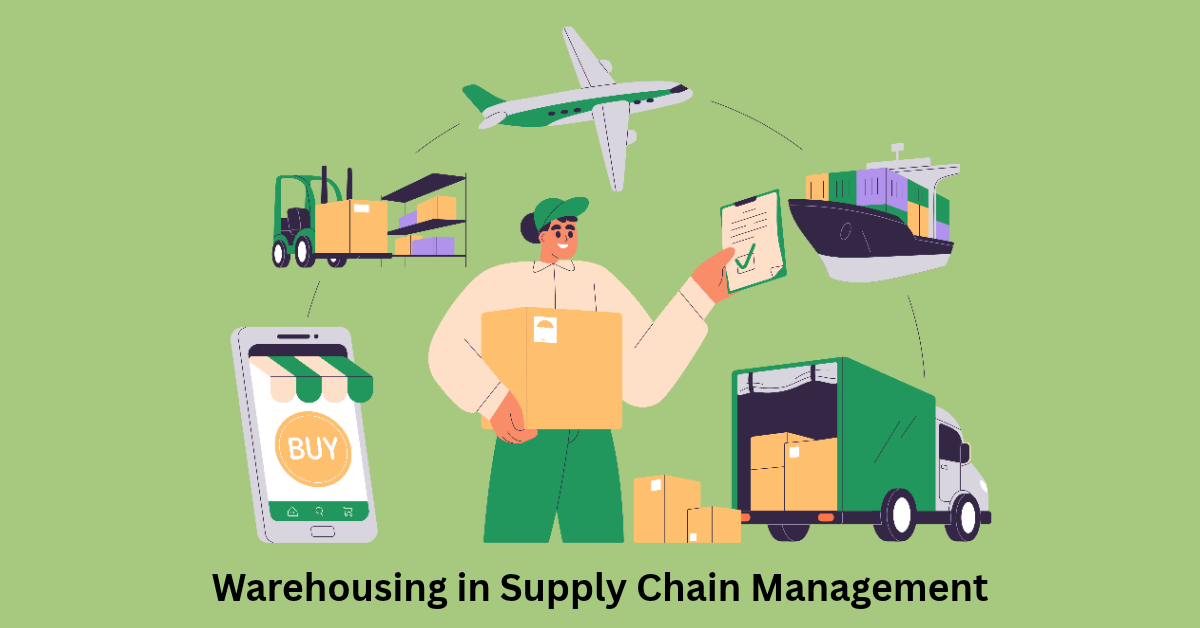
There’s no denying the fact that a supply chain can only achieve its full potential when the warehouse functions well. A business can have the greatest of products and an even greater demand for them but if its warehouse isn’t capable enough to keep up, everything can come to a standstill.
Orders can get delayed, inventory can go missing, or even worse, costs can rise higher than they should. This makes investing in WMS systems important. For the unversed, a WMS, short for warehouse management system, is a software solution that helps companies better track their inventory and storage, so orders can be completed ahead of time.
Wish to know how WMS systems are reshaping warehousing in supply chain management? Keep reading…
Warehouse Management System (WMS) is a supply chain management tool tech offering designed to help businesses control everything that takes place inside a warehouse. Right from the receipt of inventory, its storage, and lifecycle tracking to order picking, packing, and shipping, the software manages it all.
It basically gives companies a clear picture of their inventory and its location, so they can make purchases or manufacture products accordingly, avoiding shortages or overstocking. All of this and more to master warehousing in supply chain management, one order at a time.
How exactly does a WMS make warehouses smarter? You ask. Let’s deduce, as we shed light on the key ways these systems are transforming modern supply chain warehouses…
One of the biggest challenges that warehousing in supply chain management poses is the lack of transparency. Teams often find themselves struggling to track what inventory is available at a given time.
A warehouse management system fixes this by keeping track of products as they enter, get stored, or exit the warehouse. Owing to which, businesses get clarity on how much stock they have and where it is stored. It also helps them know when to restock inventory or when to hold off on new purchases to prevent unprecedented shortages and excesses.
Not everything a business sells finds a buyer every day. Some leave the warehouse every day, while others are forced to stay inside for weeks, piling dust. With a WMS in place, businesses can study these patterns and store products accordingly.
Fast-moving items are kept in easily accessible locations, while slower-moving inventory is placed further away. This reduces unnecessary movement inside the warehouse and helps businesses utilize every inch of available storage space more efficiently.
The result is a cleaner, better-organized warehouse that can accommodate more inventory without requiring additional space.
Customers expect orders to arrive quickly. A slow warehouse can delay the entire supply chain.
A WMS helps workers locate products quickly, so they don’t waste time wandering through aisles looking for inventory. They instead know exactly where to go and what to pick.
This speeds up picking, packing, and shipping operations while reducing mistakes. Orders go out faster, delivery timelines improve, and customers receive the right products more conveniently.
Suggested Read: Types of WMS Systems: Features, Benefits & Uses
Warehouse employees spend a significant portion of their time moving inventory, processing orders, and handling stock-related tasks. Without proper guidance, time can easily be wasted on unnecessary manual coordination.
A WMS assigns tasks properly and tells workers exactly what needs to be done. It helps managers distribute workloads and ensures that resources are being used where they are needed most.
As a result, teams can handle more work in less time without increasing headcount or putting unnecessary pressure on employees.
A warehouse does not operate on its own. It is connected to purchasing, transportation, accounting, sales, and customer service functions.
A WMS helps bring all these moving parts together by integrating with business systems such as ERP and transportation management platforms. So, when inventory levels change, orders are shipped, or stock is replenished, the information is automatically updated across connected systems.
This improves communication and helps create a better relationship between the warehouse and the rest of the business.
Modern WMS platforms do much more than track inventory. Many use AI, automation, and advanced analytics to improve warehouse performance.
For example, they can predict future demand, recommend optimal stock levels, identify slow-moving inventory, and highlight possible problems before they become serious issues. Some systems can even support highly automated warehouses with minimal human intervention.
This allows businesses to make better decisions, respond faster to changing demand, and build more efficient supply chain warehouses that are future ready.
Conclusion
A warehouse isn’t just a place where businesses store their yields, it’s a place where the fate of a supply chain performance quite honestly gets decided. A good and reliable WMS system can change it for better.
Besides, in a world where customers expect everything yesterday, isn’t that an advantage worth having? Well, through and through. So, if you wish to have a supply chain and warehouse management tool at your disposal, give the Techjockey team a call today itself.
The primary focus of any hospital is, of course, the care and treatment of its… Read More
If you think doctors and nursing staffers are enough to run hospital, you, my… Read More
Every day, millions of products are stored, packed, and shipped from warehouses across the globe.… Read More
Massive hiring campaigns bring constant operational difficulties for recruiters handling heavy candidate volumes. Sorting through… Read More
Nobody visits hospital to stand in queues or worse, fill out forms with the… Read More
Berry FMS, short for Berry Facility Management Services Pvt. Ltd., is renowned facility management… Read More

