
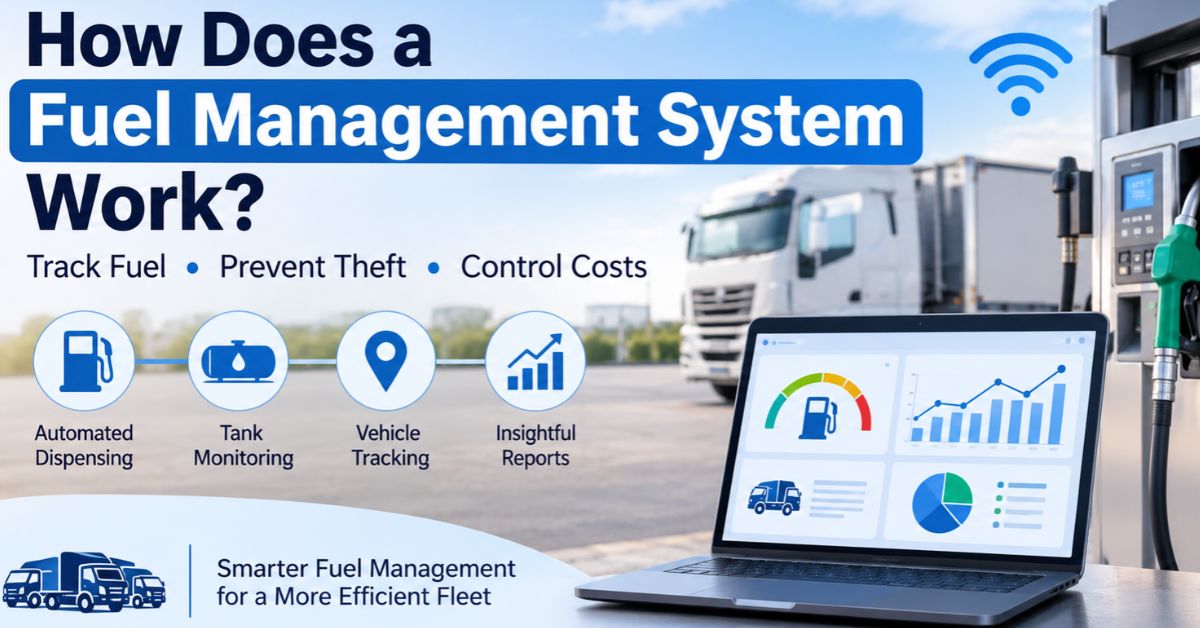


Organizations that operate through fleets or large machinery typically spend a lot of money on fuel each month. It is often hard to determine how the fuel bought by the company is being used after the purchase. To keep track of purchase orders manually is just not enough in this day and age. In other words, any business that relies on manual records pushes itself into the zone of vulnerability.
Unreported supply shortages are a common occurrence for most businesses. Illegal withdrawals and unusual spikes in consumption are also not thin on the ground! A fuel management system (FMS) takes care of all of these issues. The setup takes advantage of automatic tracking and centralized logging. Furthermore, it’s not as complicated as most people believe.
This exhaustive blog post examines the practical operation of an FMS. Readers will learn how the technology functions. The write-up also explains how fuel is moved from the storage tank to the pump and how businesses may efficiently manage their fuel expenses.
What Is a Fuel Management System (FMS)?
The best way to define an FMS is as a set of certain specialized hardware and software. As the name implies, it keeps track of, regulates, and documents fuel-related activities. It is commonly utilized by many companies to control fuel storage, dispensing, and consumption across fleets of vehicles and privately run gas stations.
Hardware includes equipment like fuel dispensers, flow meters, tank-level sensors, electronic identity readers, and automobile telematics systems. The software tool, on the other hand, gathers data from several sources and displays it via a single centralized interface.
This system as a whole provides managers with convenient access to fuel stocks, usage trends, and transaction history. It simply means that they don’t need to rely entirely on fallible human entry for any scrutiny.
Let’s assume a transport company uses its own fuel storage for running fifty trucks. Multiple drivers may use the same fuel dispensing facility, and each car needs fuel at different periods. There is a lot of room for error when every transaction is entered into a register. An employee may register a fill-up against the wrong car, input the wrong quantity, or fail to notice a certain transaction.
An FMS automates most of this whole complicated process. The advanced system identifies the authorized driver and vehicle prior to dispensing begins. It then records the quantity issued and associates the identified entry with the relevant transaction.
As a result, it becomes nearly impossible for unauthorized individuals to gain access to company fuel. Companies making use of FMS are better equipped to identify any theft or unlawful use and have more control over their inventory.
How Does an FMS Work?
How a fuel management system operates is mostly determined by the equipment that is installed at a facility. A basic system can include an identification reader and an electronic pump controller. A larger system may include cloud-based software, fuel-level monitoring devices, GPS units, and tank sensors.
Suppose a driver goes to a private gas station owned by the firm. The system then operates in the following ways:
FMS First Establishes Who Can Access the Fuel
A driver cannot simply approach the dispensing unit and start filling a vehicle. The system first needs to verify the user’s identity and the vehicle’s registration within its records. This usually involves an identification device.
Radio frequency identification (RFID) tags, PIN codes, magnetic cards, key fobs, and iButtons are among the available options. Some installations also support QR-based identification through mobile applications.
Once the driver presents the required credentials, the system checks whether the request is authorized. An unregistered user or vehicle can be denied access.
The RFID method is quite common across fuel dispensing stations. Without having drivers to provide a lot of messy information at the pump, the tag simply offers a trustworthy identification technique. This also means any amount of fuel is no longer given out simply at someone’s request. An authorization process has to be completed before any transaction can begin.
Suggested Read: 10 Best GPS Vehicle Tracking Software & Solutions for 2026
Every Dispensing Transaction Leaves a Record
After authorization, the pump starts to deliver petrol. A linked meter measures the amount delivered and records the transaction. The system is capable of recording the date, time, operator identification, vehicle miles, and engine hours. These details certainly help determine the precise timing of the transaction and the quantity of fuel received by a particular vehicle.
Let us assume a vehicle receives 50 liters on Monday and an additional 35 liters three days later. Both of these transactions are recorded independently by the system. A manager can readily evaluate these entries at any time, together with the vehicle’s mileage and historical consumption data.
It is needless to say that the system takes away much of the need for paperwork associated with manual fuel registers. It also reduces the possibility of employees entering incorrect
quantities or assigning transactions to the wrong vehicles.
Storage Tanks Are Monitored Alongside Fuel Consumption
A business managing its own fuel depot has another responsibility: keeping track of the stock inside its tanks.
Automated Tank Gauging (ATG) systems use liquid-level sensors to monitor fuel in underground or above-ground tanks. These sensors can be wired or wireless, depending on the installation.
The readings help establish how much fuel is available at any given time. When a delivery arrives, stock levels should increase. Dispensing transactions should produce corresponding reductions.
An unexpected difference deserves attention. A sudden drop in tank levels, for example, could indicate leakage or an unauthorized withdrawal.
Some systems also monitor water contamination and provide alerts when fuel stocks run low. Notifications about incoming deliveries can help managers plan replenishment before supplies
become insufficient.
For businesses handling large quantities of diesel, knowing the actual stock position is just as important as recording purchases.
Vehicle Tracking Helps Explain Fuel Consumption
Fuel dispensing records tell only part of the story. They show how much fuel a vehicle receives, but not necessarily why its consumption is high.
Telematics adds another layer of information. GPS trackers and fuel-level sensors integrated with Fleet Management Software can monitor vehicle location and fuel usage during operations. Depending on the equipment, the system may also record idling time, harsh braking, speeding, and fuel burn rates.
Let’s say two trucks are travelling comparable distances; one consistently consumes more fuel than the other. Their tracking records might reveal differences in idling or driving behavior that warrant further investigation.
Telematics can also help identify suspicious transactions. Suppose a driver uses a company fuel card at a station, but the vehicle’s GPS location shows that it is somewhere else. The mismatch can trigger an alert. An unexpected drop in fuel level while a vehicle is parked may also require investigation.
Checks like these help businesses identify possible misuse without depending solely on fuel purchase records.
Suggested Read: What is GPS – Benefits, Features and How it Works?
Managers Get All Information Via One Central Dashboard
The information collected from pumps, storage tanks, and vehicles eventually reaches the central software platform. Managers can examine individual transactions, check stock levels, and review consumption across their fleets. Platforms such as Banlaw, Hectronic, and MICHELIN Connected Fleet offer fuel management solutions.
Reporting is another important part of the software. Depending on the system’s capabilities, businesses can generate reports covering the following:
- Fuel economy: Consumption trends across vehicles and operating periods.
- Carbon emissions: CO₂ data for environmental reporting and audits.
- Fuel discrepancies: Unusual transactions, possible theft, and unexplained stock losses.
- Tax records: Documentation for fuel-related tax compliance.
- Fuel tax credits: Records supporting applicable tax credit or rebate claims.
Having these records together certainly makes it easier to investigate problems. Managers can effortlessly identify vehicles with unusual consumption or check whether recorded fuel deliveries match actual inventory changes.
Why Does Fuel Management Matter?
Fuel expenses are not limited to purchases from suppliers. Businesses must account for everything that happens between delivery and consumption. A missing transaction, an unexplained stock reduction, or an unauthorized fuel withdrawal can affect operating costs. Without reliable records, finding the cause may involve checking registers, questioning employees, and comparing separate spreadsheets.
An effective FMS provides a common record of these activities. Managers can easily trace fuel issued to particular vehicles, examine storage movements, and investigate discrepancies using supporting information.
It also helps identify inefficient vehicle usage. If a truck consumes more fuel than expected, its telematics records may offer clues about the cause. The system cannot eliminate every instance of theft or prevent all fuel wastage. However, it gives businesses a much clearer account of their fuel operations.
Conclusion
Monitoring a company’s fuel purchases is not the only aspect of fuel management. In fact, a business needs to understand how important it is to pay attention to vehicle use, storage, dispensing, and unlawful use.
An effective fuel management system brings each of these significant aspects into view. It displays the amount of fuel that is available, where it is used, and how each vehicle uses it. Instead of relying solely on conjecture when things go awry, managers have accurate records to look into. That’s simply what makes an FMS an irreplaceable tool for managing fuel-dependent operations.
FAQ’s
What is Automated Tank Gauging (ATG) in fuel management?
Automated Tank Gauging (ATG) is a technology that uses sensors to continuously monitor fuel levels inside storage tanks. It helps detect fuel shortages, leakages, unauthorized withdrawals, and replenishment needs.
What are the key features to look for in a fuel management system?
Important features include real-time monitoring, automated fuel dispensing control, tank inventory tracking, RFID authentication, GPS integration, telematics support, custom reporting, mobile access, and alert notifications.
What are the signs that a business needs a fuel management system?
Frequent fuel shortages, unexplained fuel losses, rising fuel expenses, inaccurate manual records, lack of inventory visibility, and difficulty monitoring fleet consumption are common indicators.
What is RFID in fuel management?
RFID (Radio Frequency Identification) uses electronic tags to identify drivers or vehicles. It allows authorized users to access fuel while ensuring every transaction is accurately tracked.


Written by
Rohit Prajapati

Rohit Prajapati is a supply chain and logistics professional with over six years of experience across the telecom and IT sectors. He currently works as a Senior Executive – Logistics (SCM-B2B) at SISL Infotech Pvt. Ltd., where his professional expertise includes procurement, vendor coordination, inventory management, logistics execution,... Read more
 Previous


