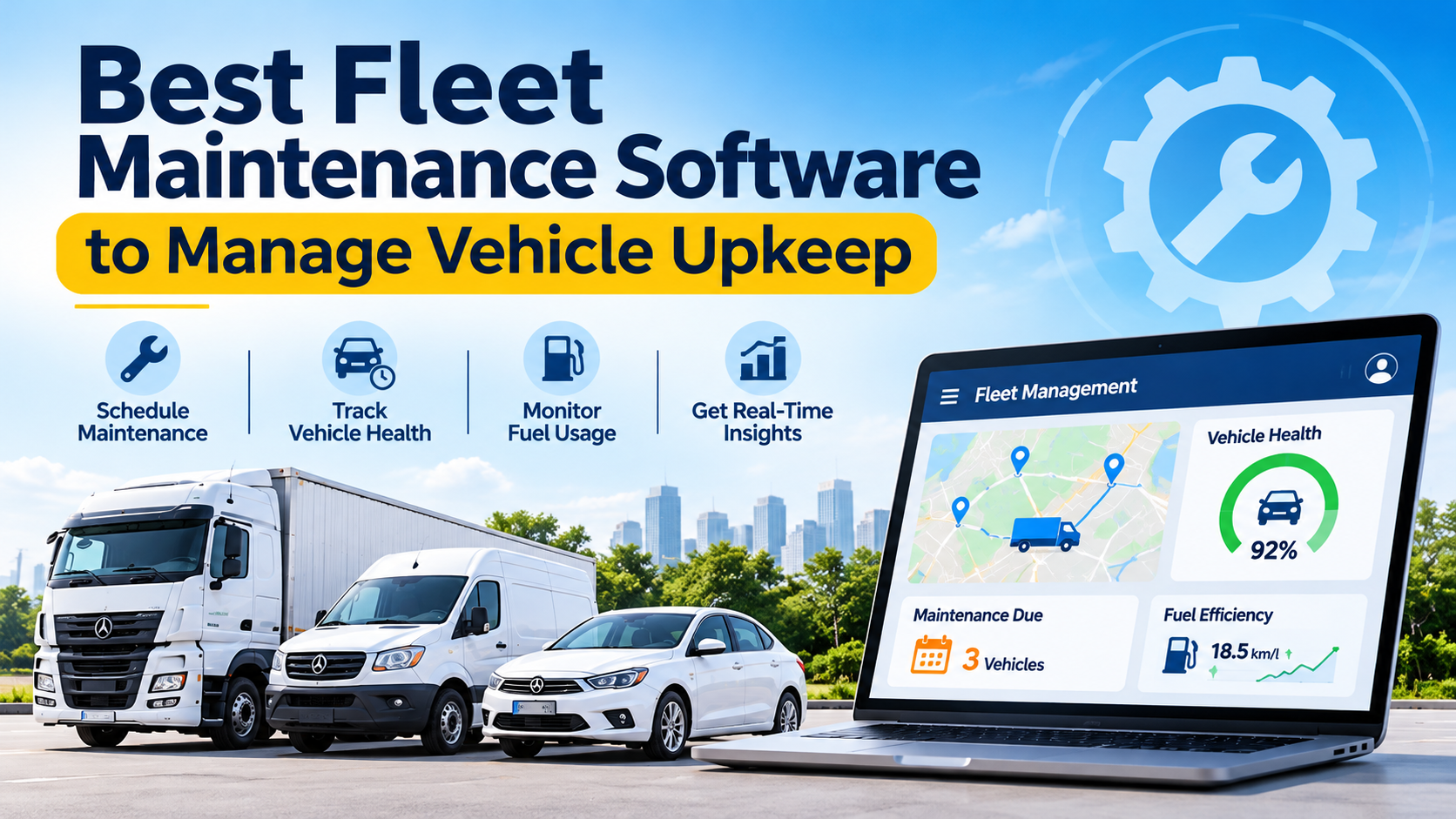
8 Best Fleet Maintenance Software to Manage Vehicle Upkeep
8 Best Fleet Maintenance Software to Manage Vehicle Upkeep
Last Updated: November 24, 2026
No, your vehicles or heavy equipment won’t issue warnings before breaking down. They will simply stop working one day if routine servicing is missed, inspections are delayed, repair requests are ignored, and maintenance schedules are taken for granted.
With a fleet maintenance software solution at your disposal, however, you can get it all done timely, and how! The software tracks every service, inspection, and repair, keeping them right on schedule, come what may. The result? Better vehicle readiness, fewer delays, and lower maintenance costs.
Let’s thus explore some of the industry-leading fleet maintenance software platforms available today and see which one would serve your business in the best way possible…
What is Fleet Maintenance Software?
Fleet maintenance software is a supply chain management tool that helps businesses keep their vehicles in good working condition. In order to attain the same, it lets fleet managers book servicing, keep track of repairs, and maintain complete maintenance records from a single platform.
Using it, businesses can prevent unprecedented breakdowns from taking place and at the same time, avoid the hefty repair bills that usually follow. Many modern fleet maintenance management software platforms also track vehicle health, parts inventory, fuel usage, and service costs. All of this and more to give businesses better control over their fleets.
List of 8 Best Fleet Maintenance Software in 2026
Some of the leading fleet management programs are listed below for your understanding. Choose one for the best possible upkeep of your vehicles and equipment…
Software
Best For
Strongest Capability
Fleetio
Businesses prioritizing preventive maintenance
Maintenance scheduling, work orders, inspections, and repair tracking
Coast
Small and mid-sized fleets
Maintenance management combined with fuel and expense tracking
AUTOsist
Small businesses and growing fleets
Vehicle maintenance reminders and digital recordkeeping
Whip Around
Fleets focused on inspections and compliance
DVIR, inspections, defect reporting, and maintenance workflows
Limble
Organizations managing fleet and equipment maintenance
Preventive maintenance and asset management
MaintainX
Businesses needing maintenance and operations management
Work orders, preventive maintenance, and team communication
Samsara
Large fleets requiring visibility and telematics
Vehicle diagnostics, maintenance monitoring, and fleet tracking
Geotab
Data-driven fleet operations
Telematics, vehicle health monitoring, and maintenance analytics
Let’s take an in-depth look at each and every fleet manager listed above to help make your choice less confusing…
1. Fleetio
Fleetio is a fleet maintenance software platform designed to help businesses keep vehicles in good working condition through timely repairs and maintenance. It allows users to schedule servicing, track repairs, manage work orders, monitor inspections, and maintain detailed vehicle records from a single dashboard.
Unlike many fleet management tools that focus primarily on tracking, Fleetio puts maintenance at the centre, making it a popular choice for businesses looking to extend vehicle lifespan.
Key Features of Fleetio:
Stores vehicle records, service history, inspections, and maintenance data in one place
Sends service reminders so maintenance doesn’t get missed
Tracks repairs, faults, recalls, and work orders
Manages parts inventory, vendors, and purchase orders
Stores inspection forms and vehicle documents digitally
Measures fuel usage and operating costs
Connects with telematics systems, fuel cards, and business software
Supports mobile access for drivers, technicians, and managers
Fleetio
Pros and Cons of Fleetio:
Pros
Prevents scheduled services from being forgotten
Makes vehicle repair records easy to find
Keeps parts inventory organized and easier to manage
Shows how much each vehicle is costing the business
Works well for fleets replacing spreadsheets and paper logs.
Brings maintenance, inspections, and repairs into one system
Helps teams stay on top of recurring maintenance tasks
Cons
Places some advanced features in higher-priced plans
Needs integrations for deeper GPS and telematics capabilities
Feels less specialized for construction equipment than some heavy-equipment platforms
Adds extra costs when telematics hardware is introduced
Fleetio Pricing & Plans: Fleetio’s Essential plan costs USD 5/vehicle/month when billed monthly. Businesses needing more advanced maintenance can choose the Professional and Premium plans, starting at USD 7 and USD 10 per vehicle per month, respectively.
Fleetio
2. Coast
Coast is a fleet maintenance management software solution that combines vehicle maintenance with fuel and expense management. Businesses can use it to schedule servicing, track repairs, monitor fuel purchases, and manage fleet-related spending, all from one platform.
This broader approach makes Coast particularly useful for companies that want to manage both vehicle health and operating costs without switching between multiple systems.
Key Features of Coast:
Turns driver inspections into work orders automatically
Stores vehicles, trailers, and equipment in one system
Schedules preventive maintenance using mileage, engine hours, or time intervals
Photos and notes can be attached directly to repair requests
Connects with telematics, sensors, and fleet hardware through integrations
Triggers work orders automatically when readings cross set limits
QR codes provide instant access to service history and open issues
Calculates maintenance spending and total ownership costs for each vehicle
Pros and Cons of Coast:
Pros
Closes the gap between inspections and repairs
Reduces the chances of preventable breakdowns through usage-based maintenance
Drivers and mechanics can work from the same information
Simplifies record keeping across multiple depots and locations
Vehicle costs become easier to understand and track
Uses real equipment data instead of relying only on calendar schedules
Cons
Centers heavily on maintenance workflows rather than fleet tracking.
Requires connected data sources to unlock predictive maintenance features
Smaller fleets may not use all automation capabilities
Depends on teams consistently completing inspections and work orders
Coast Pricing & Plans: Price on request
3. AUTOsist
AUTOsist is a vehicle maintenance software platform built for businesses that need a simple way to manage fleet maintenance. It helps users track service schedules, inspection records, repair history, registrations, and vehicle-related documents through a mobile-friendly interface.
The software is easy to use, which makes it especially popular among small businesses and growing fleets.
Key Features of AUTOsist:
Keeps maintenance records, inspections, and vehicle documents in one place
Sends reminders for upcoming services and inspections
Includes preventive maintenance scheduling and work order management
Custom DVIR forms can be completed digitally
Tracks parts inventory and maintenance history
Real-time odometer updates help automate maintenance schedules
Integrates with fuel cards to monitor fuel-related expenses
GPS tracking, telematics, engine code alerts, and driver scorecards are available in higher plans
AUTOsist
Pros and Cons of AUTOsist:
Pros
Prevents maintenance tasks from being forgotten
Makes service records easier to organize and retrieve
Mobile access works well for technicians in the field
Offers useful maintenance tools without feeling overly complex
Smaller fleets can get started without a huge investment
Adds GPS tracking and safety features as fleet needs grow
Cons
Relies on higher plans for advanced tracking and telematics
Needs accurate mileage and maintenance data for the best results
Feels more maintenance-focused than operations-focused
Large enterprises may require deeper integrations and analytics
Safety cameras are only available in premium packages
AUTOsist Pricing & Plans: AUTOsist’s maintenance package starts at $3-$6 per vehicle per month when billed annually.
4. Whip Around
Whip Around is a fleet maintenance software platform best known for its digital vehicle inspection capabilities. Drivers can complete inspections from their phones, report defects instantly, and trigger maintenance requests before problems become serious.
By bringing inspections and maintenance together, the platform helps businesses improve vehicle safety and reduce the risk of unexpected breakdowns.
Key Features of Whip Around:
Replaces paper inspections with digital checklists and workflows
Turns inspection defects into work orders automatically
Schedules preventive maintenance based on mileage, engine hours, or service intervals
Fuel usage and operating costs can be tracked from the same platform
Stores licenses, permits, insurance records, and other fleet documents
AI can review inspection photos and identify possible damage
Tracks work orders, repairs, parts, and maintenance history
Compliance workflows help fleets stay aligned with DOT and FMCSA requirements
Whip Around
Pros and Cons of Whip Around:
Pros
Catches vehicle issues before they become serious breakdowns
Speeds up the jump from inspection to repair
Keeps compliance records organized and easy to access
Fleet managers can see maintenance activity without chasing paperwork
Highlights fuel waste and unusual spending patterns
AI tools reduce some of the manual review work
Cons
Focuses heavily on inspections and compliance workflows
Requires teams to consistently complete digital inspections
Some AI and advanced maintenance capabilities may take time to configure
Offers fewer fleet analytics features than some telematics-first platforms
Whip Around Pricing & Plans: Price on request
5. Limble
Limble is a maintenance management platform that helps organizations schedule, track, and manage maintenance activities for vehicles and other business assets. Its focus on maintenance, work order management, and asset tracking makes it a practical choice for businesses that operate both fleets and equipment.
Key Features of Limble:
Automates preventive maintenance based on time, usage, or asset condition
Stores vehicle history, maintenance records, and repair costs in one system
Creates work orders and maintenance requests digitally
Detailed dashboards show downtime, labour costs, and asset performance
Tracks parts inventory and maintenance-related spending
Telematics, ERP systems, and fuel management tools can be connected through integrations
Supports multi-location fleet operations from a single platform
Custom reports help teams monitor fleet health and maintenance efficiency
Limble CMMS
Pro and cons of Limble:
Pros
Reduces surprise breakdowns through proactive maintenance scheduling
Shows the complete maintenance history of every vehicle
Keeps technicians organized with digital work orders and checklists
Maintenance data stays easy to access, even across multiple locations
Highlights maintenance costs, downtime trends, and asset performance
Fleet managers get useful reports without building complex spreadsheets
Adapts well as fleets grow in size
Cons
Focuses more on maintenance management than fleet tracking
Requires proper setup to get the most value from automations and reporting
Some teams may find the feature set broader than their needs
Depends on integrations for telematics and vehicle tracking data
Limble Pricing & Plans: Price on request
6. MaintainX
MaintainX is a fleet manager software solution that combines maintenance management with team collaboration tools. It allows businesses to create work orders, schedule maintenance, complete inspections, and communicate through a shared platform.
Since everything is updated in real time, maintenance teams can stay organized and resolve issues faster, making it particularly useful for fast-moving fleet operations.
Key Features of MaintainX:
Manages work orders from creation to completion in one place
Schedules maintenance based on mileage, usage, PSI, and other asset readings
Tracks asset health, repair history, and maintenance records
Digital inspections replace paper checklists and spreadsheets
Stores parts inventory and alerts teams when stock runs low
QR codes and barcodes provide quick access to vehicle information
Shows maintenance performance through reports and dashboards
Mobile and desktop apps keep technicians connected from anywhere
MaintainX
Pros and Cons of MaintainX:
Pros
Prevents small problems from turning into expensive repairs
Makes work orders easier to assign, track, and complete
Keeps safety inspections organized and audit-ready
Parts inventory becomes easier to control across maintenance teams
Gives managers a clear view of fleet performance and maintenance costs
Teams can update tasks directly from the shop floor or jobsite
Improves visibility into vehicle history and recurring issues
Cons
Centers more on maintenance management than GPS fleet tracking
Requires consistent data entry to keep reports accurate
Some advanced workflows may need setup time before delivering full value
Feels broader than necessary for very small fleets
7. Samsara
Samsara is cloud-based fleet management platform that combines vehicle maintenance with GPS tracking, telematics, and fleet monitoring. Along with helping businesses stay on top of maintenance schedules, it provides real-time insights into vehicle performance, fuel usage, diagnostics, and driver activity.
This makes Samsara a strong choice for organizations looking for both fleet maintenance software and operational visibility in a single solution.
Key Features of Samsara:
Brings vehicles, heavy equipment, and other assets into one dashboard
Real-time GPS tracking shows where equipment is and how it’s being used
Schedules preventive maintenance before problems become breakdowns
Engine fault alerts help teams act quickly when issues appear
Flags excessive idling and other fuel-wasting habits
AI-powered cameras help improve driver and operator safety
Tracks asset utilization to identify underused equipment
OEM integrations pull data from manufacturers like CAT, John Deere, Komatsu, Ford, and Volvo
Samsara
Pros and Cons of Samsara:
Pros
Keeps maintenance, tracking, and safety data together
Small issues can be addressed before they become costly repairs
Reveals which assets are working hard and which are sitting idle
Fuel-saving opportunities are easier to spot
Improves visibility across vehicles, equipment, and jobsites
Safety teams gain extra support through AI cameras and coaching tools
Supports mixed fleets without requiring multiple systems
Cons
Depends on hardware and connected devices for many features
Smaller fleets may find the platform more than they need
Requires clean data to get meaningful reports and alerts
Some advanced tools may take time to learn
Samsara Pricing & Plans: Price on request
8. Geotab
Geotab is a fleet maintenance software and telematics platform that helps businesses monitor vehicle health through real-time data. It tracks engine performance, fuel consumption, mileage, diagnostics, and maintenance needs, helping fleet managers identify problems before they lead to expensive repairs.
Key Features of Geotab:
Monitors vehicle health through fault diagnostics and predictive maintenance tools
Schedules maintenance using odometer readings and engine hours
Tracks maintenance activities from a single dashboard
Real-time GPS and asset visibility help connect maintenance with daily operations
Measures fuel consumption, idling, and vehicle usage
Driver safety, coaching, and compliance tools are included in advanced plans
Connects with hundreds of business systems through integrations and APIs
Sustainability reports help fleets monitor fuel use and emissions
Geotab
Pros and Cons of Geotab:
Pros
Spots maintenance issues before they lead to expensive breakdowns
Gives managers a complete picture of vehicle condition and performance
Fuel waste becomes easier to identify and fix
Helps fleets reduce downtime through predictive maintenance alerts
Maintenance scheduling requires less manual tracking
Supports both on-road vehicles and off-road equipment
Long-term fleet decisions can be backed by detailed operational data
Cons
Feels more data-heavy than traditional maintenance software
Requires telematics hardware for full functionality
Smaller fleets may not use every advanced capability available
Needs setup and configuration to maximize reporting value
Geotab Pricing & Plans: Price on request
Conclusion
Every fleet requires routine maintenance. Some are just fortunate enough to have a fleet management program in place to ensure it takes place in a timely and efficient manner. If you too wish to be one of those businesses, choose a fleet maintenance software platform from those listed above and give the Techjockey team a call right away to take care of the rest.
Your one call can take the stress out of servicing, so why wait?
Published On: November 24, 2026
Rohit Prajapati
Rohit Prajapati is a supply chain and logistics professional with over six years of experience across the telecom and IT sectors. He currently works as a Senior Executive – Logistics (SCM-B2B) at SISL Infotech Pvt. Ltd., where his professional expertise includes procurement, vendor coordination, inventory management, logistics execution, Microsoft Dynamics NAV ERP, MIS reporting, and process optimization.
As a guest author, Rohit brings a practical supply chain perspective to understanding inventory management, logistics coordination, ERP systems, and operational efficiency. His insights help businesses understand how demand planning software can support inventory visibility, improve resource allocation, and facilitate data-driven supply chain decisions.