

A clinical trial creates a huge amount of data. There are patient visits, lab results, forms, queries and reports. Managing all this on paper or in spreadsheets is slow. It can also lead to errors.
This is where clinical data management software helps. It collects trial data in one place and keeps it clean. It also helps teams meet strict rules.
But not every tool fits every study. Some are made for small academic projects. Others are built for large global trials with many sites. A poor fit can slow your study and add cost. The right software depends on your study size, budget and team. It should also be easy for sites to use every day.
What is Clinical Data Management Software (CDMS)?
Clinical data management software is a tool that helps teams collect, check and store data from clinical trials. Most tools include electronic data capture (EDC). This lets sites enter patient data into electronic case report forms (eCRFs).
A good tool also does more than data entry. It checks data as it is entered. It tracks queries between sites and data managers. It keeps an audit trail of every change. It also helps lock the database when the study ends.
These tools are used by pharma companies, biotech firms, contract research organizations (CROs), hospitals and universities. Many also support rules like 21 CFR Part 11, GDPR and HIPAA.
A basic survey tool is not the same thing. Clinical data management software is built for regulated research. It focuses on data quality and traceability.
Comparison of the Best Clinical Data Management Tools
Here are best clinical data management tools worth comparing. The table shows what each one is best for and its main strength.
| Software | Best For | Deployment | Data Management Strength | Standout Feature | Pricing |
|---|---|---|---|---|---|
| REDCap | Academic and research teams | Hosted by your institution | Forms, surveys and project databases | Shared library of ready-made instruments | Free for consortium partners |
| OpenClinica | Small and mid-size sponsors, CROs and academic teams | Cloud | Edit checks and query management | EHR-to-EDC and free expert study build | From $3,000 per study per month |
| Castor EDC | Teams that want EDC and CDMS on one platform | Cloud | Data cleaning, SDTM alignment and database lock | AI-based data extraction with human review | Custom quote |
| Veeva Clinical Data | Large pharma, biotech and CROs | Cloud | Cleaning data from many sources | Veeva CDB for multi-source data | Custom quote |
| Medidata Rave EDC | Large and complex global trials | Cloud | Validation, queries and coding | Rave Companion for EHR-to-EDC | Custom quote |
| Ennov Clinical Data Management | Sponsors and CROs using a full clinical suite | Cloud and on-premise | Multi-center data capture | ePRO, randomization and coding modules | On request |
| Oracle Clinical | Large teams with established setups | On-premise | Validation and discrepancy management | Validation and derivation procedures | On request |
| Medrio CDMS | Small and mid-size sponsors and CROs | Cloud | Validation, queries and database lock | No-code, point-and-click study builds | Custom quote |
| Viedoc EDC | Studies of any size or complexity | Cloud | Real-time validation and data review | Study-based pricing with no fixed list | Custom quote per study |
| MediLake EDC/CDMS | Clinical and non-clinical (SEND) studies | Flexible deployment | Unified data collection and management | No-code study design | On request |
REDCap: Academic and research teams

REDCap (Research Electronic Data Capture) is a secure web application. It helps teams build and manage online surveys and databases. It was created at Vanderbilt University in 2004. It was first built for clinical researchers who needed a HIPAA-compliant data tool.
Today, thousands of non-profit and government organizations use it. Each institution runs and supports its own system. REDCap is a good fit for academic studies and research projects.
REDCap
Key Features of REDCap
- Project Setup Checklist: A step-by-step checklist guides you through building a project, so nothing important gets missed.
- Shared Library: Reuse ready-made instruments instead of building every form from scratch.
- Online and Offline Design: You can design your project online or offline, which gives you more flexibility in where you work.
- Data Checks: Auto-validation, calculated fields and branching logic keep entries accurate and show only the questions that apply.
- Exports and API: Export data to Excel and tools like SPSS, SAS, Stata and R, or use the API to connect other systems.
Pros
- Free for institutions that join the REDCap consortium.
- Easy to build surveys and forms, even for first-time users.
- Secure, and built with HIPAA needs in mind.
- Flexible enough for almost any kind of data collection, and it exports well for analysis.
Cons
- Can slow down on large projects.
- The interface feels dated, so new users may need time to learn it.
- Features differ from one institution to another.
- The mobile app feels clunky, and you must go through an institution to use REDCap.
Pricing & Plans
REDCap is free for partner institutions in the consortium. It is not sold directly to individual users.
OpenClinica: Small and mid-size sponsors, CROs and academic teams

OpenClinica is an EDC platform for clinical trials. It uses dynamic eCRFs to help teams collect better data, faster. The platform is modular. You can use EDC alone. You can also add eCOA, eConsent, randomization, EHR-to-EDC and reporting.
More than 140 sponsors, CROs and research sites trust it. It is a good fit for small and mid-size sponsors, CROs and academic teams.
Openclinica
Key Features of OpenClinica
- Drag-and-Drop Builder: Create, order and re-order events and forms on a simple screen, with no coding needed.
- Templated CRFs: Start from trusted CRF templates to save time and keep forms consistent across studies.
- Real-Time Edit Checks: Errors are flagged as users enter data, so problems get fixed early.
- Role-Based Permissions: Control who can view, enter or change data, so each person sees only what they need.
- Audit-Ready Design: Built to support 21 CFR Part 11, HIPAA and GDPR, which helps studies stay ready for inspections.
- OpenClinica Code: Classify adverse events with built-in coding, so safety data is recorded in a consistent way.
- Reports and Charts: View bar charts and line graphs, and send scheduled report updates to team leads and sites.
Pros
- A free, expert-managed study build is included.
- Pricing is clear and set per study, so there are few surprises.
- You can start small and add modules like eCOA or eConsent later.
- Users often praise the support team.
- Core and Advanced plans come with a dedicated customer success manager.
- Forms are easy to create and update.
Cons
- Reporting can feel limited for some users.
- CRF layout options are limited, and complex edit checks take time to learn.
- Costs can add up for small teams.
Pricing & Plans
- OpenClinica offers a launch plan at $750 per month, EDC only, Core plan at $3,000 per month per study, on a 12-month contract. It offers Advanced at $3,750 per month per study. Its Enterprise and Academic plan price is available on request.
Castor EDC: Teams that want EDC and CDMS on one platform
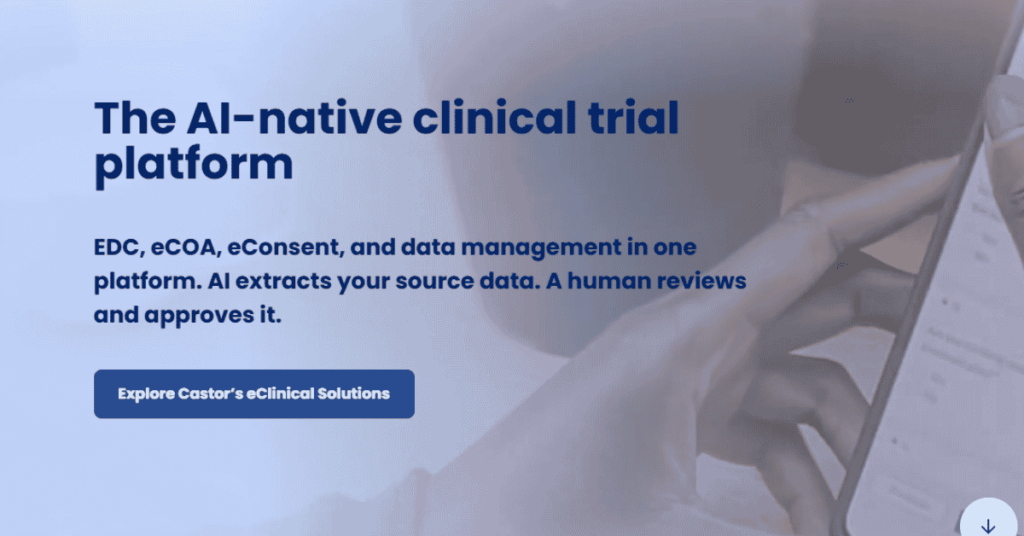
Castor is a clinical trial data platform. It brings together EDC, eCOA and ePRO, eConsent and clinical data management. Teams can combine eCRF, patient-reported, wearable and EHR data in one place.
Castor also offers an AI tool called Catalyst. It reads source documents and suggests values for the eCRF. A person reviews them before they enter the record.
Castor EDC
Key Features of Castor EDC
- No-Code Study Build: Set up studies with simple tools and no programming, so teams can get started quickly.
- Real-Time Validation: Edit checks run as data is entered, which helps catch mistakes at the point of entry.
- Mid-Trial Form Edits: Edit forms while a trial is running to handle protocol amendments as they come up.
- Query Management: Raise, track and close data queries, and review data, all in the same system.
- Castor CDMS: Covers data cleaning, query management, SDTM alignment and database lock on the same platform as the EDC.
- Open APIs: Get instant access to trial data through open APIs, instead of waiting days for data exports.
Pros
- EDC and CDMS sit on one platform, so there is no handoff between systems.
- Easy to learn, and it pulls many data sources into one place.
- A free trial lets you test it first.
Cons
- Some users want more advanced features and a better mobile experience.
- Data extraction and batch approvals could be easier.
Pricing & Plans
Castor uses a per-study subscription. Pricing is available on request.
Veeva Clinical Data: Large pharma, biotech and CROs
Veeva Clinical Data is a cloud platform built on Veeva Vault. It brings EDC, data aggregation, central cleaning and review into one system. It links with Veeva CTMS and Veeva RTSM, so clinical operations and data teams can work from one source of truth.
It is a strong fit for large pharma, biotech and CROs.
Key Features of Veeva Clinical Data
- Veeva EDC: Combines data entry, image management and auto-coding in one place, which reduces work for sites and sponsors.
- Veeva CDB: Collects, cleans and transforms data from many sources, including third-party EDC systems.
- Automated Ingestion: Brings in data from EDC, RTSM, ePRO, eCOA and labs, with fewer manual steps for data managers.
- Platform Connections: Key data moves automatically between Veeva EDC, CTMS and safety systems.
- Data Lock Tools: Close out studies with data lock and post-processing tools, including archiving at the end of the study.
Pros
- One platform ties clinical operations and data management together.
- Handles data from many sources, including third-party EDC systems.
- Built for large and complex programs.
- Customers report faster EDC changes and shorter database setup.
Cons
- Implementation and services costs can be high, and complex setups often need extra services work.
- Search and moving between modules can feel hard at first.
- May be more than a small team needs.
Pricing & Plans
Veeva price is available on request.
Medidata Rave EDC: Large and complex global trials
Medidata Rave is an EDC system used in Phase I to Phase IV studies. It helps teams capture, manage, clean and report trial data. It is the core of the Medidata Platform, which connects many clinical research tools.
Rave is used on large global trials as well as small rare-disease studies.
Rave EDC
Key Features of Medidata Rave EDC
- eCRFs: Build electronic forms that sites use to enter patient data during the study.
- Real-Time Edit Checks: Data is validated as it is entered, which helps keep it clean from the start.
- Query Management: Track and resolve data queries between sites and data teams in one system.
- Rave Companion: Fills EDC forms automatically from EHR data, which cuts the data re-entry burden on sites.
- Unified RTSM: Manage randomization and trial supply inside the same platform as your EDC.
- Centralized Administration: Manage users, roles, studies and sites across all your studies from one place.
- Intelligent Coding: Helps code medical terms, so data stays consistent across the study.
- Global Libraries: Reuse standard forms and settings to help standardize studies and start faster.
Pros
- Easy interface that sites can use in many languages.
- Handles simple and very complex protocols.
- Strong data capture and audit trails.
- Connects with other Medidata tools.
- Helpful support team.
Cons
- Cost can be high for small budgets.
- Advanced setup often needs admin or services help.
- Files are hard to locate in the EDC.
Pricing & Plans
Medidata price is available on request.
Ennov Clinical Data Management: Sponsors and CROs using a full clinical suite
Ennov EDC helps clinical teams define studies and collect subject data. It supports multi-center trials in one flexible, scalable system. It is part of the Ennov Clinical Suite. The suite also has RTSM, ePRO, CTMS and eTMF.
It can run in the cloud or on-premise. It suits sponsors and CROs that want a full suite from one vendor.
Key Features of Ennov Clinical Data Management
- CRF Creation and Data Entry: Design forms and enter data without programming skills or advanced IT help.
- Drag-and-Drop Design: Build and change forms with simple drag-and-drop tools.
- E-Signatures and Offline Access: Sign data electronically and keep capturing data even when you are offline.
- Multi-Language Support: Run global studies in many languages, with real-time reporting on the latest data.
- Connected Modules: Works with Ennov’s ePRO, randomization and medical coding modules for end-to-end data capture.
Pros
- Study teams can design studies without advanced IT skills.
- Works for trials of any size, including large global ones, in the cloud or on-premise.
- Part of a full clinical suite from one vendor.
Cons
- Some users find it less flexible than other tools.
- Slower performance with very large data volumes.
- Setup can take more effort for small studies.
Pricing & Plans
Ennov EDC Pricing is available on request.
Oracle Clinical: Large teams with established setups
Oracle Clinical is a database application that helps manage clinical trials. It covers work from study setup to preparing results for submission. Oracle Clinical Remote Data Capture (RDC) Onsite is a web app that works with studies built in Oracle Clinical.
It is a good fit for large teams that already use Oracle systems.
Key Features of Oracle Clinical
- Study Design: Model the study after the protocol, and refine it step by step as details become clear.
- Global Library: Store reusable questions and data collection objects, so you can reuse standard versions across studies.
- Two-Pass Data Entry: Supports first-pass and second-pass data entry, which helps verify what was entered.
- Validation and Derivation Procedures: Check data and create new values with little or no programming.
- Discrepancy Management: Track data issues and guide the query and correction process.
- Batch Data Load: Load data from electronic sources instead of entering it by hand.
- Freezing, Locking and Extract: Control access to prevent unwanted changes, and prepare data for tools such as SAS.
Pros
- Strong tools for validation and data cleaning.
- Flexible study design with versions, and four randomization styles.
- Detailed controls for freezing and locking data.
- Secure and suited to large studies.
Cons
- Price and recurring costs can be high.
- Some users report lag and a few bugs.
- The data entry screen could be more user friendly, and the setup needs trained staff.
Pricing & Plans
Oracle pricing is available on request.
Medrio CDMS: Small and mid-size sponsors and CROs
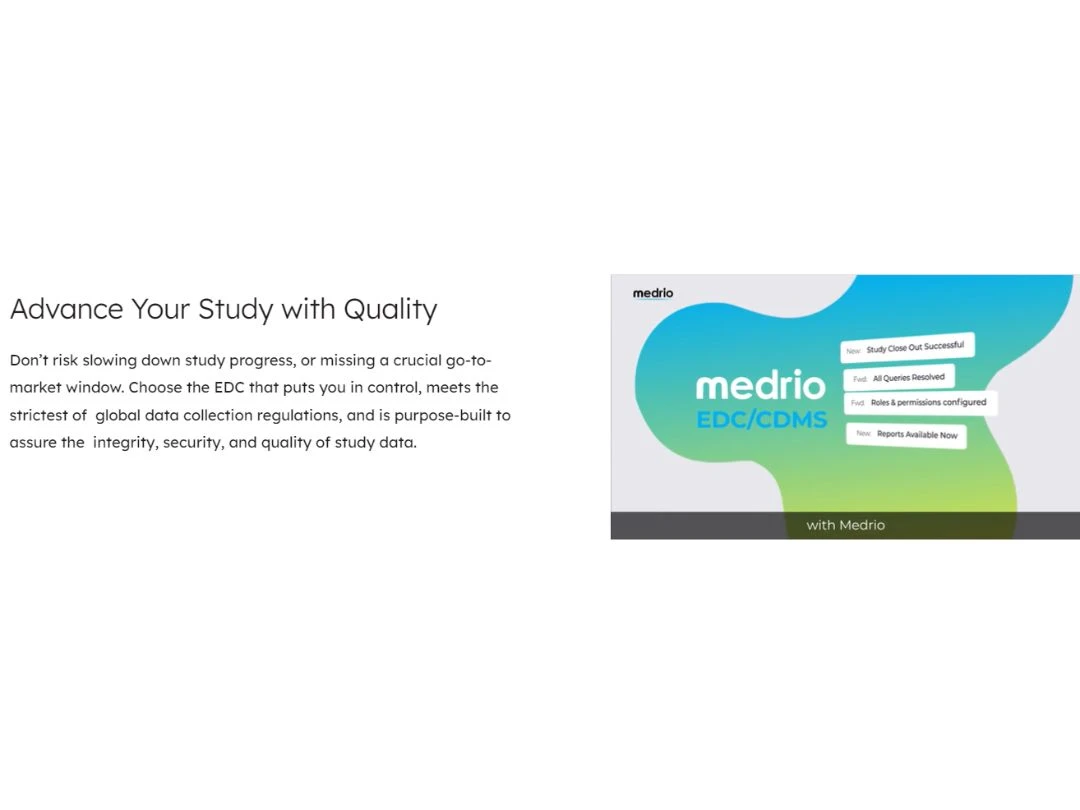
Medrio CDMS/EDC combines EDC with core data management. It includes data validation, query management, audit trails and database lock. Teams can set up studies with point-and-click tools, so no custom coding is needed.
It is built for small and mid-size sponsors and CROs. It works for MedTech, biotech, pharma and animal health trials.
Medrio EDC
Key Features of Medrio CDMS
- No-Code eCRF Builds: Build eCRFs with point-and-click tools, so you do not need specialized resources to launch.
- Mid-Study Changes: Make updates during the study with ease, which suits trials where protocols change.
- Continuous Data Review: Validate and review data all through the study to reduce cleanup at the end.
- Online and Offline Capture: Collect data whether or not you have an internet connection.
- Integrations: Connects with eConsent, RTSM, eCOA and safety systems to cut manual data reconciliation.
- Flexible Study Support: Handles adaptive protocols, complex visit schedules, hybrid models and decentralized trial parts.
Pros
- Fast study startup.
- Easy to learn and use.
- Helpful customer support.
- Regular product updates.
- Good value for small and mid-size teams.
Cons
- Reporting and data analysis tools can feel weak, and exports can be glitchy.
- Fewer features than some larger platforms.
- Complex or large studies may hit limits.
Pricing & Plans
Medrio pricing is available on request.
Viedoc EDC: Studies of any size or complexity
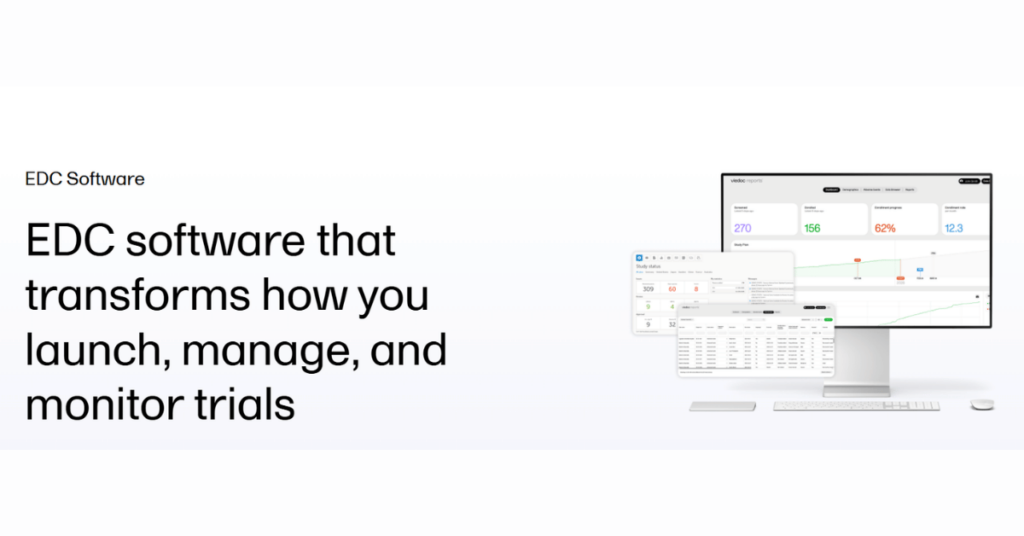
Viedoc is a browser-based EDC system. It helps users collect, manage, validate and present clinical trial data. It is built on its own admin, design, eCRF and reporting modules. Teams can run remote and decentralized studies in one system.
It works for studies of many sizes. This includes small academic studies and large global trials.
Key Features of Viedoc EDC
- Drag-and-Drop Form Design: Build eCRFs using drag-and-drop tools, with no coding needed.
- Real-Time Data Validation: Checks run as data is entered, which helps catch errors early.
- Centralized Management: Manage users, sites and studies from one place.
- Custom Reports: Create reports built around what your study team needs to see.
- GCP-Compliant Capture: Collect data in an ICH GCP-compliant way, including images and documents, with signing at form, visit or patient level.
- Add-On Modules: Add ePRO, medical coding and randomization only when your study needs them.
Pros
- Easy to use, with a clear interface.
- Quick to set up and customize.
- Helpful support team, and often cost-effective.
- Fees start only after the first patient is added.
Cons
- A few users find parts of the tool hard to use.
- Some users report small bugs.
- Trial supply management can need more manual work.
Pricing & Plans
Viedoc has no fixed price list. The price depends on study size and complexity. It includes hosting, backups, maintenance and support. Price is available on request.
MediLake EDC/CDMS: Clinical and non-clinical (SEND) studies
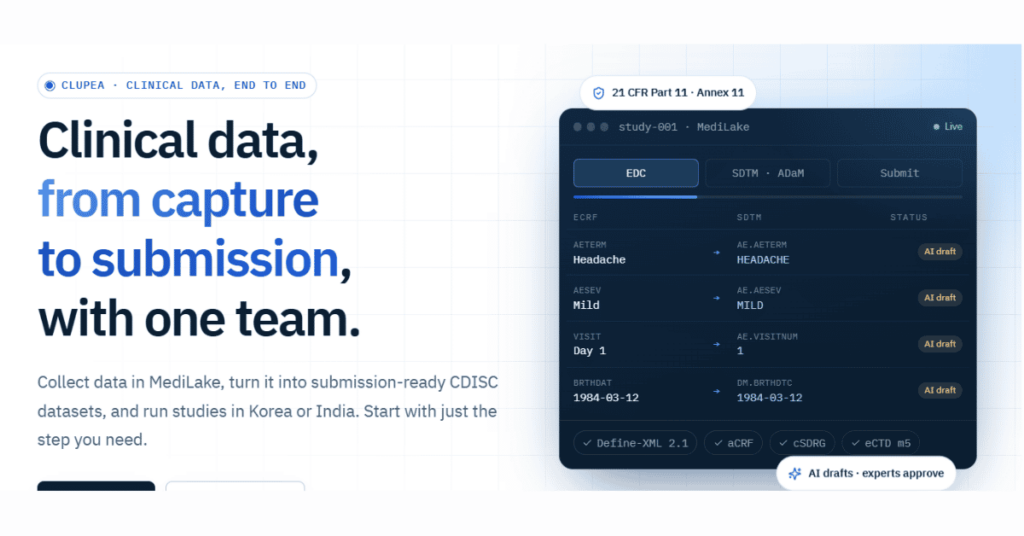
MediLake is an integrated solution for clinical trial data collection and management. It treats a trial as an expandable system. The CDMS is a fully integrated eCRF tool. Users can access, manage, review and share data from any device.
MediLake also has a CDISC SEND-based product for non-clinical data. This makes it useful for teams that handle both clinical and non-clinical studies.
Key Features of MediLake EDC/CDMS
- No-Code Study Design: Create and change studies without pre-design or coding skills.
- Unified EDC/CDMS: Collect, integrate and share trial data in one place, and access it from any device at any time.
- MediLake SEND: Manage non-clinical trial data based on CDISC SEND, within the same product family.
- eCOA/ePRO: Subjects can report their own data on a smartphone, tablet or computer.
Pros
- Handles clinical and non-clinical data in one product family.
- No coding needed to design studies.
- Flexible deployment that can be tailored to your project size.
Cons
- Details on integrations and pricing are not clear.
Pricing & Plans
MediLake pricing is available on request.
Conclusion
The best clinical data management software depends on your study size, budget and team. A small academic team may only need simple forms and secure data. A large sponsor may need to clean data from many sources.
REDCap and OpenClinica are worth a look for academic and smaller studies. Castor, Medrio and Viedoc suit small and mid-size sponsors that want to start fast. Veeva Clinical Data and Medidata Rave EDC are built for large and complex programs. Ennov and Oracle Clinical fit teams that want a full suite or already use those systems. MediLake is worth checking if you manage both clinical and non-clinical data.
Before you choose, ask for a demo. Check reporting, support and pricing. Also confirm that the tool meets the rules for your trial. You can also explore clinical data management software on Techjockey to compare products and find one that fits your study.
FAQs on CDMS Software
What are the main features of clinical data management software?
The main features include electronic data capture, electronic case report forms, data validation, query management, audit trails, clinical data integration, reporting, and user access management.
What is the difference between EDC and CDMS?
EDC (Electronic Data Capture) focuses on collecting clinical trial data electronically through digital forms. CDMS (Clinical Data Management System) covers the broader clinical data management process, including data collection, validation, cleaning, query resolution, and database management. EDC is generally considered an important component of a CDMS.
Is clinical data management software compliant with FDA regulations?
Some clinical data management platforms offer features designed to support requirements such as FDA 21 CFR Part 11. However, software selection alone does not establish compliance. Organisations must also implement appropriate validation, access controls, procedures, training, and documentation.


Written by
Shobhit Kalra

Shobhit Kalra boasts an impressive 12 years of diverse experience across industries, including Digital Media, Digital Marketing and Healthtech. He has a proven track record of creating engaging and impactful content that resonates with readers. In his journey with Techjockey, he has been given the responsibility of crafting... Read more
 Previous