 USA
USA UAE
UAE


Available
Price on Request




Brand: HEROKU
Heroku is a cloud platform that helps developers build, deploy, manage, and scale applications without managing infrastructure.
See MoreHave you used Heroku before?
Share your insights for better experience
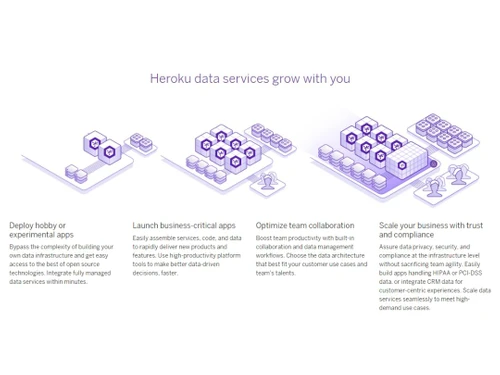
 Fully managed runtime environment Reliable & secure PostgreSQL Scales in an instant Code & data rollback Pre-integrated services Data Clips Built-in monitoring Continuous delivery GitHub Integration Smart containers

Watch the demo video to explore key features, real workflows, and how the software fits your business needs.
 Ubuntu
  Windows
  MacOS
MacOS  Linux
Linux  Desktop
  Mobile
  Tablet
  iPad
iPad  Cloud-Based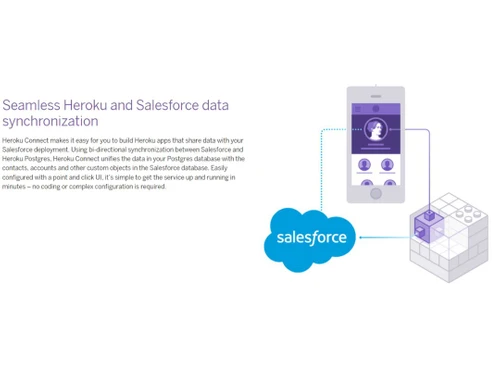
4.2
Out of 5

Overall Rating
Based on
5 Verified Ratings
Rating Breakdown
88% Recommend this Product
Add ReviewThis product has no reviews yet. Be the first to leave your feedback.
Add Review
Heroku
Price On Request
Desktop
Mobile
Web based
On Premises
Windows
Mac OS
Forcepoint Casb
Price On Request
Desktop
Mobile
Web based
On Premises
Windows
Mac OS

SenseDeep
Price On Request
Desktop
Mobile
Web based
On Premises
Windows
Mac OS

AWS CloudTrail
Price On Request
Desktop
Mobile
Web based
On Premises
Windows
Mac OS

Flentas Managed Services
Price On Request
Desktop
Mobile
Web based
On Premises
Windows
Mac OS

Citrix Private Cloud
Price On Request
Desktop
Mobile
Web based
On Premises
Windows
Mac OS

Rubrik CDM
Price On Request
Desktop
Mobile
Web based
On Premises
Windows
Mac OS

VMware vcloud Suite
Price On Request
Desktop
Mobile
Web based
On Premises
Windows
Mac OS
Zelar
Price On Request
Desktop
Mobile
Web based
On Premises
Windows
Mac OS

Amazon (ECS)
Price On Request
Desktop
Mobile
Web based
On Premises
Windows
Mac OS
(0) Product(s) selected
Available
Price on Request
Starting Price:
$49 /Monthly
Available
Price on Request
Available
Price on Request
Available
Price on Request
Available
Price on Request
Available
Price on Request
Available
Price on Request
Available
Price on Request




Heroku Website Development Tools demo is available for free at Techjockey.
Heroku Website Development Tools offers a free trial. However, the premium plan with advanced features available at Techjockey.
For Heroku Website Development Tools installation, insert the given CD/USB flash storage in your system and open the Setup Wizard to get started.
Heroku is a fully managed cloud application platform used by developers for building, deploying, running, and scaling web applications and APIs without needing to manage infrastructure.
Heroku no longer offers a free tier for its services; the entry-level plan is the Eco dyno, which starts at USD 5 per month according to its pricing page.
Heroku is a Platform as a Service (PaaS) that provides a fully managed environment to simplify app deployment, while AWS is a broader Infrastructure as a Service (IaaS) that offers raw computing resources requiring more manual configuration.
Heroku works by running your application code inside lightweight, isolated containers called dynos on a fully managed runtime, allowing you to deploy directly from your Git repository.
The best alternative to Heroku depends on your specific project needs, but common alternatives include other Platform as a Service (PaaS) providers or configurable Infrastructure as a Service (IaaS) platforms.
Dynos are the lightweight, isolated smart containers that Heroku uses to run and scale your application's code on a fully managed runtime environment.
Heroku Buildpacks are used to automate the build process for your application, compiling your code and dependencies into a deployable format based on the programming language you use.
Heroku Postgres is a fully managed, secure, and scalable PostgreSQL database offered as a service, optimized for developers to use with their applications.
Yes, Heroku provides a platform for building and deploying AI applications and agents, offering features like Managed Inference, pgvector for Heroku Postgres, and the Model Context Protocol (MCP).
20,000+ Software Listed
Best Price Guranteed
Free Expert Consultation
2M+ Happy Customers
Terms and Condtions

Users with registered businesses can purchase goods from merchants on the platform to satisfy their business needs. Users are not permitted to utilize any products acquired through the platform for resale, advertising, business, or further distribution.
For each purchase made, users will receive a Tax Invoice (or 'GST invoice') that includes specific details such as:
the GSTIN of the user associated with their registered business, and
the specified Entity Name for their business.
It should be noted that not all products are eligible for GST Invoice. Only the products displayed by participating sellers with the 'GST-based Invoice Available' callout on the product description page would qualify.
Certain goods and services are not eligible to get a GST Invoice, including items with VAS, i.e., Value Added Services (e.g., Total Mobile Protection/Assured Buyback) and those involving an exchange offer at the time of purchase.
Users must ensure the accuracy of the GSTIN, and business entity name provided for the GST Invoice. Requests for corrections into GST Invoice would not be accommodated by Techjockey.com or any Seller, and any issues arising from user-provided information are the sole responsibility of users.
Techjockey.com is not liable for the GST Invoice or any associated input tax credit. To efficiently claim an input tax credit, users should select the registered place of business address as per the GST authority's data and follow the provisions of the GST Act and rules.
To claim an input tax credit, the delivery and billing addresses must match. Furthermore, input tax credits will not be granted if the delivery address and GSTIN on the invoice are from different states. In case of incorrect GST details provided during the order placement, the order will be canceled automatically.