What is ITR-3? Check Eligibility, Changes and Deadlines (AY 2026-27)


Too many forms, too many rules, and strict deadlines while filing ITR could be overwhelming. But among all, choosing the right type of ITR form is the most important step.
ITR-3 is one of the seven types that confuse most taxpayers. Who exactly needs to file it? What makes it different from the other ITR forms? Are there any new changes you should know about for FY 2025-2026?
These common questions arise when you are filing the ITR-3 form. This blog post will walk you through everything about ITR-3, from its structure to who can file it and who cannot.
What is ITR-3 Form?
ITR-3 form is for individuals and Hindu Undivided Families (HUFs) who earn from a business or a profession. It’s specifically designed for the income received from the profits and gains of a business.
So, the ITR-3 form is for you if you run a shop or showroom, you are a freelancer or a trader, or run a business as a doctor, lawyer, or architect.
Who Can File ITR-3?
You may think ITR-3 is for whom? Here’s a more detailed list of explaining ITR-3 is for:
- ITR-3 form is for individuals and HUFs who have a business or a profession.
- For freelancers who get income from projects or clients.
- Those who generate income from dividends, interest, or house property, whether single or multiple.
- For people who earn from F&O trading, intraday trading, or share trading.
- Self-employed doctors, lawyers, designers, architects, and other professionals.
- Individuals who receive remuneration, interest, or commission from a partnership firm but not from LLPs.
- For taxpayers with capital gains from selling their property, shares, or mutual funds.
- Residents, non-residents, and even those with foreign income or assets.
The process of ITR-3 filing becomes easier when you use an income tax software that automates most of the tasks for you. You can also use the government portal directly to file ITR.
Who Cannot File ITR-3?
It’s just as important to know who is not eligible:
- Salaried employees who do not earn from a business or profession do not come under ITR-3 applicability.
- Individuals with only capital gains, interest, or rental income.
In simple words, if you earn from sources limited to salary, pension, or basic investments, you don’t need Form ITR-3.
Due Date ITR-3 Filing in AY 2026-27
ITR-3 filing last date for taxpayers is 31 July 2026. Filing ITR late will cost you penalties. It is always advisable not to wait until the last moment. Filing ITR-3 early can give you enough time to correct any errors found in the form and also keep stress away.
Major Changes in ITR-3 for AY 2026-27
Tax laws do not remain the same over the years. They can evolve with time and new financial updates by the government.
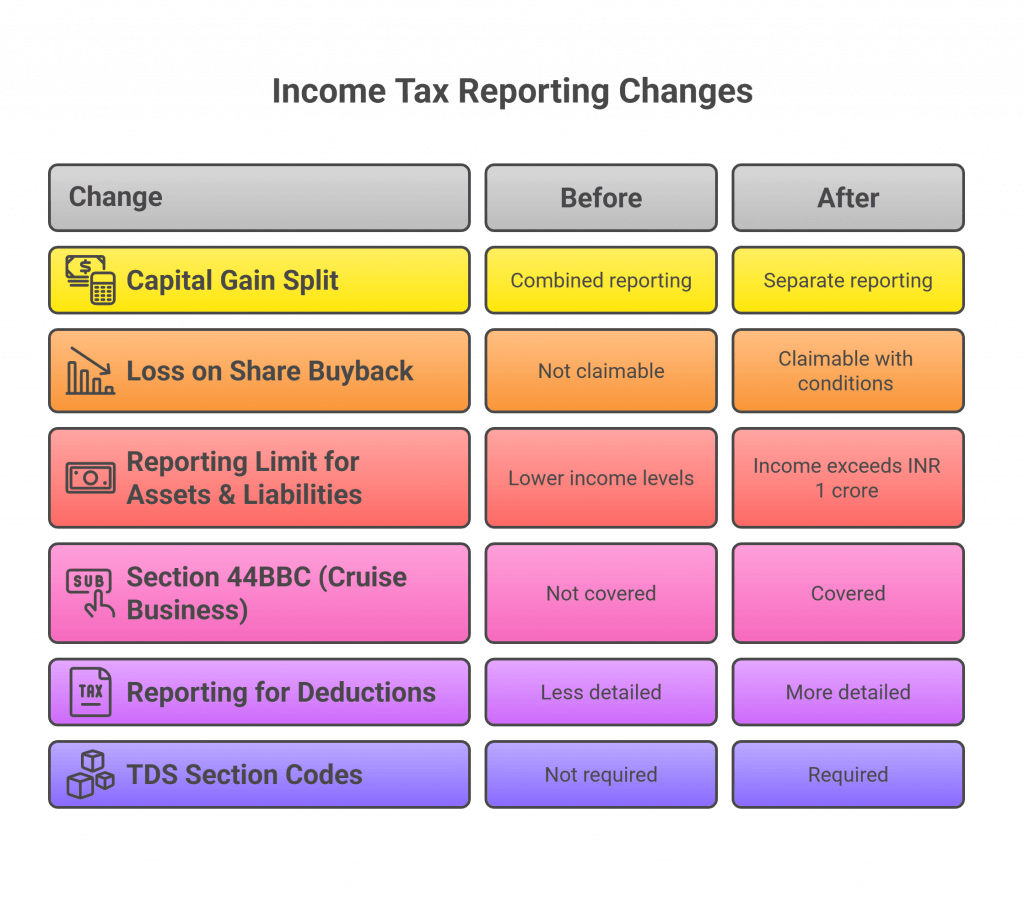
Here’s what’s new this time around:
- F&O Trading Reporting: New, separate reporting fields for Futures & Options (F&O) turnover and income, necessitating stricter reconciliation of trading transactions.
- MSME Payment Disallowance: A new column in Part A – OI (Other Information) is introduced to report interest on delayed payments to Micro or Small Enterprises (MSEs) as per the MSMED Act.
- Partnership Firm Disclosures: Partners in firms must now specifically disclose interest and remuneration received in Schedule IF.
- Enhanced Cash Transaction Reporting: Taxpayers must select the applicable cash transaction percentage slab (Up to 5% or >5%), affecting audit applicability under Section 44AB.
- Capital Gains Update: The structure for reporting capital gains has been updated to align with the removal of old tax rates (15% on STCG, 12.5% or 20% on LTCG) as per the Finance Act 2025.
- Audit Info Rationalization: Reduced requirements for providing specific auditor details (Name, Registration number, UDIN) in certain sections.
- Political Donation Reporting: Additional details under Section 80GGC, including name of the political party, PAN, and transaction ID.
Key Updates Introduced in Earlier Years (Still Applicable)
Alongside the latest changes, a few updates from recent years are still in play:
- Schedule VDA: A special section to report income from crypto and other Virtual Digital Assets (VDAs). Every transaction, with purchase/sale dates, must be reported.
- Opting Out of the New Tax Regime: The form now includes questions about whether you opted out in previous years.
- Disclosure for Foreign Institutional Investors (FII/FPI): They must provide their SEBI registration number.
- Balance Sheet Reporting: Advances from related parties under Section 40A(2)(b) must be shown under Advances.
- Intraday Trading: A new Trading Account section requires turnover and income reporting.
Why is Filing ITR-3 Important?
Some taxpayers wonder that if TDS is already deducted, then why they should file ITR. Here’s why filing is important:
- It’s legally mandatory if your income falls under ITR-3 eligibility.
- You can claim refunds if excess tax is deducted.
- It builds a financial record, helpful for loans and visas.
- It ensures compliance and avoids penalties.
Final Thoughts
The ITR-3 form might look like a long, time-consuming, and complex form to file. But once you break it down, it’s a structured method of informing the government about your income, spending, and taxes.
Whether you’re a freelancer, business owner, or someone earning from trading, this form helps you to stay compliant. So, it’s high time to gather your documents, understand the latest updates, and file your return before the deadline.


Written by
Mehlika Bathla 
Mehlika Bathla is a passionate content writer who turns complex tech ideas into simple words. For over 4 years in the tech industry, she has crafted helpful content like technical documentation, user guides, UX content, website content, social media copies, and SEO-driven blogs. She is highly skilled in... Read more
 Previous