React Native and Kotlin are two prominent platforms primarily used for mobile app development. React Native is a framework developed by Facebook and is known for its cross-platform capabilities and efficient development process using React and JavaScript. On the other hand, Kotlin is a versatile programming language by JetBrains, known for its seamless integration with Java. It offers robustness in Android app development. Here, we will compare these two platforms based on their key features and characteristics.
React Native vs. Kotlin: An Overview
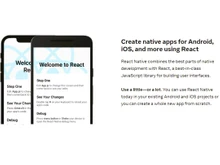
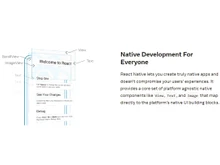
React Native by Facebook is an open-source platform that allows developers to build mobile applications by using JavaScript as well as React. It enables the creation of cross-platform apps with one codebase, offering a smooth and efficient development experience with a focus on native performance and appearance. This framework is popular for streamlining the app development process for iOS and Android platforms.
Kotlin is a programming language that is statically typed and is developed by JetBrains, known for its conciseness, interoperability with Java, and suitability for building robust and efficient applications, particularly for Android development. Kotlin is an open-source language known for its modern features, strong safety checks, and seamless integration with existing Java codebases.
React Native vs. Kotlin: Key Differences
Here are some major differences between Kotlin and React Native, and these are:
- React Native and a few React Native alternatives use JavaScript and React for cross-platform app development, while Kotlin is a statically typed language primarily used for native Android development.
- React Native offers hot reloading for instant code changes, whereas Kotlin benefits from Android Studio's Instant Run feature.
- React Native emphasizes cross-platform development with a rich ecosystem of third-party libraries, while Kotlin and other Kotlin alternatives focus on seamless integration with existing Java libraries for native Android app development.
React Native and Kotlin: In Terms of Features
- Library: Kotlin offers a standard library and can also seamlessly integrate with existing Java libraries and frameworks. In contrast, React Native has a rich set of libraries for various functionalities and has a strong ecosystem with many third-party libraries available through npm.
- License: React Native is distributed under the MIT License while Kotlin is an open-source language distributed under the Apache 2.0 license.
- In-built Apps: Kotlin is typically used for Android app development, and many popular Android apps including Trello, Evernote, and Coursera have been built using Kotlin. On the other hand, Facebook, Instagram, and Airbnb are some prominent apps built with React Native.
- Third-Party Plugins: React Native has a vast ecosystem of third-party plugins and libraries available through npm, allowing developers to easily extend app functionality. Contrarily, Kotlin can make use of existing Java libraries and frameworks, providing access to a wide range of third-party plugins and tools developed for the Android platform.
- Hot Reloading: This feature is not a built-in feature of Kotlin, but Android Studio provides Instant Run, which offers similar functionality for updating code and resources while the app is running. In contrast, React Native supports this feature, enabling developers to instantly view changes in the code without recompiling the app completely.
- Integrations: React Native can integrate with native modules written in Objective-C, Swift, or Java for platform-specific functionalities. On the other hand, Kotlin seamlessly integrates with existing Java code and libraries, enabling gradual migration to Kotlin while maintaining compatibility with Java code.
React Native vs. Kotlin: Programming Language
React Native uses JavaScript and React for building mobile apps. On the other hand, Kotlin is a programming language that runs on the JVM (Java Virtual Machine) and can also be compiled into JavaScript or native code.
React Native or Kotlin: Learning Curve
Kotlin is designed to be interoperable with Java, making it easier for developers with Java knowledge to transition to Kotlin. Therefore, it is generally considered to have a moderate learning curve. React Native, however, is known for its low learning curve for developers familiar with JavaScript and React.
React Native and Kotlin: Performance
React Native offers good performance for most apps but lacks performance for highly complex or demanding applications due to the JavaScript bridge. Whereas Kotlin, when used for native Android development, offers high performance, and is optimized for the platform.
React Native or Kotlin: Ease of Development
Kotlin provides a modern and concise syntax, which can lead to faster development. Android Studio also provides a range of tools to enhance the development experience. Similarly, React Native offers a fast development cycle and offers hot reloading to view the instant effect of code changes.
React Native vs. Kotlin: Technology Stack
React Native uses JavaScript, React, and the React Native framework for building cross-platform mobile apps. On the other hand, Kotlin is commonly used with the Android tech stack, which includes Android SDK, Android Studio, and various Android libraries and APIs.
React Native or Kotlin: Development Environment
Kotlin development for Android is typically done using Android Studio, which is a feature-rich IDE specifically tailored for Android app development. Contrarily, the development of React Native is possible with any text editor or IDE, and it has good support for both iOS as well as Android platforms.
Kotlin vs React Native: Use Cases
React Native is well-suited for cross-platform mobile app development, especially for apps that require rapid development and deployment across both Android and iOS. On the other hand, Kotlin is commonly used for native Android app development. Apart from that, it is well-suited for building high-performance, platform-specific applications.
Kotlin vs React Native: Code Reusability
While Kotlin itself does not offer cross-platform code reusability, its interoperability with Java and native Android development practices allows for the reuse of certain components and business logic across projects. On the contrary, React Native offers a high level of code reusability across platforms, allowing developers to write one codebase for both iOS as well as Android apps.
Verdict: Kotlin vs. React Native
In summary, React Native and Kotlin serve distinct purposes in mobile app development. React Native excels in facilitating cross-platform app development using JavaScript plus React, with a strong focus on code reusability and a rich ecosystem of third-party libraries. On the other hand, Kotlin is designed for native Android app development, leveraging its interoperability with Java, modern features, and advanced integrations. While React Native prioritizes cross-platform capabilities and hot reloading, Kotlin is known for its native performance and seamless integration with existing Java libraries.
 USA
USA UAE
UAE


 Comparison


 4 Ratings & 0 Reviews


 Free Trial










 Get directly in your email inbox on your Whatsapp


