 USA
USA UAE
UAESmall Business
Designed for startups and growing businesses

See More




Brand: SelfCAD
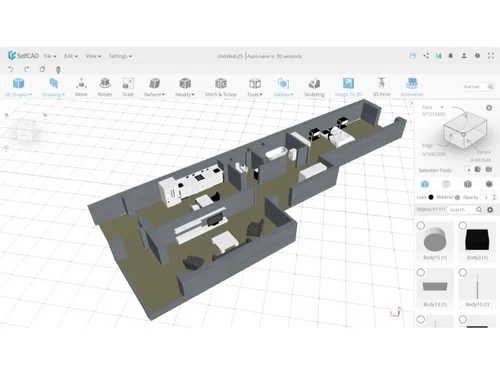
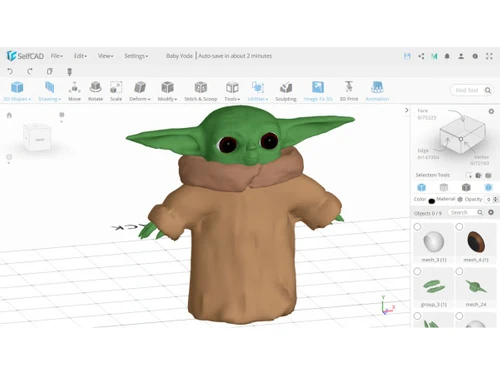
SelfCAD used to create, sculpt, and prepare 3D designs for printing.
See MoreHave you used SelfCAD before?
Share your insights for better experience
 Polygon Mesh Editor Boolean Operations Edge Loop Selection In built STL Slicer Non Manifold Repair Sculpting Brushes Spline Drawing Extrusion Tool Deformation Tools Image to 3D Tool Measurement Tool Face Inset Tool Mesh Smoothing

Watch the demo video to explore key features, real workflows, and how the software fits your business needs.
 Windows
  MacOS
MacOS  Desktop
  Cloud-Based
  Perpetual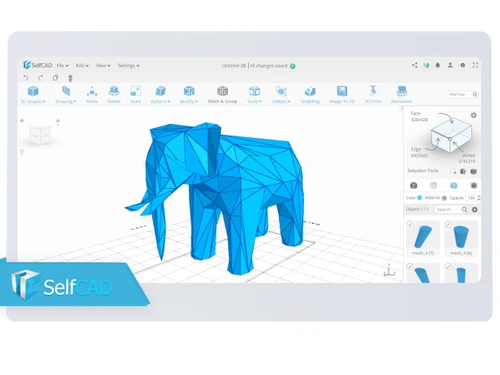
Small Business
Designed for startups and growing businesses
Medium Business
Built for business growth and flexibility
Enterprises
Designed for complex and large-scale business needs
Techjockey Trusted Reviews from Verified Users
No reviews are currently available for SelfCAD. Discover similar 3D Design Software reviews

Power NURBS Pro
Whats great - PowerNurbs is an incredible NURBS apparatus, natural and amazing. 3Ds max joined with PowerNurbs winds up a standout amongst ... read more

Autodesk Autocad Plant 3D Toolset
Whats great - Produce and offer isometrics, orthographics, and materials reports. read more

Power Translator Pro
Whats great - Exquisite on the grounds that its planners imagined the sorts of reports and situations that individuals need to decipher. read more
SelfCAD
Price On Request
Desktop
Mobile
Web based
On Premises
Windows
Mac OS

CLO 3D Fashion
Price On Request
Desktop
Mobile
Web based
On Premises
Windows
Mac OS

Coohom
₹ 750
Desktop
Mobile
Web based
On Premises
Windows
Mac OS

Pacdora
Price On Request
Desktop
Mobile
Web based
On Premises
Windows
Mac OS

Bambu Studio
Price On Request
Desktop
Mobile
Web based
On Premises
Windows
Mac OS

Autodesk 3DS Max
Price On Request
Desktop
Mobile
Web based
On Premises
Windows
Mac OS
Spline
Price On Request
Desktop
Mobile
Web based
On Premises
Windows
Mac OS

SMART PLANT 3D (SP3D)
Price On Request
Desktop
Mobile
Web based
On Premises
Windows
Mac OS
MeshLab
Price On Request
Desktop
Mobile
Web based
On Premises
Windows
Mac OS

Rodin AI
Price On Request
Desktop
Mobile
Web based
On Premises
Windows
Mac OS

Sweet Home 3D
Price On Request
Desktop
Mobile
Web based
On Premises
Windows
Mac OS
(0) Product(s) selected
Starting Price:
$18 /Month
Available
Price on Request
Starting Price:
$15 /Seat/Month
Available
Price on Request
Starting Price:
$15 /Month

Available
Price on Request

Starting Price:
$2,645 /Quantity

Available
Price on Request

Starting Price:
$299 /Month

Available
Price on Request
SelfCAD price starts at USD 15 on techjockey.com.
No, SelfCAD does not have a dedicated mobile app, it runs through a web browser.
SelfCAD is compatible with Windows and macOS as it is browser-based.
Yes, SelfCAD offers a free trial for new users to explore its features.
SelfCAD works directly in the browser, allowing users to create, edit, and prepare 3D models online.
SelfCAD is used by students, educators, hobbyists, designers, and 3D printing enthusiasts.
Yes, a free demo is available to help users understand the platform before subscribing.
SelfCAD is not fully free, but it offers trial access and paid subscription plans for full features.
20,000+ Software Listed
Best Price Guranteed
Free Expert Consultation
2M+ Happy Customers
Terms and Condtions

Users with registered businesses can purchase goods from merchants on the platform to satisfy their business needs. Users are not permitted to utilize any products acquired through the platform for resale, advertising, business, or further distribution.
For each purchase made, users will receive a Tax Invoice (or 'GST invoice') that includes specific details such as:
the GSTIN of the user associated with their registered business, and
the specified Entity Name for their business.
It should be noted that not all products are eligible for GST Invoice. Only the products displayed by participating sellers with the 'GST-based Invoice Available' callout on the product description page would qualify.
Certain goods and services are not eligible to get a GST Invoice, including items with VAS, i.e., Value Added Services (e.g., Total Mobile Protection/Assured Buyback) and those involving an exchange offer at the time of purchase.
Users must ensure the accuracy of the GSTIN, and business entity name provided for the GST Invoice. Requests for corrections into GST Invoice would not be accommodated by Techjockey.com or any Seller, and any issues arising from user-provided information are the sole responsibility of users.
Techjockey.com is not liable for the GST Invoice or any associated input tax credit. To efficiently claim an input tax credit, users should select the registered place of business address as per the GST authority's data and follow the provisions of the GST Act and rules.
To claim an input tax credit, the delivery and billing addresses must match. Furthermore, input tax credits will not be granted if the delivery address and GSTIN on the invoice are from different states. In case of incorrect GST details provided during the order placement, the order will be canceled automatically.

