Choosing the right society management platform is no longer just about visitor logs or notices. Now, RWAs need automated billing, GST/TDS handling, audit-ready ledgers, staff/workflow management, vendor payments, procurement, and transparent operations.
Mygate, Adda, and NoBrokerHood are top real estate software. These tools claim to manage everything, all in one unified space. But you can’t use three of them together. So, we’ve analyzed their accounting configuration, workflow depth, and operational backbone, and the differences are massive.
Based on our comprehensive comparison of ADDA ERP vs Mygate vs NoBrokerHood, here is the final recommendation for you to choose easily among these platforms.
ADDA ERP
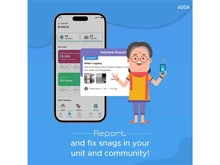
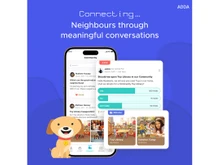
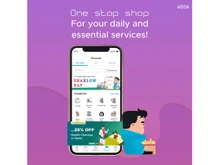
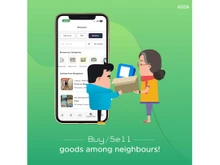
ADDA began as an apartment management platform that aims to offer a one-stop solution for societies. It includes accounting, communication, visitor/maintenance management, facility booking, notices, and community networking. It reduces reliance on Excel or paper ledgers, gives residents a convenient interface for dues payment, facility bookings, maintenance requests, community notices, classifieds, etc.
Mygate ERP
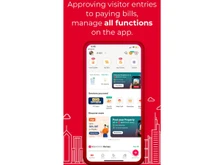
Mygate started as a visitor management software for gated communities. Over the years, this tool has evolved into a full & comprehensive society management platform. It offers billing & accounting, vendor & asset management, maintenance, facility booking, helpdesk/ticketing, resident communication, and 250+ more features.
Its architecture and features are more enterprise-grade, such as automated invoicing, GST/TDS-ready accounting, reconciliation, audit-ready ledgers, and financial reports. Mygate is ideal for societies that want deep operational control, automation, scalability, and minimal manual bookkeeping.
NoBrokerHood
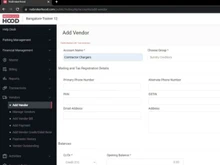
NoBrokerHood is a part of NoBroker’s larger ecosystem. It operates as a subsidiary that specializes in managing gated communities and housing complexes. Rather than offering deep accounting or ERP-level complexity, its primary focus is on visitor and delivery management, simple billing and dues collection, and day-to-day community conveniences.
The platform is largely resident-centric, emphasizing ease of use and operational simplicity. Key strengths include resident and staff management, payments, notices, and other resident-facing features. NoBrokerHood is well-suited for communities that prioritize convenience and smooth operations over stringent audit requirements or advanced financial controls.
Feature-by-Feature Comparison: ADDA ERP vs Mygate ERP vs NoBrokerHood
Here’s a breakdown of major features and components, and how each platform fares across them.
| Feature |
ADDA ERP |
NoBrokerHood |
Mygate |
| Pricing |
Price on request |
Price on request |
Price on request |
| Support, Onboarding & Access |
Small support team,
Slower response,
Limited access,
Paid premium support.
Onboarding requires mapping to fixed Tally rules. |
Small support team,
Long wait times,
Basic onboarding. |
Dedicated ERP support,
Fastest turnaround,
Direct RWA feedback loop,
Structured onboarding,
Ledger mapping,
Data cleanup & workflow configuration. |
| Core Accounting Foundation |
Only 2 bank accounts,
Shallow chart of accounts,
No deactivation option. |
2 bank account limit,
Slightly deeper chart,
No deactivation. |
Multiple bank accounts,
Deep chart hierarchy,
Deactivation supported. |
| Ledger Controls, Mapping & Integrations |
Single penalty type,
Partial Tally sync,
Limited TDS,
Income mapping via third party. |
Item-based penalty only,
Manual import/export,
Limited TDS. |
Flexible penalties,
Full income & TDS mapping,
Complete Tally export support. |
| Billing Intelligence & Flexibility |
Single auto-invoice rule,
Fixed bill date,
Percentage GST only,
No billing-period controls. |
Single configuration,
Fixed billing cycles,
Basic GST support. |
Multiple auto-invoice rules,
Configurable cycles,
Flexible GST slabs,
Automated billing-period controls. |
| Special Billing & Rate Logic |
Floor-wise rates supported,
No slab penalties,
No discounting. |
Same limitations as ADDA. |
Slab-based penalties,
Supports rate variations,
Discounting supported,
No dependency on floor-wise rates. |
| Expense, Vendor, Procurement & Inventory |
No due date tracking,
Approvals via add-on only,
Basic procurement,
No inventory management. |
No due date tracking,
Restricted workflows,
Minimal inventory. |
Due date tracking,
Structured approval workflows,
PR–PO–GRN–Bill cycle,
Vendor linking,
Full inventory with valuation & alerts. |
| Budgeting, Audit & Financial Governance |
Basic budget warnings,
Limited visuals,
No audit logs,
No cash flow reporting. |
Basic budgeting only,
No visual dashboards,
Limited audit logs. |
Budgeting with or without GST,
Graphical insights,
ERP-grade audit logs,
Complete cash flow reports. |
| Reconciliation & Data Reliability |
Auto reconciliation possible,
Format-dependent,
Manual mapping required. |
Mostly manual reconciliation. |
Automated reconciliation,
Works across formats,
Automated GST & TDS mapping. |
| Helpdesk, Staff & Amenity Controls |
Basic helpdesk,
No SLA tracking,
Item-level blocking only,
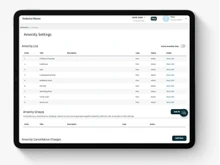
Limited amenity grouping. |
Basic complaint logging,
Minimal blocking controls. |
Full-featured helpdesk,
Categories & SLAs,
Escalation workflows,
Detailed amenity rules,
Deposits & usage limits. |
| Security, Visitor Management & Community Operations |
Suitable for small societies. |
Strong visitor-first design,
Ideal for small apartments. |
Built for large societies,
Multi-gate & multi-tower support,
QR-based entry,
Vehicle & staff tracking,
Enterprise-grade operational control. |
Which Society Should Choose Between ADDA ERP, Mygate, and NoBrokerHood?
Based on the comparative features, here’s when each business software tends to work better (and when it might feel limiting):
When to Choose ADDA ERP?
- Small to Mid-size Apartment: You are managing a small to mid-size apartment complex or gated community (say 30–200 units / moderate size).
- No Complicated Accounting Needs: Your society doesn’t have complicated accounting, vendor payments, multiple bank accounts, or complex compliance needs.
- Ease of Use: You want simplicity, ease-of-use, quick onboarding, minimal training, and a straightforward resident/resident-committee tool for maintenance, dues, notices, facility booking, and community communication.
When to Choose Mygate ERP?
- Small to Large Society: Your society is small to large, possibly with multiple towers/blocks, many flats, lots of residents, multiple staff, vendors, amenities, and complex operations.
- Require Full-operational Control: When you need a more comprehensive all in one solution with robust accounting, audit-ready financials, vendor & asset management, maintenance tracking, facility bookings, security integration, and scalable workflows.
- Minimize Manual Effort: You want automated billing, payment reconciliations, transparent audit logs, and vendor tracking. You want to treat society as a small organization rather than a collection of spreadsheets.
When to Choose NoBrokerHood?
- Small-to-Medium Society: Your focus is on residents who value security, convenience, and easy payments over full-blown ERP platform features.
- No Heavy Accounting or Deep Audit-level: Your priority is visitor/guard/staff/delivery management, resident convenience, basic dues/billing & payments.
- Simple Day-to-Day Services: You prefer resident-facing simplicity, easy access to day-to-day services, and a simpler setup. Especially if society operations are relatively light or not complex.
What Limitations to Check While Choosing Between ADDA ERP, Mygate, or NoBrokerHood?
While choosing business software, user adoption matters a lot. If residents don’t use the app, or guards/staff aren’t comfortable, even the best software doesn’t deliver. We’ve compiled a list of limitations that you should watch before purchasing these society management software.
- ADDA ERP: While it covers basics well, for large societies or those expecting rapid growth, its accounting/back-end may feel limiting. It requires manual overrides or external tools for complex accounting needs.
- Mygate ERP: With so many features on a single platform, there can sometimes be a learning curve, especially for older residents.
- NoBrokerHood: Its strength lies in convenience and simplicity. However, it may fall short in complex financial audits. For societies that require serious governance, back-end transparency, or multi-layer operations, NBH can feel too light.
Final Recommendations for ADDA ERP vs Mygate vs NoBrokerHood
You must evaluate size, complexity, number of units, expected growth, engineering/management bandwidth, and other requirements to choose business software. For a mid-to-large society expecting growth, Mygate gives the longest-term benefit. For small communities or societies, prioritizing minimal fuss, ADDA or NBH work fine.
| Your Needs |
Recommended Platform |
Small apartment complex,
Fewer units,
Simple billing,
Need ease of use and quick setup. |
ADDA ERP |
Medium to large society,
Complex financial requirements,
Many residents,
Need full accounting, vendor, facility & security management,
Scalability required. |
Mygate |
Priority on visitor, staff & delivery management,
Resident convenience,
Basic payments and dues,
Lighter operational needs. |
NoBrokerHood |
Balance between automation and convenience,
Without heavy ERP complexity. |
Small society: ADDA ERP
Medium with moderate operations: NoBrokerHood
Small to large with all needs: Mygate |
Adoption and Implementation Guide for the Right Society Management Software
Before selecting software, a society committee should consider:
- How many units/residents/blocks/towers: Check the size of your society and apartments before opting for any management software. Bigger societies benefit more from ERP-like Mygate.
- Volume and complexity of financial flows: Look whether you are dealing with multiple bank accounts, vendor payments, maintenance charges, varying slabs, fines, etc. Complex workflows favor Mygate. Simpler flows suit ADDA/NBH.
- Staff/vendor/asset management needs: If society has vendor contracts, maintenance staff, multiple common assets (pumps, lifts, clubhouses), a helpdesk, and vendor workflows, ask them their pain points and needs.
- Resident adoption and ease for older or non-tech-savvy people: Simpler UI matters and heavier ERP features may discourage participation, especially among older residents.
- Budget/subscription cost: Heavier/feature-rich platforms may cost more. For smaller societies, lighter systems may suffice cost-effectively.
- Audit/compliance needs: Some societies (especially in metros) might need audit-ready books, transparent ledgers, GST/TDS, etc. Confirm these needs before purchasing.
- Scalability and growth potential: If society expects to grow in the future, investing upfront in a scalable ERP can save pain later.
Techjockey Verdict
If your society is small or mid-sized with modest operational requirements, ADDA ERP offers a low-friction, easy-to-use solution that covers most essential needs. It works well for societies looking for straightforward billing, basic accounting, and simple community management without heavy complexity.
If you expect an all-in-one solution that can support growth, such as multiple towers or blocks, numerous amenities, regular maintenance cycles, vendor payments, and staff or asset management, then a more comprehensive platform like Mygate is a better fit. It is more robust and designed to be future-proof.
On the other hand, if your priority is visitor management, security, staff and delivery tracking, and overall resident convenience rather than deep financial controls, NoBrokerHood may be sufficient. It is especially suitable for societies that prefer a lighter, convenience-oriented platform over a full ERP system.
In general, choose a society management software based on society’s size, complexity, and what you expect over the next 3–5 years, not just immediate needs. Still unsure about which business tool to opt for, reach out to our software experts.
 USA
USA UAE
UAE


 Comparison


 4 Ratings & 4 Reviews


 Free Trial












 Get directly in your email inbox on your Whatsapp


