How to Manage Multiple Construction Sites Without Losing Control?
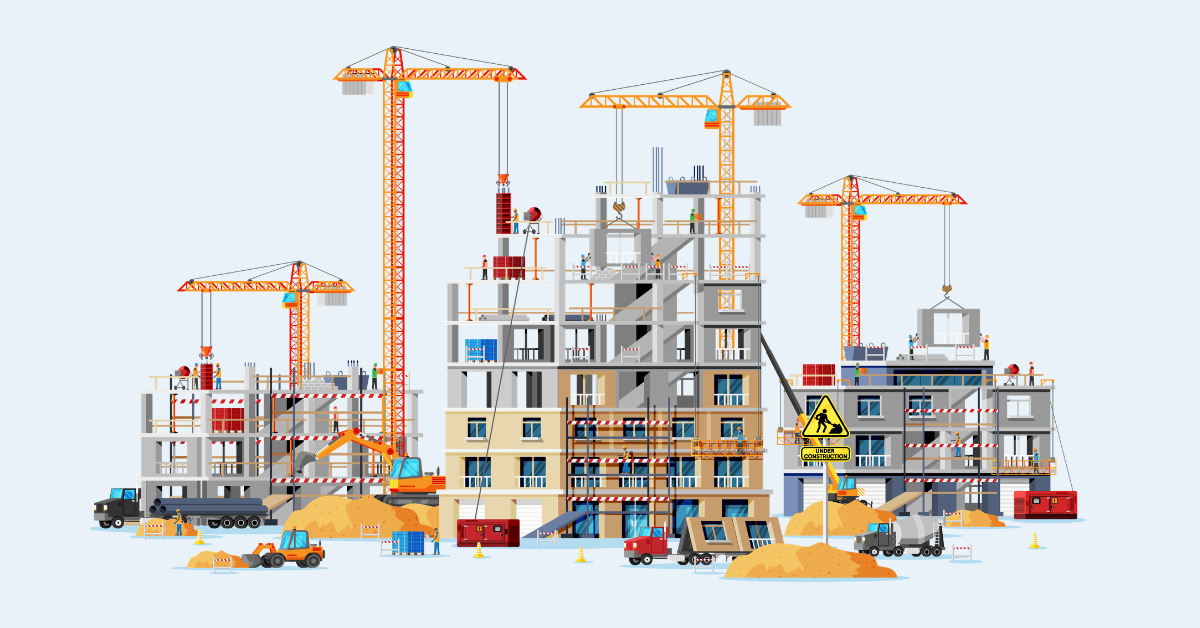


For many contractors (or construction business owners), landing more projects is like crossing the finish line! They often forget that growth brings its own complications. A business that once worried about finding work suddenly has to hold the reins of several active sites at once.
One project may demand an urgent decision, another may be waiting on materials, and a third may require immediate supervision. Now the real problem is not that unexpected issues appear. In fact, the construction business has never been predictable! The main problem is that these issues start arriving simultaneously from every direction.
No contractor can make confident and productive decisions with only part of the picture. When workforce data, material records, budgets, and progress reports are fragmented, uncertainty tends to fill the gaps. Management becomes reactive, and every day feels like a race against the next problem.
That said, there are fortunately some ways to bring everything back under control, and that’s exactly what we’ll discuss next.
Growth Brings Complexity Along
A shortage of projects is rarely what sinks a construction firm. The downfall usually comes about when the rudimentary processes that are capable of managing, let’s say, two jobs are stretched to accommodate six or seven (or maybe even more).
The breaking point looks like a barrage of simultaneous demands: a superintendent calling in a desperate need for materials, a separate job site waiting on an urgent purchase order approval, an anxious property owner requesting a progress update, and the accounting team refusing to release payments until expenses are logged.
While none of these requests are extraordinary on their own, their concurrent arrival from various locations can naturally bury even the most capable managers.
The problem is not the number of sites themselves; the real challenge, in fact, is maintaining a clear understanding of what is happening across every site. But one shouldn’t be spending their entire day chasing this information.
The builders who can survive this growth spurt are those who stop managing by sheer memory, frantic phone calls, and loose paperwork. They are the ones who turn to structured workflows that ensure data flows to them predictably, clearly, and in a way that’s immediately actionable.

SiteSathi
Starting Price
₹ 5999.00 excl. GST
The Cost of ‘Not Knowing’
Most people think the hardest part of managing multiple construction sites is just how spread out they are. And sure, that’s a factor; you obviously can’t be in two places at once, let alone five. However, if you speak with enough contractors, you will find that the distance between sites is rarely the real issue.
The real source of frustration is discovering issues after they have already begun to cause harm or damage. For example, a delivery is running late, material stocks are getting thinner than expected, attendance has been slipping for days, etc. None of these things usually appear out of nowhere.
Looking back at project failures, the breadcrumbs can almost always be seen. A supervisor might have messaged (or warned) about it, or a client dropped a hint on a call. The critical knowledge was captured somewhere, but a communication gap kept it from reaching the action team.
Put simply, the objective of multi-project management should be remote supervision rather than compulsive physical presence. While emergencies stem from delayed ideas, great opportunities arise from timely discoveries.
Everyday Reporting Should Make Things Easier, Not Harder
Many people hear the phrase daily reporting and immediately think of paperwork. This perception exists because reporting has traditionally been treated as an administrative task rather than a management tool.
Effective reporting should answer a simple question: what happened on site today that management needs to know about?
When site teams submit clear updates covering progress, workforce attendance, material usage, and project status, managers gain a much stronger understanding of where each project stands. Decisions become faster because assumptions are hardly involved.
This is one area where construction management platforms such as SiteSathi can be particularly useful. Instead of relying on separate messages, spreadsheets, and phone calls, project information can be collected through a single system.
Site supervisors can submit updates directly from the field, allowing contractors and project managers to review progress without waiting for lengthy discussions at the end of the day. The goal is not to create more reports, but the goal is to reduce uncertainty.
SiteSathi
Starting Price
₹ 5999.00 excl. GST
Labour Management Deserves More Attention Than It Usually Gets
Managing labour is often less about just counting workers and more about keeping pace with constant change. Construction teams often keep evolving throughout a project. Some fresh people arrive, others leave, and attendance levels may fluctuate for many uncertain reasons.
This movement is easy enough to follow when everything is happening in one place. However, if these workforce changes are spread across multiple sites, maintaining
accuracy becomes far more demanding. What begins as a minor reporting issue can eventually affect payroll, scheduling, and project profitability.
This is why many construction firms are moving away from paper-based attendance systems. Digital records provide greater transparency and make it easier to verify information whenever questions arise.
SiteSathi includes labour and attendance management capabilities that help teams maintain accurate records across different locations. Rather than waiting for physical registers to reach the office, managers can easily review workforce information whenever necessary and gain a clearer picture of labour deployment across projects.
Material Control Often Determines Profitability
Every contractor seems to understand quite well the impact materials have on project costs. However, material management is still one of the areas where businesses lose significant amounts of money.
The loss is not always dramatic. It is often the result of ordinary operational inefficiencies. Orders are placed without accurate stock information. Materials are consumed without proper tracking. Deliveries are received but not documented consistently. These issues may seem minor on individual levels, but collectively, they can have a significant effect on budgets and project performance.
Managing multiple sites certainly increases the likelihood of these problems because information becomes more difficult to verify. A contractor cannot personally inspect inventory at every location every day.
For this reason, maintaining clear records of material movement is essential. SiteSathi helps teams track inventory, monitor stock levels, and manage purchase-related activities in a more organised manner. Having such visibility allows managers to make informed decisions instead of relying on mere assumptions or incomplete information.
SiteSathi
Starting Price
₹ 5999.00 excl. GST
Consistency Is an Underrated Advantage
Many contractors discover that managing more projects is not necessarily the difficult part. The harder task is ensuring that every project operates according to the same standards.
Different sites, over time, tend to create their own methods for handling paperwork, approvals, reporting, and daily activities. That said, when the business expands, these differences begin to create unnecessary complexity or obstacles.
Information arrives in different forms, records are maintained differently, and managers spend time trying to make sense of conflicting systems.
It can be stressed that only consistency can solve this problem! SiteSathi supports that very consistency by providing one unified platform. It makes teams able to manage attendance, reporting, materials, workflows, and project activities with ease, using the same structure across every site.
You Cannot Be Everywhere At Once
Being (or at least attempting to be) everywhere could initially seem like sound management. You try to answer every call, approve every purchase, and personally check progress whenever possible.
Over time, however, this approach creates a problem of its own! Every decision begins to wait for you, and every issue eventually lands on your desk. The business becomes very much dependent on your availability.
Contractors who get beyond this barrier usually do so by raising the visibility bar rather than stressing oversight. SiteSathi helps by creating a central source of information that keeps teams aligned and managers informed. When reliable data is available all the time, leadership becomes less reactive and far more effective.
SiteSathi
Starting Price
₹ 5999.00 excl. GST
Conclusion
Running multiple construction sites successfully doesn’t mean you have to live at work or constantly travel between locations. The real hurdle as you scale is keeping tabs on the big picture without getting overwhelmed by information.
The firms that do this well all have one thing in common: reliable setups for tracking field progress, labour, and materials. They don’t rely on scattered updates or wait for a crisis to figure out where a project stands.
Some widely trusted platforms like SiteSathi pull these essentials into a single dashboard. It helps builders get a clear view of operations. Multi-site management becomes incredibly streamlined when project data is accurate and centralised.
Success in the construction business isn’t about your physical mileage between sites; it’s about establishing an information flow that hits the right people at the right time.


Written by
Techjockey Team

The Techjockey content team is a passionate group of writers and editors dedicated to helping businesses make informed software buying decisions. We have a deep understanding of the Indian software market and the challenges that businesses face when choosing the right software for their needs. We are committed... Read more
 Previous