

Every construction project starts with a plan but keeping that plan on track isn’t easy. From managing budgets to coordinating teams, timelines, and contractors, construction businesses have a lot to look after every day.
To bring everything together in one place, many firms today are turning to construction project ERP software. For a good ERP solution not only helps teams stay organized but it also helps them make better decisions with real-time data.
However, with the market filled with countless options, choosing the right platform can be tough. To help you find the best fit, we, at Techjockey, have curated a list of leading construction ERP software solutions that would keep your projects moving forward, one critical step at a time.
What is Construction Project ERP Software?
Construction project ERP software is a business management solution built specifically for construction companies. It helps teams manage projects, budgets, resources, contractors, and daily operations from a single platform.
The software typically includes features such as project planning, cost tracking, procurement, resource management, and reporting. By bringing all these critical processes together, an ERP system in construction, as such, helps businesses improve collaboration, control costs, and complete projects in a timely and effective manner.
Top Construction Project ERP Solutions Compared for 2026
Explore how the top construction ERP software compare in terms of their best use cases and core strengths.
| Construction Project ERP Software | Best For | Key Strengths |
|---|---|---|
| Trimble Viewpoint Vista | Mid-sized to large contractors | Job costing, finance, payroll, field collaboration |
| CMiC ERP | Large construction firms | Unified platform for projects, finance, HR, and assets |
| IFS Cloud ERP for Construction | Complex infrastructure projects | Project management, asset lifecycle, risk control |
| PENTA Construction ERP | Specialty contractors | Construction accounting, payroll, business intelligence |
| Farvision ERP | Construction real estate firms | Project planning, procurement, inventory control |
| Oracle NetSuite Construction ERP | Growing construction businesses | Cloud ERP, project management, real-time reporting |
| SAP Cloud ERP (SAP S/4HANA) | Large enterprises | Advanced analytics, financial planning, contract management |
List of 7 Best Construction Project ERP Software in 2026
Some of the best ERP software for construction are listed below for your convenience…
1. Trimble Viewpoint Vista
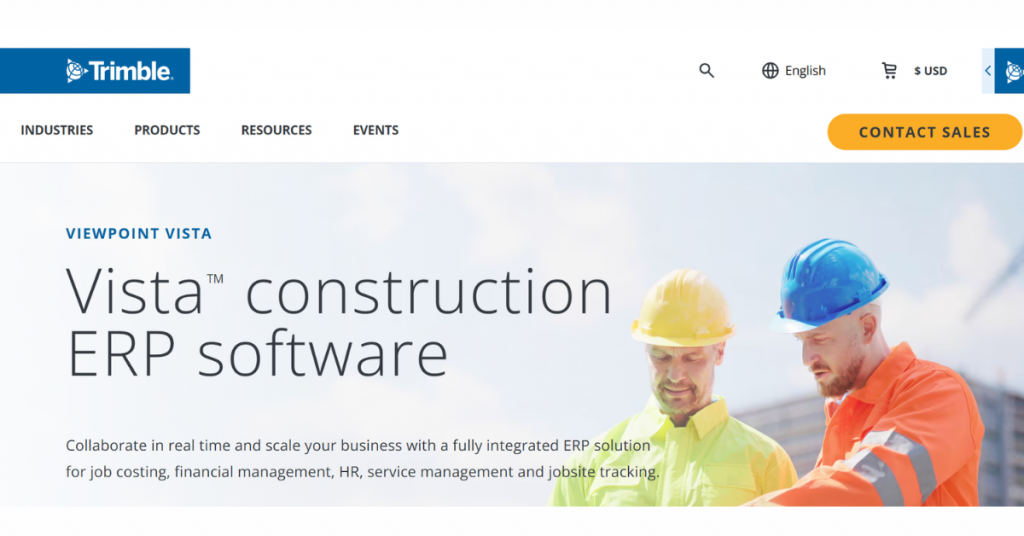
Trimble Viewpoint Vista is a construction project ERP known for its strong accounting and job-costing capabilities. It helps contractors track project costs in real time, manage payroll, monitor equipment usage, and connect field operations with back-office teams.
The software is particularly popular among firms that want tighter control over project profitability.
Key Features of Trimble Viewpoint Vista:
- Provides a construction-specific ERP for accounting, job costing, payroll, HR, service management, and field operations
- Supports detailed job cost accounting and budget tracking
- Automates invoicing, billing, and payment workflows
- Offers workforce, payroll, and HR management tools
- Provides equipment and service management capabilities
- Delivers real-time financial visibility across projects
- Supports project forecasting and work-in-progress tracking
- Includes analytics, dashboards, and reporting tools
- Connects field and office teams through shared data
- Integrates with Trimble Construction One and other construction solutions
- Supports document management, inventory, purchasing, and collaboration workflows
- Offers cloud-hosted and enterprise deployment options

Trimble Viewpoint
Starting Price
Price on Request
Pro and cons of Trimble Viewpoint Vista:
Pros
- Built specifically for construction businesses
- Strong accounting and job costing capabilities
- Connects field and back-office operations
- Highly scalable for large contractors
- Offers extensive reporting and analytics
- Part of the broader Trimble ecosystem
Cons
- Better suited for mid-sized and large construction firms
- Implementation can be time-consuming
- Requires training to use advanced features effectively
- Custom reporting may need technical expertise
Trimble Viewpoint Vista Pricing & Plans: Price on request
2. CMiC ERP
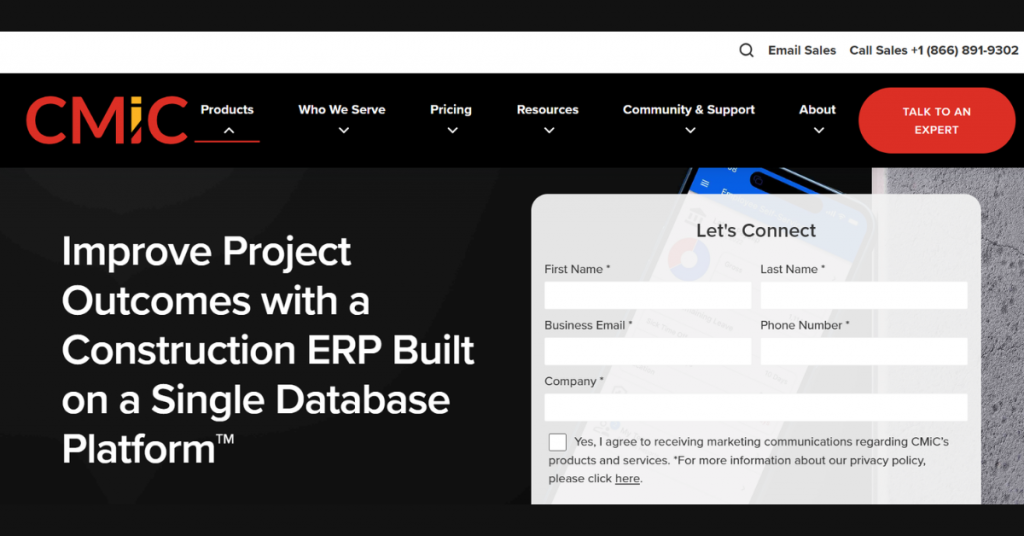
CMiC ERP stands out for its single database architecture, which allows project, financial, HR, and asset data to flow through one unified system. Instead of relying on multiple disconnected applications, construction firms can manage nearly every business function from a centralized platform, making it a strong choice for large enterprises.
Key Features of CMiC ERP:
- Provides a unified construction ERP built on a single database platform
- Supports accounting, project management, payroll, and field operations from one system
- Offers advanced job costing and budget control capabilities
- Facilitates project scheduling, procurement, and resource planning
- Enables real-time visibility into financial and operational performance
- Provides workforce, payroll, and human capital management tools
- Includes equipment, inventory, and asset tracking features
- Delivers workflow automation and document management capabilities
- Supports collaboration between office staff, project teams, and field crews
- Offers analytics, dashboards, and business intelligence reporting
- Allows seamless integration with construction-focused third-party solutions
- Facilitates cloud and on-premises deployment based on business needs
Pro and cons of CMiC ERP:
Pros
- Strong construction-specific ERP functionality
- Comprehensive financial management tools
- Covers both project and back-office operations
- Suitable for complex construction environments
- Robust analytics and reporting capabilities
Cons
- Implementation can be resource-intensive
- Learning curve may be steep for new users
- Better suited for larger construction firms
- Custom configurations can require technical expertise
CMiC ERP Pricing & Plans: Price on request
3. IFS Cloud ERP for Construction

IFS Cloud is a construction project ERP system designed for companies handling large-scale infrastructure, engineering, and capital projects. What sets it apart is its ability to combine project management with asset lifecycle management, helping organizations oversee everything from project planning and execution to long-term asset maintenance.
Key Features of IFS Cloud ERP for Construction:
- Provides a construction-focused ERP platform for managing projects, assets, and operations
- Supports the full project lifecycle, from planning and execution to financial control and maintenance
- Offers integrated project management, procurement, and financial workflows
- Facilitates project budgeting, forecasting, and cost control
- Provides contractor, subcontractor, and supplier management capabilities
- Supports equipment, asset, and maintenance management
- Enables resource scheduling and workforce planning across projects
- Offers document control, compliance tracking, and risk management tools
- Delivers real-time project visibility through analytics and reporting
- Supports modern construction methods, including modular and prefab construction
- Provides AI-powered ERP capabilities through the IFS Cloud platform
- Facilitates integration between ERP, asset management, and field service operations
Pro and cons of IFS Cloud ERP for Construction:
Pros
- Purpose-built for construction and engineering companies
- Strong project financial management capabilities
- Covers project, asset, and service management in one platform
- Supports complex and large-scale construction projects
- Real-time visibility into project performance and costs
- Flexible deployment and modular architecture
Cons
- Better suited for mid-sized and large organizations
- Implementation can be complex for smaller firms
- Extensive functionality may require user training
- Customizations can increase deployment costs
IFS Cloud ERP for Construction Pricing & Plans: Price on request
4. PENTA Construction ERP
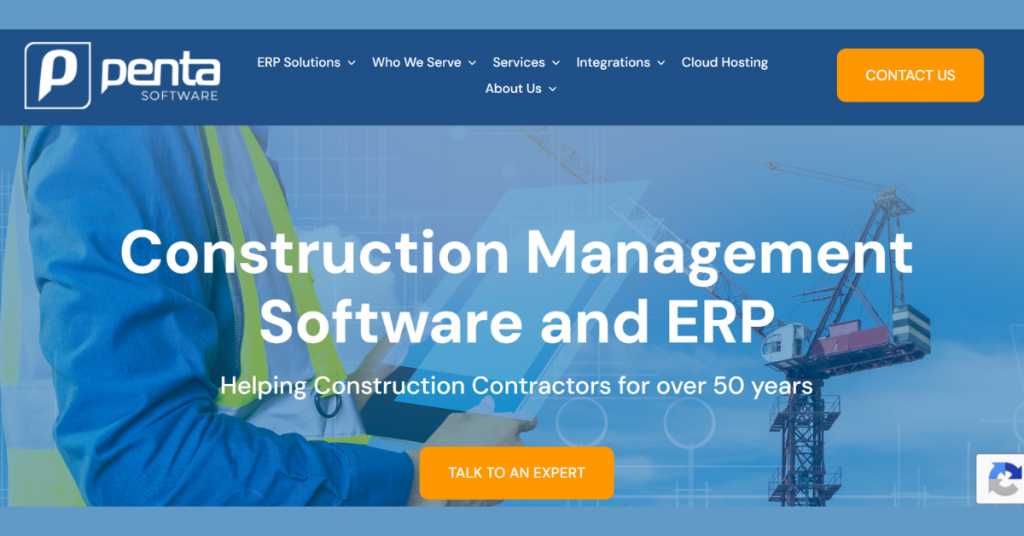
PENTA Construction ERP is built specifically for contractors that need detailed financial oversight. The platform combines construction accounting, payroll, service management, and business intelligence tools, making it especially useful for organizations looking to improve operational efficiency while maintaining strict control over costs.
Key Features of PENTA Construction ERP:
- Provides a construction ERP platform built for specialty contractors and engineering firms
- Supports job costing with real-time project tracking and reporting
- Offers centralized financial management for better visibility and control
- Facilitates payroll processing for complex construction labor requirements
- Provides field service management tools that connect office and field teams
- Supports multi-company and multi-project operations from a single system
- Offers equipment management capabilities for tracking assets and maintenance needs
- Enables construction-specific reporting and business analytics
- Provides document imaging and mobile field reporting tools
- Supports union, multi-state, and multi-trade payroll requirements
- Integrates with best-in-class third-party software solutions
- Delivers cloud-hosted deployment with implementation and consulting services

Penta
Starting Price
Price on Request
Pro and cons of PENTA Construction ERP:
Pros
- Built specifically for construction and specialty contractors
- Strong job costing and financial management capabilities
- Handles complex payroll requirements effectively
- Includes robust field service management tools
- Scales well for large and multi-location operations
- Supports equipment-heavy construction businesses
Cons
- Better suited for mid-sized and large contractors
- May be more complex than smaller firms require
- Implementation can take significant planning and resources
- Training is often needed to utilize advanced functionality
PENTA ERP Pricing & Plans: Price on request
5. Farvision ERP
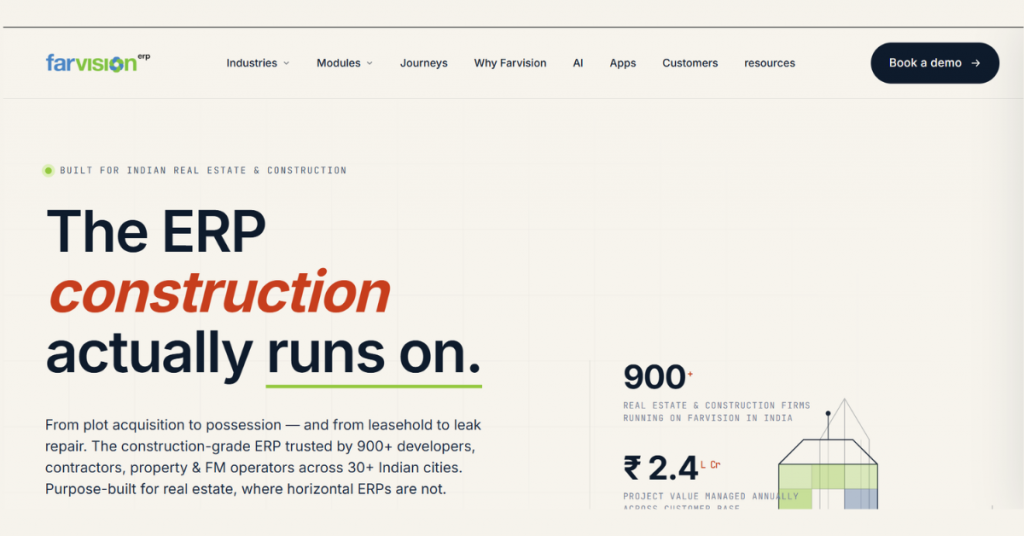
Farvision ERP is widely used by construction and real estate companies looking for an end-to-end project management solution. Its strength lies in helping businesses manage procurement, contracts, inventory, project progress, and financials within a single system, making it easier to keep projects on schedule and within budget.
Key Features of Farvision ERP:
- Provides an ERP platform purpose-built for construction, real estate, infrastructure, and property management businesses
- Supports end-to-end project lifecycle management, from planning and procurement to execution and handover
- Offers project costing, budgeting, and financial management tools
- Facilitates procurement, inventory, and materials management across projects
- Provides CRM and sales management capabilities for customer engagement and lead tracking
- Supports contract, vendor, and subcontractor management processes
- Offers HRMS, payroll, and workforce management functionality
- Enables real-time reporting and analytics for project and business performance monitoring
- Provides document management and workflow automation tools
- Supports facility management, asset maintenance, and CAFM operations
- Facilitates compliance with GST, e-invoicing, and industry-specific regulatory requirements
- Offers mobile access for project stakeholders and field teams

FARVISION ERP
Starting Price
Price on Request
Pro and cons of Farvision ERP:
Pros
- Built specifically for construction and real estate businesses
- Covers finance, projects, procurement, sales, and operations in one system
- Strong project and materials management capabilities
- Delivers real-time visibility across multiple projects and sites
- Supports a wide range of construction-related business models
- Scales well for growing enterprises
Cons
- Implementation can be time-consuming due to extensive data migration needs
- Better suited for medium and large organizations
- Advanced functionality may require user training
- Customization can increase deployment complexity
- Full pricing structure may vary by modules and user requirements
Farvision ERP Pricing & Plans: Farvision subscription charges starting from INR 4000/user/month/module, minimum 5 users. Cloud hosting charges start at INR 2000/user/month. For further details, get in touch with the Techjockey team.
6. Oracle NetSuite Construction ERP
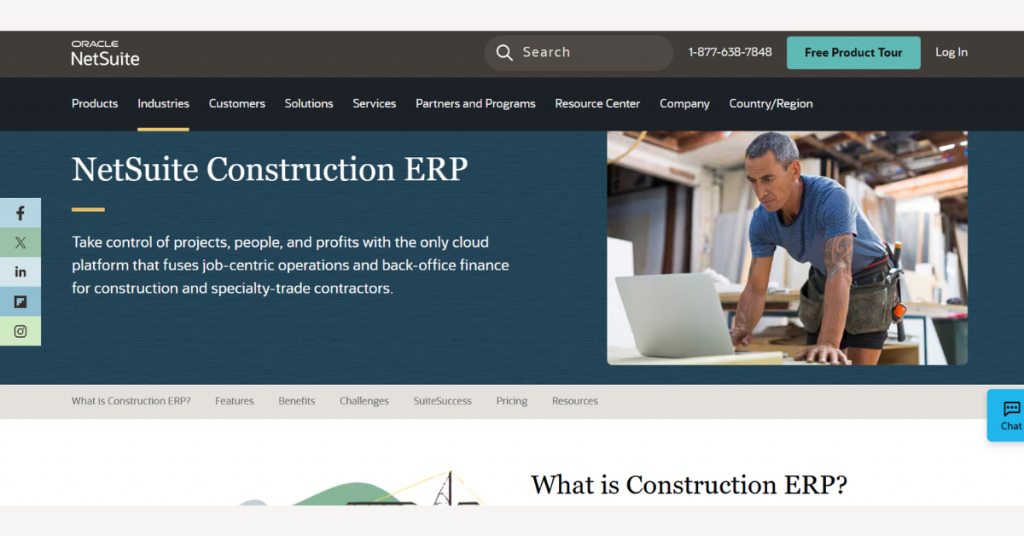
Oracle NetSuite brings the flexibility of a cloud ERP to the construction industry. It is best suited for growing businesses that need real-time visibility across multiple projects, locations, and teams. Its scalable architecture and strong financial management capabilities make it a popular option for expanding construction companies.
Key Features of Oracle NetSuite Construction ERP:
- Provides a cloud-based construction ERP that unifies project operations and back-office finance
- Supports construction accounting, project management, job costing, and inventory management from a single database
- Offers real-time job cost tracking for labor, materials, subcontractors, and equipment
- Facilitates project budgeting, forecasting, and profitability monitoring
- Provides automated revenue recognition, retainage tracking, and progress billing capabilities
- Supports change order management and work-in-progress (WIP) reporting
- Offers field service management with mobile access and dispatching tools
- Enables AI-driven alerts for schedule and cost anomalies
- Provides CRM, procurement, inventory, and financial management tools within the same platform
- Supports multi-entity accounting and financial consolidation
- Facilitates real-time collaboration between field teams, project managers, and finance teams
- Offers customizable dashboards, reporting, and analytics for project visibility
Pro and cons of Oracle NetSuite Construction ERP:
Pros
- Built on a modern cloud-native architecture
- Strong construction accounting and job costing capabilities
- Combines ERP, CRM, and financial management in one platform
- Scales well for growing construction businesses
- Provides real-time visibility across projects and business units
- Supports multi-company operations and consolidations
Cons
- May be more complex than smaller contractors require
- Implementation can take time depending on customization needs
- Advanced functionality may require training
- Construction-specific features may require additional configuration
Oracle NetSuite Construction ERP Pricing & Plans: Price on request
7. SAP Cloud ERP (SAP S/4HANA)
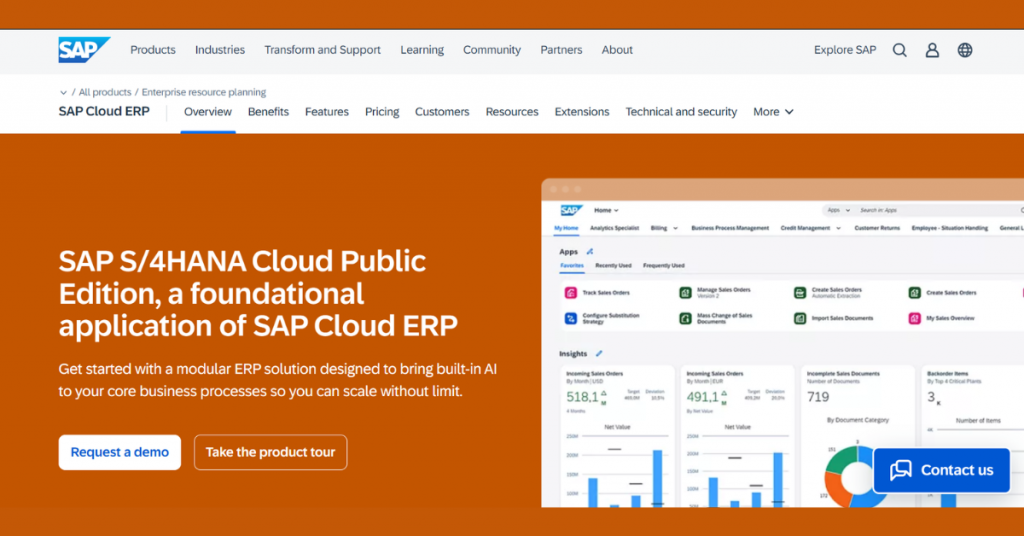
SAP S/4HANA is an enterprise-grade solution built for large construction firms managing complex operations. Known for its advanced analytics, AI-powered automation, and real-time reporting capabilities, it enables businesses to make data-driven decisions while overseeing procurement, contracts, financials, and large-scale project execution from a centralized platform.
Key Features of SAP Cloud ERP (SAP S/4HANA):
- Provides an AI-powered cloud ERP platform for managing finance, supply chain, sales, procurement, and operations
- Supports end-to-end business process management through a unified system
- Offers real-time financial management, accounting, and compliance capabilities
- Facilitates project planning, execution, and cost control for large construction projects
- Provides embedded AI, machine learning, and process automation tools
- Supports procurement, inventory, and supply chain management workflows
- Offers built-in analytics, dashboards, and business reporting
- Enables multi-entity management and global business operations
- Provides industry best-practice workflows through preconfigured business processes
- Supports integration with SAP Business Technology Platform and partner applications
- Facilitates automatic updates and continuous innovation without major disruptions
- Offers enterprise-grade security, compliance, backup, and disaster recovery capabilities
Pro and cons of SAP Cloud ERP:
Pros
- Built for complex enterprise operations
- Strong financial and supply chain management capabilities
- Embedded AI and automation features
- Highly scalable for growing organizations
- Supports global and multi-company operations
- Regular cloud updates and continuous innovation
Cons
- May be too complex for smaller businesses
- Implementation can require significant time and resources
- Customizations may increase deployment costs
- User training is often needed for advanced functionality
- Full pricing depends on modules, users, and deployment requirements
SAP Cloud ERP (SAP S/4HANA) Pricing & Plans: Price on request
Conclusion
Construction projects are complicated as is; your construction project ERP software thus shouldn’t be. All the solutions listed above have their own pros and cons to offer. It now depends on you and your business goals to determine which one fits your needs in the best way possible. This, so your planning does not go to waste and yields better project outcomes at any given point in time.


Written by
Yashika Aneja

Yashika Aneja is a Senior Content Writer at Techjockey, with over 5 years of experience in content creation and management. From writing about normal everyday affairs to profound fact-based stories on wide-ranging themes, including environment, technology, education, politics, social media, travel, lifestyle so on and so forth, she... Read more
 Previous