8 Growth Navigate Startup Tools Every Startup Needs to Grow



Running a startup isn’t just about building a product and finding the right customers for it. It is also about managing teams, scaling up, adapting to change, and making sound decisions through and through. Not to mention the hundred other tasks that pile up alongside.
With growth navigate startup tools at your disposal, however, you aren’t required to do it all alone. Helping you find new opportunities and evade the burden of routine tasks, these tools free up more time for you to focus on making your startup a succcess.
If you wish to the achieve the same for your business, here’s a well-researched list of 8 startup growth navigation tools that are making growth a little less messy for new founders in 2026.
What are Growth Navigate Startup Tools?
Growth navigate startup tools are business management software solutions that help founders manage growth and scale their businesses with ease. In order to attain that, they assist them with tasks like project management, customer tracking, team collaboration, analytics, planning, and so much more.
These tools, in doing so, ensure that you stay focused on growing your business while they handle the tasks that accelerate that growth.
List of 8 Best Growth Tools for Startups in 2026
Some of the leading startup growth navigation tools are listed below for your understanding and convenience…
| Growth Navigate Startup Tool | Primary Use | Best For |
|---|---|---|
| HubSpot CRM | Customer relationship management, sales tracking, and marketing automation | Startups looking for an all-in-one platform to manage leads, customers, and growth |
| Attio | Modern CRM and relationship management | Fast-growing startups needing a flexible and customizable CRM |
| Crunchbase | Company, funding, and market intelligence database | Founders and sales teams researching prospects, investors, and competitors |
| PostHog | Product analytics and user behavior tracking | Product-led startups that want to understand how users interact with their product |
| Amplitude | Advanced product and customer analytics | Teams focused on optimizing user journeys, retention, and engagement |
| Zapier | Workflow automation and app integration | Startups looking to automate repetitive tasks without coding |
| Closely | LinkedIn outreach and lead generation | Sales teams focused on prospecting and building professional connections |
| Notion | Documentation, project management, and collaboration | Startups needing a centralized workspace for knowledge and team organization |
CRM & Relationship Management
Opt for the following growth navigate startup tools if you wish to organize contacts, track interactions, and manage sales opportunities more effectively…
1. HubSpot CRM
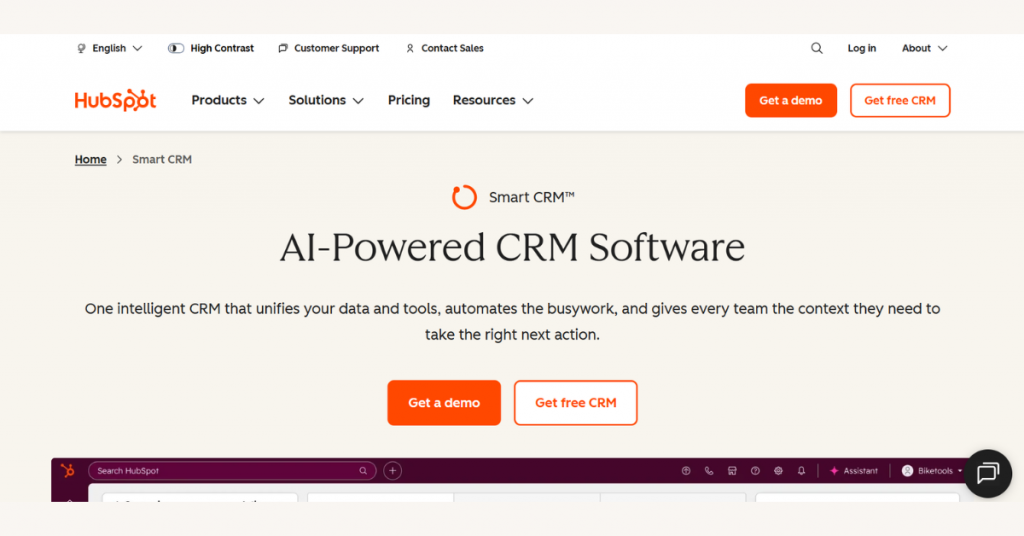
HubSpot CRM is a customer relationship management platform that helps startups keep track of leads, customers, and sales activities in one place. It makes it easier to store contact information, monitor conversations, follow up with prospects, and manage deals.
Using it, teams can view their sales pipeline, organize tasks, and improve communication without switching between multiple tools. Its simple interface helps businesses stay organized as they grow.
Key Features of HubSpot CRM:
- Centralizes customer records for streamlined relationship management
- Enables visual pipeline tracking for sales opportunities
- Delivers customizable dashboards for performance measurement
- Simplifies task management across customer-facing teams
- Streamlines CRM migration through flexible import tools
- Leverages Breeze AI for smarter workflow automation
- Automates lead qualification using chatbot functionality
- Connects applications through two-way data synchronization
- Integrates business tools using extensive app marketplace
- Facilitates customer conversations through shared inbox capabilities

HubSpot CRM
Starting Price
$ 15.00
Pro and cons of HubSpot CRM:
Pros
- Provides free CRM access without expiration limits
- Helps startups scale through flexible upgrade paths
- Improves pipeline visibility with intuitive deal tracking
- Unifies customer data across sales and support
- Enhances productivity through built-in artificial intelligence
- Reduces deployment effort with quick platform setup
- Integrates seamlessly with thousands of business applications
Cons
- Requires upgrades for advanced automation capabilities
- Limits premium functionality within free plan tiers
- Increases subscription costs as teams expand
- Restricts deeper customization to higher plans
- Necessitates additional purchases for broader functionality
HubSpot CRM Pricing & Plans:
| Plan | Price |
|---|---|
| Free | INR 0 |
| Professional | INR 4,170/seat/month |
| Enterprise | INR 6,250/seat/month |
2. Attio
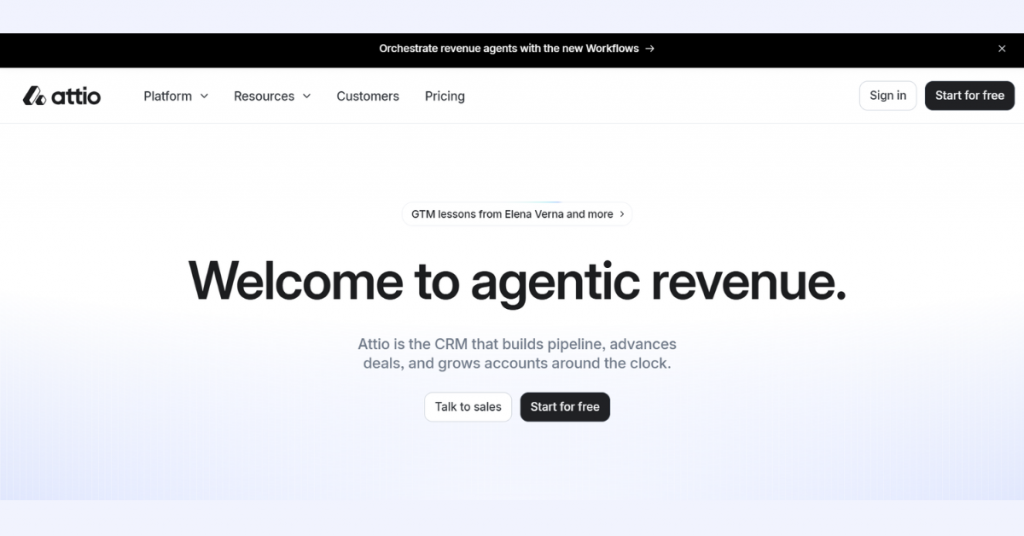
Attio is a CRM designed to help startups manage business relationships and customer information. Using it, teams can organize contacts, track interactions, and create custom workflows that match their processes.
It gives a clear view of important relationships and keeps information updated automatically, making collaboration with customers and partners easier.
Key Features of Attio:
- Centralizes relationship data within a customizable CRM
- Enables real-time contact syncing across business workflows
- Delivers automatic data enrichment for cleaner records
- Streamlines pipeline management through flexible data structures
- Integrates email and calendar activity into workflows
- Automates processes using customizable workflow automation tools
- Provides advanced reporting for revenue and growth insights
- Leverages AI agents for research and data analysis
- Connects systems through API, webhooks, and integrations
- Facilitates collaboration with shared records and workspaces

Attio
Starting Price
$ 36.00
Pro and cons of Attio:
Pros
- Offers a generous free plan for startups
- Simplifies relationship tracking through intuitive interface design
- Supports highly flexible CRM customization for teams
- Enhances data quality through automatic enrichment features
- Improves collaboration across sales and partnership teams
- Scales efficiently from startup to enterprise stages
- Accelerates workflow execution using built-in AI capabilities
Cons
- Requires setup planning for optimal CRM structure
- Presents a learning curve for new users
- Limits advanced functionality to higher-tier subscriptions
- Provides fewer native integrations than established competitors
- Increases costs as teams and usage expand
Attio Pricing & Plans:
| Plan | Price |
|---|---|
| Free | USD 0/user/month |
| Plus | USD 35/user/month |
| Pro | USD 79/user/month |
| Enterprise | Price on request |
Startup Research & Growth Intelligence
Opt for the following tools if you wish to discover market trends, track competitors, and uncover opportunities that support smarter growth decisions…
3. Crunchbase
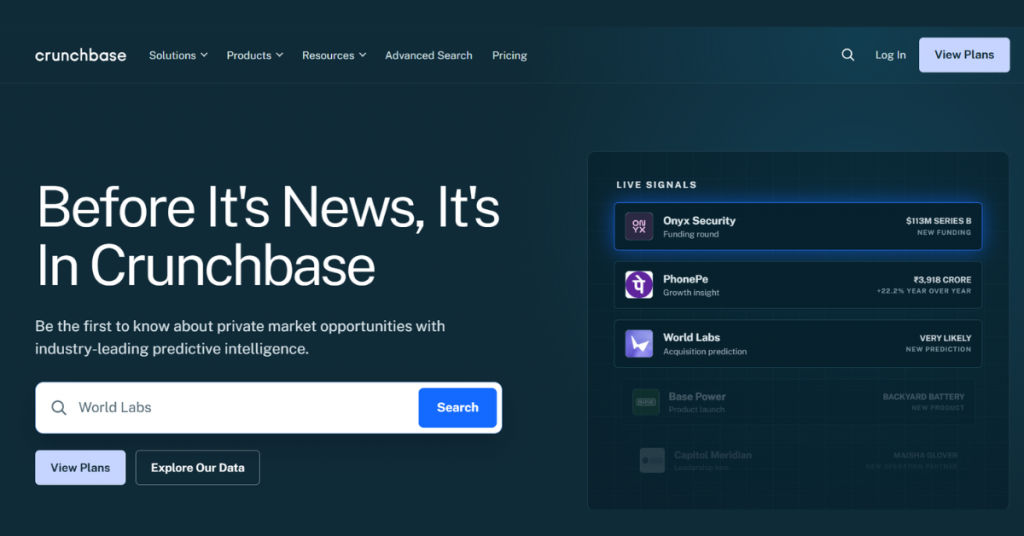
Crunchbase is a business intelligence platform that provides information about companies, industries, investors, and funding activities. Startups use it to research competitors, discover market trends, and identify potential business opportunities.
It can also help teams find investors, partners, or prospects based on specific criteria. The platform offers useful insights that support planning, outreach, and business development efforts.
Key Features of Crunchbase:
- Discovers promising startups through predictive market signals
- Tracks funding rounds, investors, and acquisitions globally
- Delivers real-time financial and growth intelligence
- Enables advanced filtering across private company databases
- Identifies emerging opportunities using AI-powered insights
- Monitors target companies through custom alerts
- Provides investor, executive, and funding history data
- Supports company tracking with lists and stages
- Facilitates market research with industry trend analysis
- Connects CRM systems with automated data enrichment
- Exports company data for deeper business analysis
- Surfaces growth indicators through proprietary scoring models
Pro and cons of Crunchbase:
Pros
- Offers extensive coverage of global private companies
- Helps founders identify relevant investor opportunities
- Provides valuable insights into competitor activities
- Enables smarter prospecting using predictive analytics
- Simplifies market research with powerful filters
- Supports CRM integrations for streamlined workflows
- Delivers timely alerts on market developments
- Facilitates data-driven startup growth planning
Cons
- Requires subscriptions for advanced intelligence features
- Limits export capacity within lower-tier plans
- Charges higher rates for team access
- Restricts premium insights to paid plans
- Needs add-ons for expanded functionality
- Presents occasional complexity for first-time users
- Depends heavily on subscription-based feature access
Crunchbase Pricing & Plans:
| Plan | Price |
|---|---|
| Free | USD 0 |
| Pro (Annual) | USD 49/month |
| Pro (Monthly) | USD 99/month |
| Business | Starts at USD 199/month |
| Custom Data Access | Price on request |
Product Analytics & User Insights
Use the following startup growth navigation tools to understand how users interact with your product and make changes to improve their experience accordingly…
4. PostHog
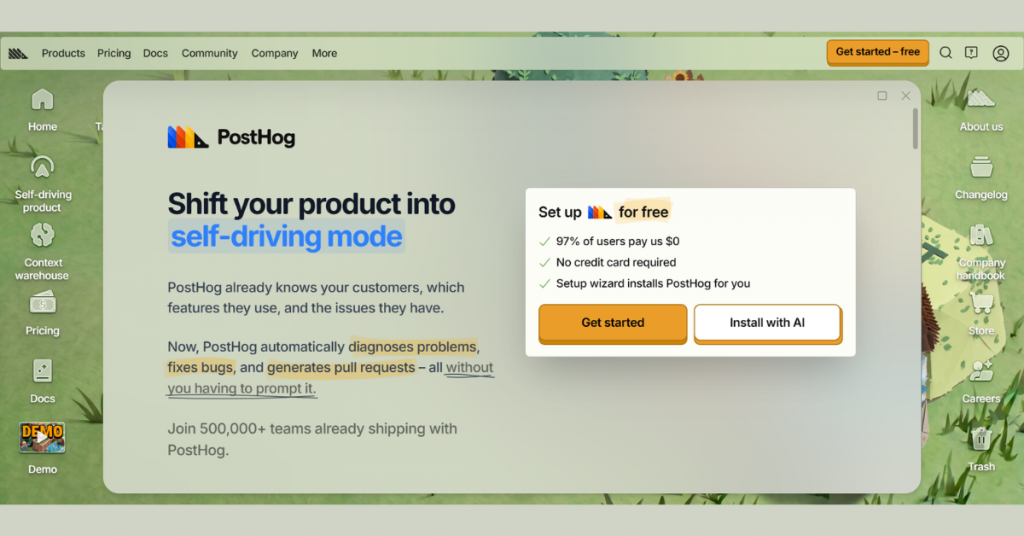
PostHog is an open-source product analytics platform that helps startups understand how users interact with their products and websites. It tracks user actions, highlights popular features, and shows where users face difficulties. Teams can use these insights to improve the customer experience and make better product decisions.
Key Features of PostHog:
- Combines analytics, session replay, and experimentation tools
- Delivers product insights through automatic event capture
- Enables feature flag management for controlled releases
- Supports A/B testing for data-driven decisions
- Provides session recordings to analyze user behavior
- Tracks conversion funnels and retention performance
- Offers built-in surveys for collecting customer feedback
- Facilitates error tracking alongside product analytics
- Includes SQL access for deeper data exploration
- Supports warehouse and data pipeline integrations

PostHog
Starting Price
Price on Request
Pro and cons of PostHog:
Pros
- Brings multiple growth tools into one platform
- Offers generous free usage for startups
- Helps teams validate product decisions faster
- Reduces reliance on separate analytics solutions
- Supports scalable pricing based on usage
- Enables rapid experimentation without engineering overhead
- Provides strong visibility into customer journeys
- Accommodates engineering-led teams with advanced flexibility
Cons
- Requires technical knowledge for advanced implementation
- Presents a learning curve for beginners
- Increases costs as event volume grows
- Limits certain advanced features on free tiers
- Demands proper tracking setup for accuracy
- May feel complex for non-technical teams
PostHog Pricing & Plans:
| Plan | Price |
|---|---|
| Free | USD 0 |
| Product Analytics | 1,000,000 events/month free |
| Pay-As-You-Go | Starts at USD 0.0000500/event |
| Startup Program | Up to USD 50,000 credits |
5. Amplitude
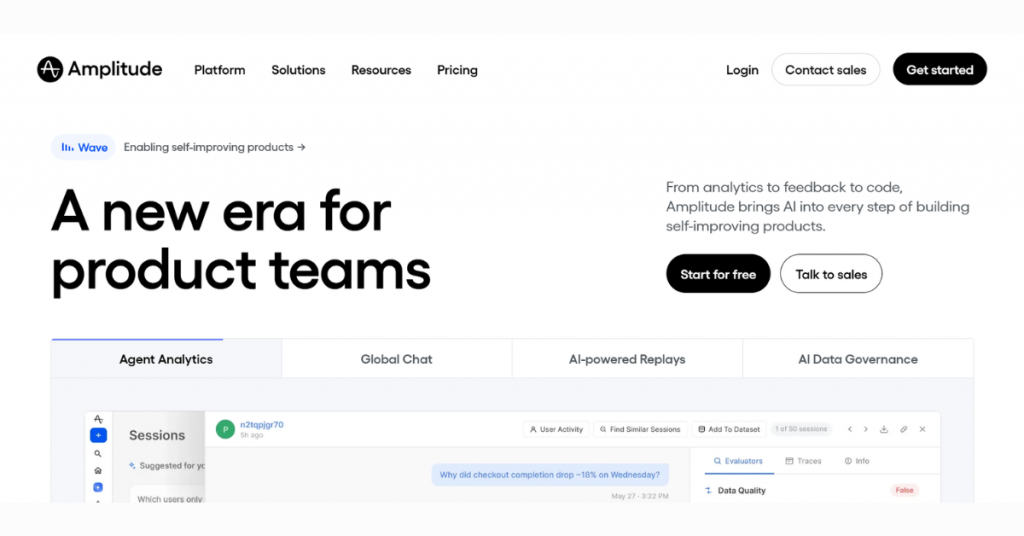
Amplitude is a digital data analytics platform focused on helping businesses understand customer behavior and product usage. It allows startups to track user journeys, measure engagement, and identify factors that drive retention.
Using its advanced analytics and reporting capabilities, teams can make informed product decisions and optimize customer experiences, improving conversion rates over time.
Key Features of Amplitude:
- Analyzes user behavior across digital products
- Tracks funnels, retention, and customer journeys
- Delivers AI-powered insights from product data
- Enables experimentation through A/B testing capabilities
- Provides session replay for user behavior analysis
- Supports feature flags for controlled rollouts
- Creates behavioral cohorts for audience segmentation
- Connects customer feedback with product analytics
- Offers heatmaps to uncover engagement patterns
- Syncs data across warehouse and business tools
- Monitors product performance with automated alerts
- Builds custom audiences for targeted activation

Amplitude
Starting Price
$ 61.00
Pro and cons of Amplitude:
Pros
- Combines analytics, experimentation, and feedback tools
- Offers generous free usage for startups
- Helps teams identify growth opportunities faster
- Delivers powerful behavioral analytics capabilities
- Simplifies product decisions through AI insights
- Supports unlimited seats across all plans
- Enables startup scaling without immediate upgrades
- Includes feature flags within free plans
Cons
- Requires technical knowledge for advanced setup
- Is not very beginner-friendly
- Increases costs significantly at larger scales
- Limits advanced functionality to premium plans
- Demands proper tracking implementation for accuracy
Amplitude Pricing & Plans:
| Plan | Price |
|---|---|
| Free | USD 0 |
| Plus | Starts at USD 0 |
| Growth | Price on request |
| Enterprise | Price on request |
Workflow Automation
Use the below listed growth navigate startup tools to automate repetitive work and improve efficiency…
6. Zapier
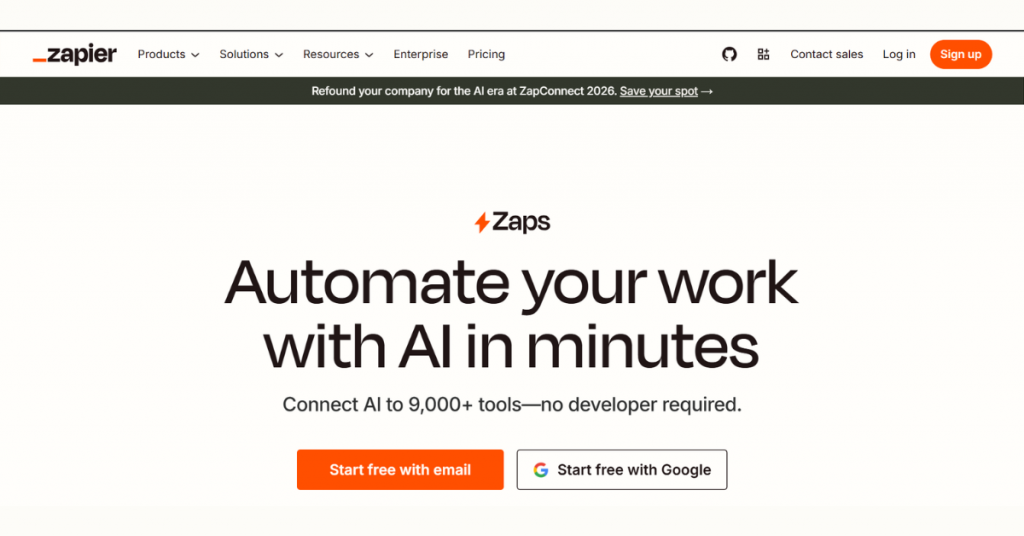
Zapier is a workflow automation platform that connects thousands of apps and services without requiring coding skills. It enables startups to automate repetitive tasks by creating workflows called Zaps. This, so they can save time, minimize errors, and focus on tasks that further business growth.
Key Features of Zapier:
- Automates workflows between thousands of connected applications
- Connects over 9,000 apps without coding requirements
- Enables multi-step workflows with advanced automation logic
- Delivers AI orchestration for complex business processes
- Simplifies data collection through customizable forms
- Provides structured data management using built-in tables
- Supports webhooks for custom system integrations
- Leverages Zapier Copilot for AI-assisted automation building
- Facilitates team collaboration through shared workflow management
- Streamlines app connectivity with no-code automation tools

Zapier
Starting Price
$ 29.99
Pro and cons of Zapier:
Pros
- Offers extensive integration coverage across business software
- Reduces manual work through automated task execution
- Helps startups scale operations without additional resources
- Improves productivity with easy workflow creation tools
- Supports AI-powered automation for repetitive processes
- Accelerates implementation through intuitive no-code functionality
- Enhances collaboration using shared workflows and folders
Cons
- Increases costs as task usage grows significantly
- Limits advanced capabilities within the free plan
- Requires higher tiers for team collaboration features
- Creates dependency on third-party app availability
- Restricts premium integrations to paid subscriptions
Zapier Pricing & Plans:
| Plan | Price |
|---|---|
| Free | USD 0/month |
| Professional | Starts at USD 19.99/month |
| Team | Starts at USD 69/month |
| Enterprise | Price on request |
Leads Generation & Sales Outreach
Go for the following to find potential customers and organize your sales efforts…
7. Closely

Closely is a sales prospecting and outreach tool built to help businesses connect with potential customers. It helps users discover leads, manage outreach campaigns, and build professional relationships more efficiently.
Startups can use it as a growth navigate startup tool to expand their reach, generate new opportunities, and keep track of prospect interactions without creating extra manual work.
Key Features of Closely:
- Automates LinkedIn and email outreach from one platform
- Generates personalized messages using built-in AI capabilities
- Enriches lead profiles with verified contact data
- Streamlines prospect research through AI-powered insights
- Connects outreach campaigns across LinkedIn and email
- Provides unified inbox management for team communications
- Tracks campaign analytics for performance optimization
- Integrates CRM data with major sales platforms
- Supports workflow automation with conditional sequences
- Facilitates lead scoring using AI-driven assessment
Pro and cons of Closely:
Pros
- Combines LinkedIn and email outreach
- Improves engagement through AI-powered personalization tools
- Enhances prospecting with real-time lead enrichment
- Simplifies response management through unified inboxes
- Reduces manual effort with automated outreach workflows
- Integrates natively with popular CRM platforms
- Supports scalable outbound campaigns for growing teams
Cons
- Limits LinkedIn accounts based on subscription tiers
- Requires higher plans for larger outreach teams
- Consumes credits across enrichment and AI features
- Restricts advanced capabilities on entry-level plans
- Increases monthly costs as usage requirements grow
Closely Pricing & Plans:
| Plan | Price |
|---|---|
| Starter | USD 49/month |
| Growth | USD 127/month |
| Essential | USD 205/month |
| Custom | USD 350/month |
Documentation & Team Collaboration
Use the following growth tools for startups to keep your team aligned by centralizing information and workflows in one place…
8. Notion
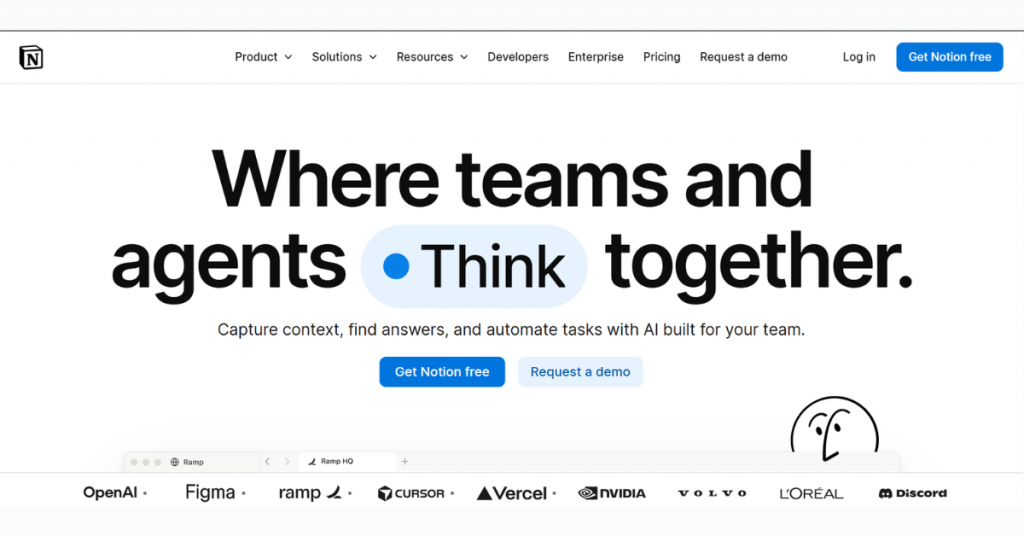
Notion is an all-in-one productivity and collaboration platform that combines note-taking, documentation, project management, and knowledge sharing. Startups use it to organize company information, manage tasks, track projects, and collaborate across teams.
By keeping information centralized and accessible in this way, the software supports teamwork and helps growing businesses stay organized even when operations become complex.
Key Features of Notion:
- Combines docs, wikis, and projects in one workspace
- Centralizes company knowledge through collaborative team wikis
- Enables project tracking with customizable database views
- Delivers AI assistance for writing and summarization
- Streamlines meeting documentation with automated note generation
- Provides enterprise search across connected work applications
- Supports forms for collecting and organizing responses
- Facilitates workflow automation through custom AI agents
- Integrates calendars for scheduling and time management
- Visualizes information through charts, tables, and boards

Notion
Starting Price
$ 12.00
Pro and cons of Notion:
Pros
- Replaces multiple startup tools with one platform
- Improves collaboration through shared workspaces and databases
- Simplifies knowledge management across growing teams
- Enhances productivity with integrated artificial intelligence features
- Adapts easily to different startup workflows
- Reduces software costs through workspace consolidation
- Scales effectively from early-stage to enterprise teams
Cons
- Requires setup time for complex workspace structures
- Creates learning challenges for first-time users
- Limits advanced AI capabilities on lower plans
- Depends heavily on user adoption for value
- Becomes difficult to manage without governance practices
Notion Pricing & Plans:
| Plan | Price |
|---|---|
| Free | USD 0/member/month |
| Plus | USD 10/member/month |
| Business | USD 20/member/month |
| Enterprise | Price on request |
Conclusion
If you wish to make your business a resounding success, let the above-listed growth navigate startup tools take care of the rest. But before you get them to work for yourself, it is imperative you understand your startup’s needs and how these solutions work.
Require any sort of assistance in figuring out that, give the Techjockey team a call right away!


Written by
Yashika Aneja

Yashika Aneja is a Senior Content Writer at Techjockey, with over 5 years of experience in content creation and management. From writing about normal everyday affairs to profound fact-based stories on wide-ranging themes, including environment, technology, education, politics, social media, travel, lifestyle so on and so forth, she... Read more
 Previous